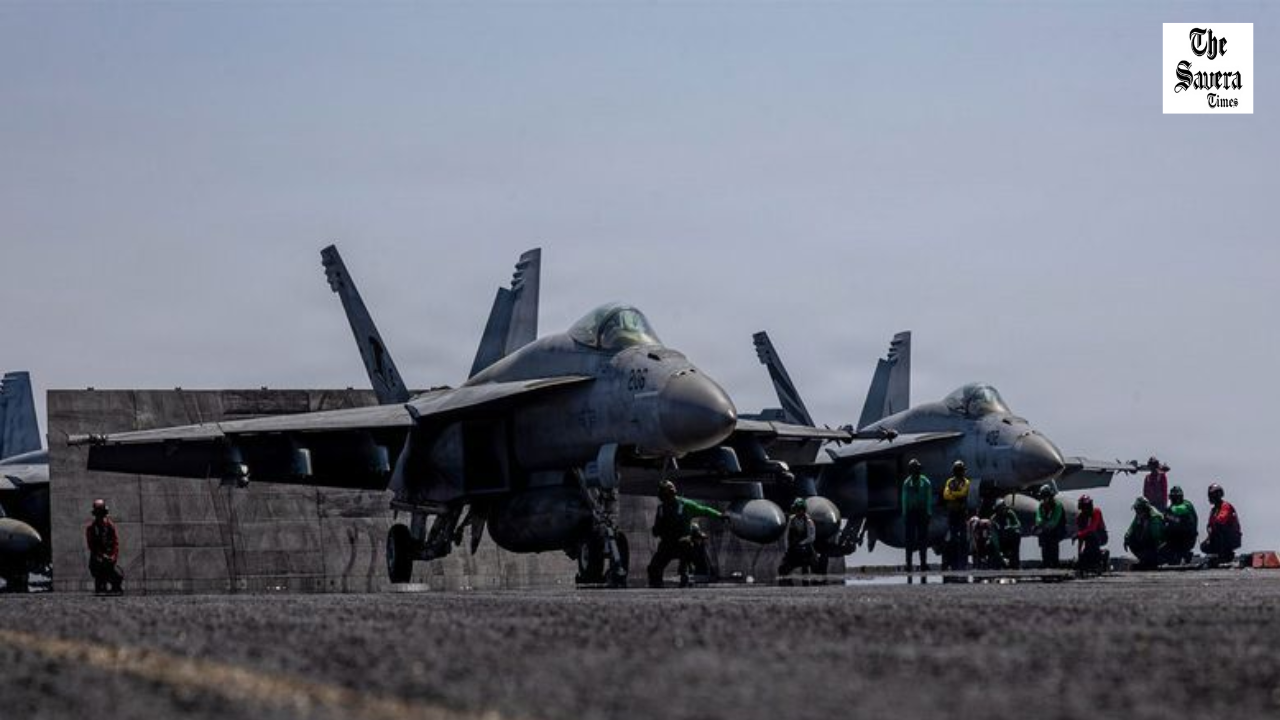
The conflict in West Asia intensified further as the United States launched heavy airstrikes on Iran, targeting military facilities and strategic infrastructure. The attacks are part of a broader military campaign involving U.S. and allied forces aimed at weakening Iran’s capabilities amid the ongoing regional war.
Reports indicate that several locations in and around Tehran were struck during the latest wave of air operations. The escalation has significantly heightened tensions across the region and raised fears of a wider conflict involving multiple countries.
The strikes come as Iran continues to respond with missile and drone attacks targeting regional infrastructure and shipping routes in the Persian Gulf.
Oil Prices Jump Above $100
One of the immediate global impacts of the conflict has been a sharp rise in crude oil prices. International benchmark crude surged past $100 per barrel, driven by concerns about disruptions to energy supplies from the Middle East.
The region accounts for a significant portion of the world’s oil production, and any military escalation there tends to cause turbulence in global energy markets. Attacks on oil infrastructure and shipping lanes near the Strait of Hormuz—a critical global oil transit route—have further intensified supply fears.
Economists warn that sustained high oil prices could trigger inflation worldwide, affect economic growth, and increase fuel costs for consumers.
Iranian Air Campaign Targets Gulf Region
Iran has reportedly intensified its own aerial campaign, launching missiles and drones across the region. Several Gulf countries have activated their air-defense systems to intercept incoming threats.
According to reports, Saudi Arabia intercepted dozens of Iranian drones, while debris from intercepted missiles caused fires in industrial areas in parts of the Gulf region.
The conflict has expanded beyond Iran’s borders, with attacks and counterattacks occurring in Lebanon, Iraq and other parts of West Asia. Armed groups aligned with Iran have also launched rockets toward Israeli territory, increasing regional instability.
US Military Aircraft Crash in Iraq
Amid the ongoing military operations, a U.S. aerial refuelling aircraft crashed in western Iraq while participating in operations linked to the conflict.
The aircraft, identified as a KC-135 Stratotanker, was involved in supporting combat missions when it went down. U.S. Central Command confirmed that rescue operations were launched immediately after the incident.
Officials initially said the crash occurred in “friendly airspace,” and investigations are ongoing to determine the exact cause. Some Iran-aligned militia groups later claimed responsibility for the incident, though authorities have not confirmed those claims.
Regional Tensions Continue to Spread
The war has also spread into neighboring countries such as Lebanon and Iraq, where armed groups have increased attacks against U.S. and allied targets. Civilian casualties and infrastructure damage have been reported in several areas.
In addition, international forces stationed in the region have come under drone and missile attacks. For example, a drone strike in Iraq recently killed a foreign soldier and injured several others involved in counter-terrorism operations.
Diplomatic efforts to reduce tensions have so far failed to produce a ceasefire.
Global Community Calls for De-escalation
The escalating conflict has prompted urgent calls from the international community for restraint and dialogue. The United Nations and several world leaders have warned that continued escalation could threaten global stability and disrupt international trade routes.
With oil prices rising and military operations expanding across multiple countries, analysts fear the crisis could have long-term geopolitical and economic consequences if a diplomatic solution is not reached soon.
For now, the situation remains highly volatile as both sides continue military operations and the world watches closely for further developments in the rapidly evolving conflict.