Last Updated: September 22, 2026
Last Updated: September 22, 2026





~Abhishek Vij
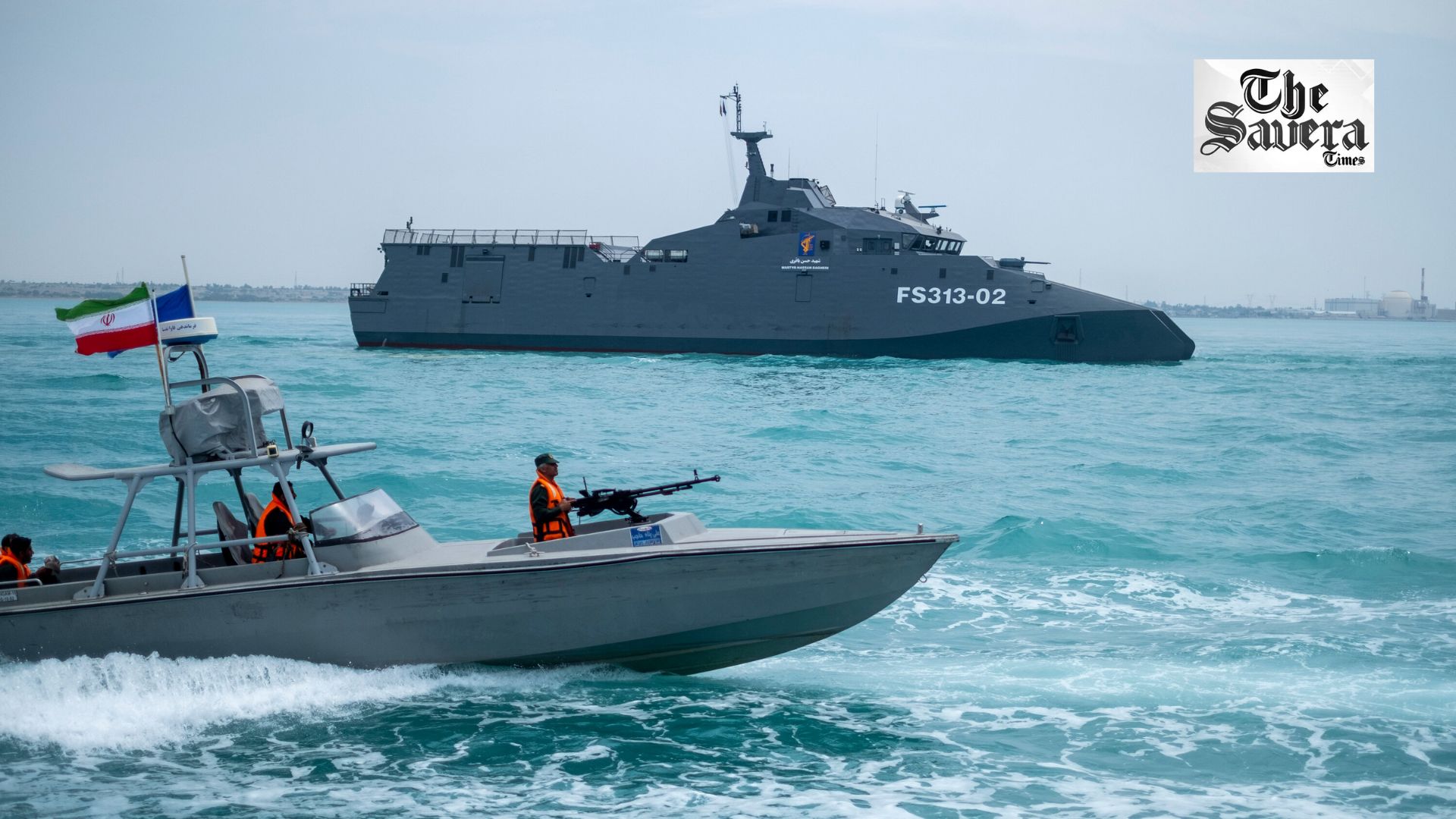
When the US and Iran flared up for
the third time despite a ceasefire,
it was believed that the war had
become centered on Hormuz. Iran’s
blockade of Hormuz, on the one
hand, and the US blockade of the Gulf of Oman, on
the other, suggested the war was taking a commercial
turn. Perhaps the issue was tariff imposition, but the
very next day the US declared no tariff imposition, but
also stated that the Hormuz route should remain free
and prevent Iran from bullying it. Serious observers
are now observing that efforts are being made to inflict
maximum damage. Civilians are becoming targets of
the war. Hospitals, bridges, and public buildings are
being attacked. Iran’s retaliatory strikes are targeting
US military bases. Tensions in West Asia have reached
a peak. Several Gulf countries have strengthened their
security systems.
In response to the US attacks, Iran is threatening
to infiltrate deep into Gulf countries and teach them a
lesson. Meanwhile, the US is attacking the strategically
important city of Bandar Abbas within Iran. This city
is located near the Strait of Hormuz and is a major hub
for the Iranian military and the IRGC. Communication
towers and railway facilities have been damaged in
the attacks, causing damage to residential areas,
and civilians are panicking. Iran claims that US
forces have attacked railway stations, bridges, water
supply centers, food storage facilities, hospitals, and
residential areas in southern Iran. “All the rules of war
are being ignored,” he said. Undoubtedly, the Strait
of Hormuz remains the center of the war, but the
attacks on economic and commercial establishments
are exacerbating the situation. India’s concern is that
Iran is creating a new trade route with Gulf countries
through Chabahar Port, just as China is developing
Gwadar Port in Pakistan.
India has invested heavily in the construction of
Chabahar Port, but now Chabahar Port itself has come
under US attack. Although India’s Ministry of External
Affairs has denied reports that the Shahid Beheshti
Terminal, linked to India, was damaged in the US
attack, the US attacks have put India’s development
of the Chabahar Port on hold. Iran has retaliated
by attacking US military bases in Bahrain, Qatar,
and Kuwait. Iran has also attacked and destroyed a
drinking water plant in Kuwait. Political experts know
that the US midterm elections are near, so Trump is
attacking with full force this time to underline his
winning image.
Iran is also unwilling to yield. Beyond this political
sting, economic hostility cannot be ignored. Iran
wants war compensation as stipulated in the ceasefire
agreement, but the US wants the Gulf countries to
pay for the losses, while the Gulf countries believe
that if the war is America’s, it should be America’s
responsibility. Following the US’s renewed trade
sanctions on Iran, Iran has also announced its
withdrawal from the agreement. Countries like India
are being threatened with tariffs of up to 100% if they
purchase oil from Iran and Russia. What kind of war
is this? This involves a game of political and economic
dominance, and a period of threats against countries
like India. Therefore, the war is no longer confined to
the Strait of Hormuz. Its scope is expanding. A new
ideological approach is needed for a solution.
As Chinese research vessels operate in waters around Taiwan, Beijing has maintained that they are conducting only marine...
Putin's United Russia party has won 355 of 450 State Duma seats in Russia's first parliamentary election since...
Two crew members were injured after a tanker was struck by an unknown projectile while transiting the Strait...
New Delhi: Prime Minister Narendra Modi on Monday condoled the death of Sheikh Ahmed bin Rashid Al Maktoum,...
Chinese President Xi Jinping will visit the United States from September 23 to 25 for talks with President...
Indian Naval Ships Sahyadri and Kulish have arrived at Subic Bay in the Philippines to participate in the...
Aries: The day will be auspicious...