Last Updated: October 26, 2026
Last Updated: October 26, 2026





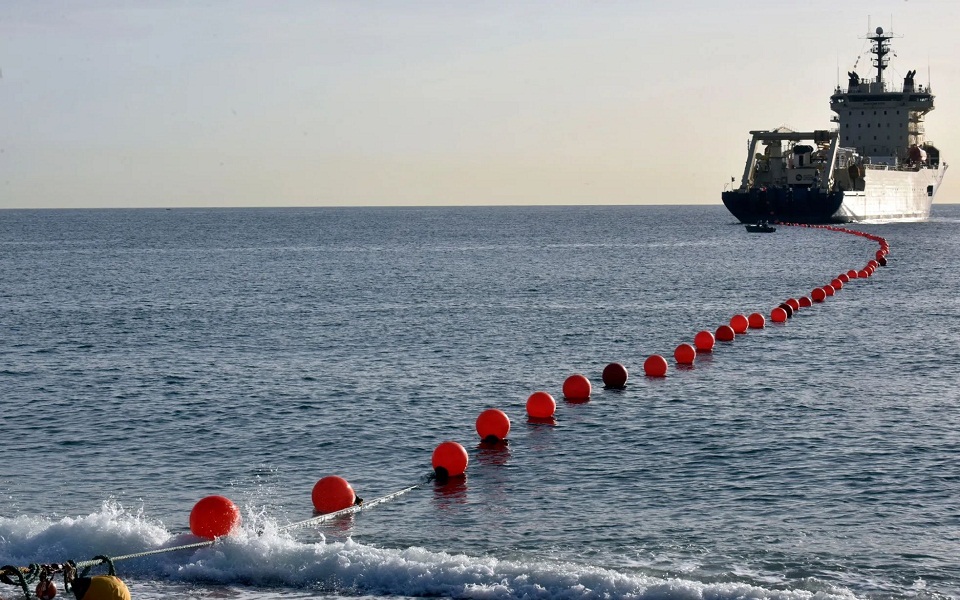
The US is pushing for the (GSI), a planned undersea electricity link connecting Greece, Cyprus and Israel, to be taken up as a top priority in Greece’s Eastern Mediterranean strategy.
The recent agreement in Athens allowing French investment group Meridiam to become the majority shareholder in the company behind the Great Sea Interconnector, have raised greater expectations that the project will be implemented in its next phase.
For Washington, the interconnector is increasingly being viewed as part of a much larger architecture combining energy security, regional connectivity and the strategic ambitions of IMEC (India-Middle East-Europe Economic Corridor).
IMEC was first presented by India at the G20 summit in New Delhi in 2023, and is now widely seen as the democratic world’s answer to China’s Belt and Road Initiative.
A bipartisan group of US lawmakers has written to Secretary of State Marco Rubio and Ben Black, head of the US International Development Finance Corporation (DFC), calling for greater American attention to the Great Sea Interconnector. The US lawmakers are of the view that the Eastern Mediterranean could become an important gateway to IMEC and describe the Great Sea Interconnector as strategically important infrastructure for the development of the corridor.
They say projects such as the GSI could strengthen US partners, diversify energy routes and deepen regional cooperation while providing alternatives to infrastructure controlled or influenced by strategic rivals.
The representatives also requested a classified briefing from the Trump administration on the geopolitical challenges that could affect completion of the project.
The US lawmakers see the project as more than an electricity connection. They frame it as part of a wider strategic network that could strengthen regional resilience and support closer economic ties between Europe.
The proposed interconnector is designed to link the electricity networks of Greece, Cyprus and Israel, creating two-way electricity flows between Europe and the Eastern Mediterranean. For Cyprus, the project is particularly significant because it could help end the island’s long-standing energy isolation.
For Israel, the interconnection could provide an additional layer of energy security, while Greece would strengthen its role as an energy bridge between Euro.
Iranian Foreign Ministry spokesman Esmail Baghaei said on Monday that the proposed meeting of senior officials from Saudi...
US forces deployed in West Asia are ready to launch a new and potentially major military operation against...
Prime Minister Narendra Modi, External Affairs Minister S. Jaishankar, and Congress MP Shashi Tharoor met with Iranian parliamentary...
The Australian government has expanded biometric information requirements for those applying for visas in India. Under this, applicants...

Commerce Minister Piyush Goyal’s Netherlands visit focused on expanding trade and investment, improving maritime logistics and strengthening economic...

Brazil's President Luiz Inacio Lula da Silva has won a fourth term after defeating Flavio Bolsonaro in a...