Last Updated: October 13, 2026
Last Updated: October 13, 2026





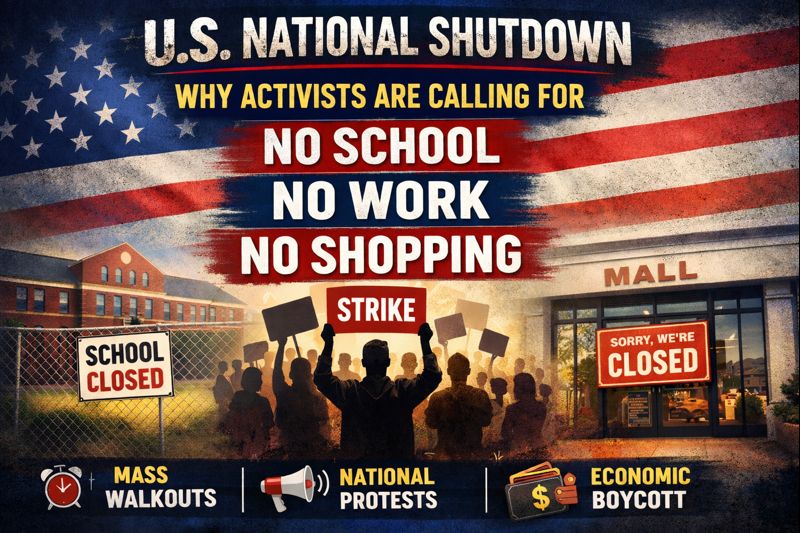
Across the United States on January 30, 2026, thousands of people are participating in what activists are calling a Nationwide Shutdown — a day of protest urging Americans to stay home from school and work and refrain from shopping.
This historic action is meant to put pressure on the federal government and spotlight anger over immigration enforcement.
What Is the National Shutdown?
The “National Shutdown” is a coordinated protest movement across many U.S. cities. Organizers are urging people to pause everyday life — no work, no school, no shopping — to create an economic and social pause and show opposition to federal immigration enforcement, especially actions by Immigration and Customs Enforcement (ICE).
This protest day builds on recent actions in Minnesota but has now spread nationwide. It is also referred to as a general strike or economic blackout — a tactic where large numbers of people withdraw labor and spending to amplify political pressure.
Background: What Sparked the Movement?
The protests were triggered by a series of deadly encounters involving relocation and enforcement agents:
How Minnesota Set the Stage
Before the national action, a Massive Protest in Minnesota on January 23 drew national attention. Tens of thousands joined what was called the “Day of Truth & Freedom,” where schools closed, businesses shut, and many people stayed home to demonstrate against what they view as harmful ICE operations.
Minneapolis has become a focal point of the movement because of the recent incidents and long-standing concerns in immigrant communities about federal enforcement tactics, including aggressive raids and detentions.
Why “No School, No Work, No Shopping”?
The phrase “no school, no work, no shopping” reflects a strategy known as a general strike — a mass withdrawal of economic participation designed to create a visible impact. By slowing down daily life, organizers hope to:
Who’s Organizing and Who’s Supporting It?
The Nationwidе Shutdown is largely a grassroots effort, built through a decentralized network of activists and community groups. Often mentioned supporters include:
What’s Happening Today?
On January 30:
These activities mark one of the most visible nationwide protests around immigration enforcement in recent U.S. history.
What Are the Main Demands?
Protesters are calling for:
These demands are rooted in ongoing debates about civil liberties, policing, and federal authority over immigration policy.
Organizers say the January 30 shutdown is part of a longer movement with future protests and actions planned, including rallies, lobbying days in Washington, and continued local demonstrations.
Whether this day’s action leads to policy change remains to be seen, but it has already drawn national attention to immigration enforcement and sparked widespread discussion across communities and political arenas.
Imagine a foreign national standing among Indian citizens at a political protest, raising questions about the government or...

For thousands of Indian tech workers in the United States, a job offer is only the beginning of...

Three years ago, on October 7, 2023, Israel woke up to one of the deadliest attacks in its...

Imagine being seriously injured inside a flying aircraft, with blood on your clothes, passengers in panic and the...

Imagine the world’s biggest diesel exporter turning off its export taps. That is the concern after US President...

For India’s pharmaceutical industry, the latest US tariff decision brings relief — but not across the entire medicines...

Aries: The day will be auspicious...