Last Updated: October 23, 2026
Last Updated: October 23, 2026





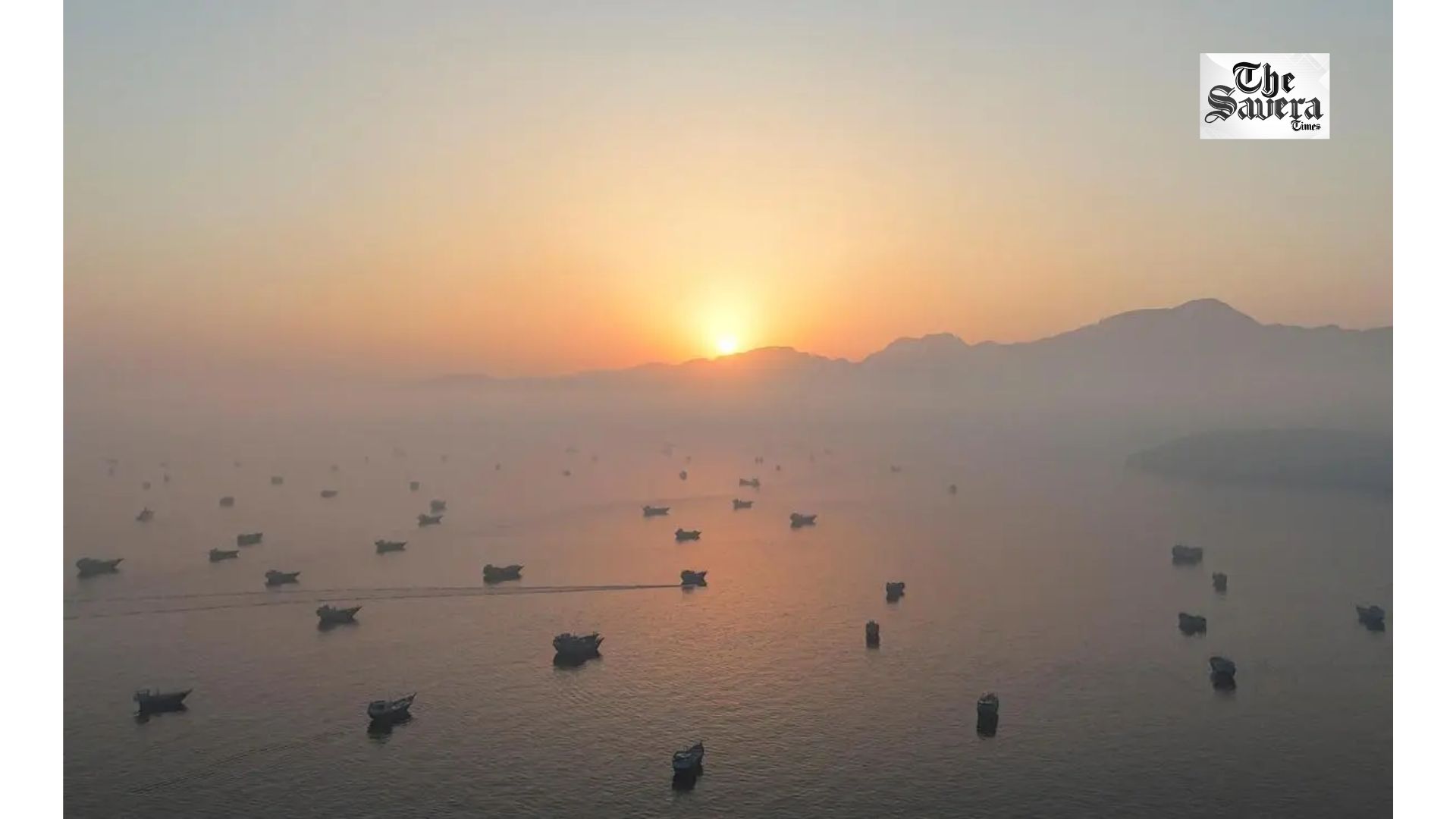
Washington: The United States military has quietly established a maritime shipping corridor through the Strait of Hormuz to facilitate the movement of millions of barrels of crude oil each day, even as the conflict with Iran remains at a stalemate, according to a report by Axios citing two US officials.
The operation has reportedly been active for several weeks, with 15 to 20 oil tankers using a southern route along the Omani coastline each night.
US officials said the corridor is currently enabling roughly 10 million barrels of oil per day to move from the Gulf into international markets, although volumes remain below pre-conflict levels.
US military coordinates tanker movements
According to the report, the US-led operation is not limited to escorting loaded oil tankers.
It also helps empty tankers travel from the Arabian Sea through the Strait of Hormuz into Gulf ports, where they load crude before making the return journey.
The operation is coordinated by a US task force based at Fort Bragg, North Carolina, working with regional Gulf partners.
Tankers are reportedly organised into inbound and outbound convoys that travel through the designated southern corridor under US military coordination.
US provides air defence cover
US officials said the shipping corridor became possible after a two-week campaign by US Central Command that weakened Iran’s radar and maritime surveillance capabilities.
The US Air Force is also providing air defence protection against possible Iranian drone and cruise missile attacks, according to the officials.
Iranian forces have reportedly fired missiles towards suspected shipping lanes, but US officials said American forces have intercepted or neutralised multiple incoming threats.
Oil exports reach around 10 million barrels a day
Over the past two weeks, nighttime movements of 15 to 20 tankers have helped keep oil exports at around 10 million barrels per day, according to the report.
At times, volumes have reportedly reached between 15 million and 20 million barrels per day.
Despite the recovery in shipments, energy flows through the strategic waterway remain below pre-conflict levels.
The US operation has nevertheless helped reduce the risk of a major disruption to global energy supplies from one of the world’s most important oil transit routes.
Trump says ‘tremendous amount of oil’ moving through strait
US President Donald Trump told Axios on Wednesday that a significant volume of oil was continuing to move through the Strait of Hormuz.
Trump also said Washington was not currently engaged in active negotiations with Tehran.
The development comes after Trump ruled out extending a fragile 60-day ceasefire agreement with Iran and claimed that the Strait of Hormuz remained open and that the US exercised “total control” over the strategic waterway.
Strait of Hormuz remains key energy chokepoint
The Strait of Hormuz has remained a major point of tension since hostilities escalated on February 28, with repeated disruptions and conflicting claims over whether the waterway was operational or blocked.
The strategically important passage connects the Persian Gulf with the Gulf of Oman and the Arabian Sea and is a crucial route for global energy shipments.
According to the report, the strait accounts for roughly 20 per cent of global oil consumption, around a quarter of globally traded oil and approximately 11.4 billion cubic feet of LNG flows each day.
The complete details of the US-managed shipping corridor had not previously been publicly disclosed, according to Axios.
New York, USA: The New York City Council has passed a law to ban horse-drawn carriages, naming the...

Washington: US President Donald Trump suggested that further military action against Iran remained possible, while acknowledging that the...
Lhasa: Sixteen people were killed and 32 others injured after a 7.0-magnitude earthquake struck Tibet on Thursday, according...
More than two weeks after the Yemeni government launched a major offensive against the Houthi group, front lines...
Singapore’s iconic skyline is disappearing behind a thick blanket of haze. Air pollution has reached such alarming levels...
Pakistan believed that the Taliban’s return to power in Afghanistan would become strategic leverage in the region. However,...
Aries: The day will be auspicious...