Last Updated: October 28, 2026
Last Updated: October 28, 2026





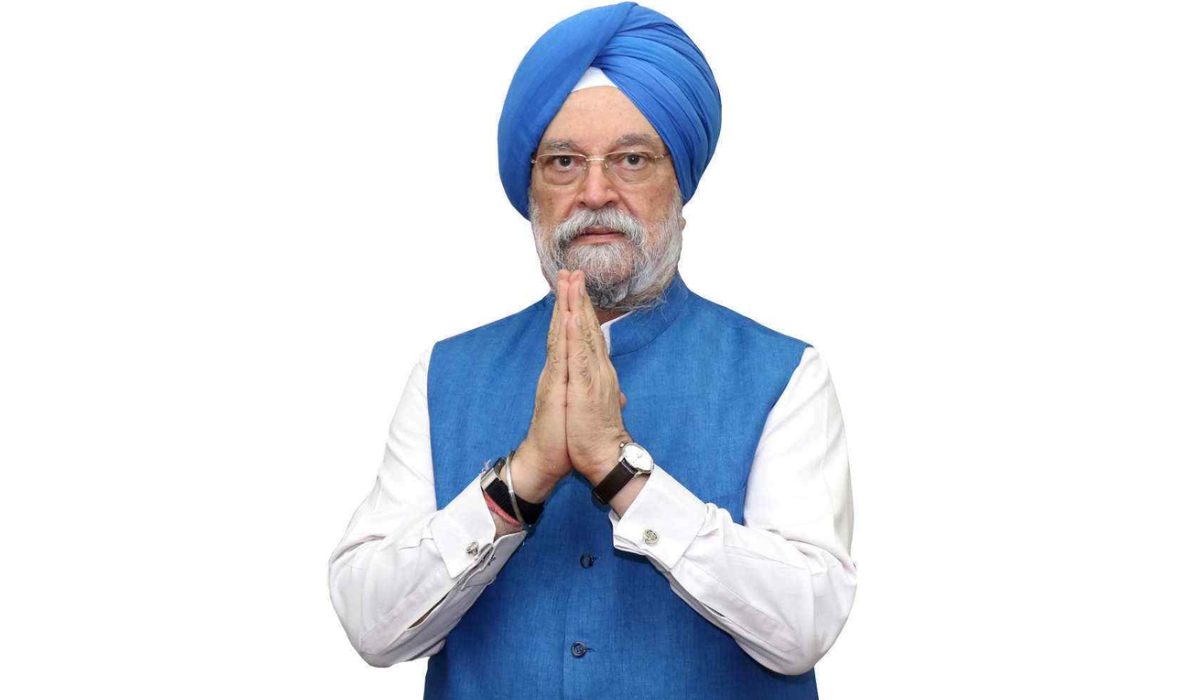
New Delhi: Union Petroleum and Natural Gas Minister Hardeep Singh Puri said that India is rapidly diversifying its import sources and increasing domestic production to secure its liquefied petroleum gas (LPG) supply. He stated that India now imports approximately 67% of its LPG needs from the US.
Speaking at a press conference on the sidelines of the 29th Energy Technology and Innovation Meet in South Goa, Puri said that despite severe disruptions to regular supply routes, India successfully averted a potential fuel crisis through advance planning and strategic partnerships.
Import options expanded after the Hormuz crisis
Hardeep Singh Puri stated that during the Hormuz crisis, there were fears of supply disruptions from major suppliers like Qatar, the United Arab Emirates (UAE), and Saudi Arabia. India had already signed an agreement with the United States to address this situation.
He said, “When the Hormuz crisis erupted, our three major supply sources were Qatar, the UAE, and Saudi Arabia. Suddenly, it appeared they wouldn’t be able to supply. Anticipating this, we arranged to import 10 percent of our LPG from the United States in January. When this arrangement proved successful, we decided to expand it further. Today, we import 67 percent of our LPG from the United States. We also began purchasing from Algeria and other countries, meaning we obtained supplies from wherever we could.”
The Minister explained that India has expanded its import sources from 27 to 41 countries. Additionally, emphasis has been placed on increasing domestic production at the country’s refineries.
Domestic LPG production increased from 34,000 to 55,000 tonnes per day
According to Puri, India has increased domestic LPG production from 34,000 metric tonnes per day to 55,000 metric tonnes. He said that all stakeholders worked together to achieve this target.
He explained that refineries prefer petrochemical products over LPG from a commercial perspective because they offer better economic returns. However, they can increase LPG production if needed.
The minister said, “Not all refineries want to produce LPG. They prefer petrochemical products because they are more commercially profitable. But when the situation demands, LPG production will be increased.”
Sudden increase in demand for cylinders, clarified rumors
Dismissing speculation in the market about fuel shortages in the country, Puri said that the daily demand for domestic LPG cylinders had temporarily increased from 5.1 million to 9 million. According to him, the reason behind this increase was fears of hoarding and rumors.
He explained that the situation was quickly brought under control through administrative monitoring, coordination with state governments, and changes in the waiting period for cylinder booking.
India’s target to increase refining capacity to 300 million tons per annum by 2030
Referring to India’s refining capacity, Puri said that the country’s current capacity is approximately 290 million metric tons per annum, which is planned to be increased to 300 million metric tons per annum by 2030.
He said that this expansion is taking place at a time when refining capacity is declining worldwide. Refining capacity is continuously declining in Europe, while new greenfield refineries are not being established in Western countries.
According to the minister, India is emerging as a major global refining hub to meet growing domestic fuel demand, increase exports, and expand petrochemical production. This will help achieve long-term energy self-sufficiency.
Strategic reserves and fuel network also expanded
On the social media platform X, Puri stated that India has prepared the energy sector in advance to deal with potential crises over the past decade.
He stated that India has expanded its crude oil procurement sources from 27 to 41 countries and created strategic reserves of 5.33 million metric tons (MT). Furthermore, according to his post, refining capacity has been increased from 215 to 267 million metric tons per annum (MMTPA).
Puri also stated that the number of fuel outlets in the country has increased from approximately 52,000 to over 100,000. The number of LPG import terminals has also been increased from 11 to 22. The increase in domestic LPG production was also cited as an important step towards strengthening energy security.
Emphasis on Samudra Manthan, E20, and GOBARdhan Schemes
Puri stated that the Samudra Manthan initiative is a major step towards harnessing India’s underwater hydrocarbon potential. It envisages opening up approximately 1 million square kilometers of previously declared “no-go” areas for exploration and exploration.
Referring to E20 fuel, he said it is providing additional income to farmers and helping reduce the country’s energy import bill.
The Minister also highlighted the role of the GOBARdhan scheme. He said the scheme is promoting the potential for generating compressed biogas (CBG) from agricultural residues and organic waste. This is furthering the “Annadata se Urjadata” vision, while also supporting rural livelihoods and waste-to-wealth initiatives.
New Delhi: Prime Minister Narendra Modi on Tuesday said that the real success of science is achieved when...
A 20-year-old Indore woman has accused six men of gang rape and brutal assault in a moving car...

Good Evening Viewers! Stay updated with The Savera Times Evening Bulletin, bringing you the latest news and top...

The Supreme Court on Tuesday questioned the Central Government's decision to limit the trade margin on cancer drugs...
BJP Rajya Sabha MP Raghav Chadha on Tuesday met Pyotr Tolstoy, the great-grandson of the great Russian writer...

The Supreme Court has rejected Asaram's plea seeking an extension of his medical parole. The court has directed...
Aries: The day will be auspicious...