Last Updated: October 21, 2026
Last Updated: October 21, 2026





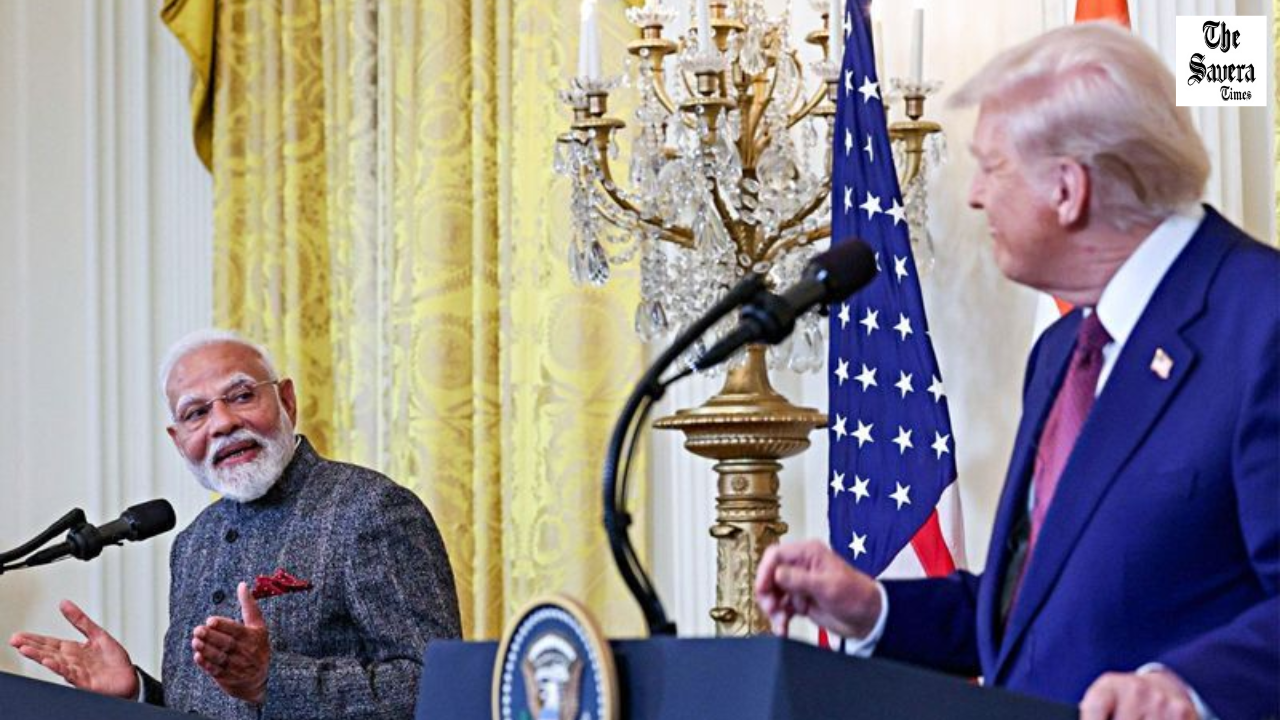
The Supreme Court of the United States on February 20, 2026, ruled that President Donald Trump exceeded his authority under the International Emergency Economic Powers Act (IEEPA) by imposing sweeping tariffs on imports including those affecting India’s exports.
The 6-3 decision restored constitutional limits on presidential tariff powers, providing relief to global trading partners and overturning a central pillar of Trump’s trade agenda.
Despite the Supreme Court setback, the Trump administration swiftly announced an alternative tariff strategy. A temporary 10 % global import tariff has been introduced under Section 122 of the Trade Act of 1974, applying to most goods for 150 days while the administration considers further actions under Sections 301 and 232.
India will face this tariff regime on most exports in the near term, though some tariff exemptions remain for certain industries.
The tariff ruling has immediate implications for India’s trade with the United States. By invalidating the broader “reciprocal tariffs,” the decision frees about 55 % of Indian exports from higher levies, reducing them to standard most-favoured nation (MFN) tariff levels. Key export categories that remain affected include steel, aluminium and specific auto components.
Trade experts say that this relief could reinvigorate India’s export competitiveness, particularly in sectors like textiles, apparel, gems and petroleum products.
India and the United States are currently negotiating an interim bilateral trade pact, expected to formalize tariff reductions and broader market access provisions. A joint statement outlining framework terms was issued in early February, with both sides aiming to conclude it by March.
However, the Supreme Court’s tariff ruling coupled with mixed signals from Washington about future tariff authority has prompted calls for re-examination of the trade deal strategy. Think tanks and economists suggest that New Delhi should use this moment to push for favourable terms and safeguard its strategic autonomy rather than rely on temporary or uncertain tariff structures.
Negotiators are now evaluating whether the pact will deliver long-term stability or if India should adopt more cautious positions to protect exporters and reduce vulnerability to sudden US policy shifts.
With tariffs and trade policy in flux, India finds itself at a crossroads. The Supreme Court ruling has removed one layer of tariff uncertainty, but Washington’s alternative measures and ongoing negotiations underline the complexity of achieving a robust, mutually beneficial trade agreement.
Industry and government officials will be closely watching the pact’s final terms, seeking a framework that supports Indian exporters while strengthening economic ties with the United States.
The Supreme Court of the United States on February 20, 2026, ruled that President Donald Trump exceeded his authority under the International Emergency Economic Powers Act (IEEPA) by imposing sweeping tariffs on imports including those affecting India’s exports.
The 6-3 decision restored constitutional limits on presidential tariff powers, providing relief to global trading partners and overturning a central pillar of Trump’s trade agenda.
Despite the Supreme Court setback, the Trump administration swiftly announced an alternative tariff strategy. A temporary 10 % global import tariff has been introduced under Section 122 of the Trade Act of 1974, applying to most goods for 150 days while the administration considers further actions under Sections 301 and 232.
India will face this tariff regime on most exports in the near term, though some tariff exemptions remain for certain industries.
The tariff ruling has immediate implications for India’s trade with the United States. By invalidating the broader “reciprocal tariffs,” the decision frees about 55 % of Indian exports from higher levies, reducing them to standard most-favoured nation (MFN) tariff levels. Key export categories that remain affected include steel, aluminium and specific auto components.
Trade experts say that this relief could reinvigorate India’s export competitiveness, particularly in sectors like textiles, apparel, gems and petroleum products.
India and the United States are currently negotiating an interim bilateral trade pact, expected to formalize tariff reductions and broader market access provisions. A joint statement outlining framework terms was issued in early February, with both sides aiming to conclude it by March.
However, the Supreme Court’s tariff ruling coupled with mixed signals from Washington about future tariff authority has prompted calls for re-examination of the trade deal strategy. Think tanks and economists suggest that New Delhi should use this moment to push for favourable terms and safeguard its strategic autonomy rather than rely on temporary or uncertain tariff structures.
Negotiators are now evaluating whether the pact will deliver long-term stability or if India should adopt more cautious positions to protect exporters and reduce vulnerability to sudden US policy shifts.
With tariffs and trade policy in flux, India finds itself at a crossroads. The Supreme Court ruling has removed one layer of tariff uncertainty, but Washington’s alternative measures and ongoing negotiations underline the complexity of achieving a robust, mutually beneficial trade agreement.
Industry and government officials will be closely watching the pact’s final terms, seeking a framework that supports Indian exporters while strengthening economic ties with the United States.
A fire in a hut in Nonapar village of Deoria district claimed three lives, including those of a...

Amit Shah paid tribute to police personnel who died in the line of duty at the National Police...
Reduced water levels at Har Ki Pauri and other Haridwar ghats have inconvenienced pilgrims during the Upper Ganga...

Six people returning from a Dussehra Mela were seriously injured when a car hit them on National Highway...

A bus travelling from Pachiound to Ramnagar fell into a gorge at Gulli Gula in Udhampur district. Nine...

Protests in Jakarta, Yogyakarta and Bandung brought students onto the streets over rising costs, forest fires and civil...
Aries: The day will be auspicious...