Last Updated: October 13, 2026
Last Updated: October 13, 2026





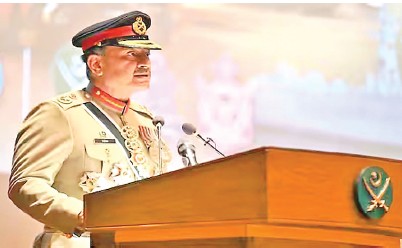
Pakistan Army Chief General Asim Munir finds himself in an increasingly delicate position, caught between competing international expectations and volatile domestic sentiment. At the centre of the dilemma is a request from the United States for Pakistan to contribute troops to an international stabilisation force proposed for Gaza, even as public opinion at home remains overwhelmingly hostile to Israel and deeply sensitive to any perceived compromise on the Palestinian cause.
Munir is preparing for his third visit to Washington in less than six months, where he is expected to meet US President Donald Trump. The visit comes against the backdrop of Trump’s newly unveiled 20-point Gaza peace plan, which has received United Nations approval. The plan envisages the deployment of an International Stabilisation Force (ISF), largely composed of troops from Muslim-majority countries, to oversee a transitional phase focused on reconstruction and economic recovery in Gaza after more than two years of devastating Israeli military operations.
According to reports, the ISF would be headed by a two-star US general, with the United States coordinating the rebuilding process through a headquarters established in Israel. While Washington has stressed that no American troops would be deployed on the ground, the US would take a leading role in shaping the mission. Senior figures close to Trump, including Jared Kushner and Steve Witkoff, are expected to be involved in the broader peace framework. A recent conference in Qatar brought together dozens of countries to discuss the proposed force, including Pakistan, Egypt, Indonesia, Qatar, Jordan, the UAE, Italy, France, the UK and Azerbaijan. Turkey, a vocal supporter of Hamas and a regional rival of Israel, was notably absent.
For Pakistan, participation in such a force raises profound political and ideological challenges. Islamabad has never recognised Israel and has consistently aligned itself with the Palestinian cause since its founding in 1947. Pakistan’s opposition to Israel dates back to 1948, when Muhammad Ali Jinnah rejected the creation of a Jewish state, a position rooted in both ideological solidarity with Muslim nations and broader opposition to Western influence in the region. To this day, Pakistan’s passport explicitly states that it is not valid for travel to Israel, and the country maintains no diplomatic relations with Tel Aviv. Unlike several Muslim-majority states that normalised relations with Israel under the US-brokered Abraham Accords, Pakistan has remained firm in its insistence on a two-state solution, with East Jerusalem as the capital of a future Palestinian state. This stance is deeply entrenched within Pakistani society, cutting across political, religious and ideological lines. The war in Gaza that erupted in October 2023 has further intensified anti-Israel sentiment, with Islamabad repeatedly describing Israeli actions as genocide and accusing Prime Minister Benjamin Netanyahu of war crimes, allegations Israel strongly denies.
This domestic context makes any potential deployment of Pakistani troops to Gaza politically explosive. Islamist parties in Pakistan wield significant street power and have a history of mass mobilisation. Even though the government recently banned a hardline Islamist group known for violent protests over blasphemy laws, its ideology continues to resonate with large segments of the population. At the same time, supporters of former prime minister Imran Khan, who remains jailed and whose party emerged with the largest number of seats in the 2024 elections, remain deeply antagonistic toward Munir and the military establishment.
Since assuming the role of army chief, Munir has projected himself as a devout Muslim and a guardian of Islamic values. Any move perceived as aligning Pakistan with Israel, even indirectly through a stabilisation mission, risks being portrayed by critics as a betrayal of faith and principle. Analysts warn that such a decision could trigger widespread unrest, embolden Islamist groups and further destabilise an already tense political environment. There are also regional considerations. Pakistan could face diplomatic backlash from countries such as Turkey, Oman and Qatar, which have historically taken a more sympathetic view of Hamas and remain critical of Israel’s actions in Gaza. Being seen as complicit in a force tasked with overseeing demilitarisation could strain Islamabad’s relations with these states.
At the same time, refusing to participate carries its own risks. The United States remains a key source of military assistance, diplomatic support and potential investment for Pakistan, which is grappling with economic challenges and security concerns. “Not contributing to the Gaza stabilisation force could annoy Trump, which is no small matter for a Pakistani state keen to remain in his good graces,” said Michael Kugelman, senior fellow at the Atlantic Council. He noted that Washington’s goodwill is crucial for Pakistan’s access to aid and international financial support. Defence analyst Ayesha Siddiqa argues that Pakistan’s military capabilities place additional pressure on Munir.
“There is an expectation that Pakistan will deliver when asked, given its capacity and experience,” she said. Abdul Basit of Singapore’s S. Rajaratnam School of International Studies warned that any escalation involving the stabilisation force could quickly become politically toxic. “People will say Asim Munir is doing Israel’s bidding. It would be naive not to see that reaction coming,” he said. As Munir weighs his options ahead of his Washington visit, the decision he faces is not merely strategic but existential for his leadership. Balancing external expectations with internal legitimacy may prove one of the most consequential tests of his tenure as Pakistan’s army chief.
A major train accident occurred on Tuesday in the Multan district of Pakistan's Punjab province. At least four...

Canadian Foreign Minister Anita Anand will arrive in New Delhi on an official visit on Tuesday. During her...
International human rights organization Amnesty International has expressed serious concern over the alleged arbitrary arrests of prominent leaders...

US President Donald Trump says Vladimir Putin may be more willing than Volodymyr Zelenskyy to reach a peace...
A magnitude 6.1 earthquake struck Panama early Tuesday at a depth of 10 kilometres. The tremor followed a...

US President Donald Trump has indicated the possibility of meeting North Korean leader Kim Jong Un during his...
Aries: The day will be auspicious...