Last Updated: October 17, 2026
Last Updated: October 17, 2026






It is an open secret that there are certain sectors— both at the national and state levels—where there is significant scope for corruption and the circulation of black money. No matter how many facilitation centers are established within the bureaucratic maze, ways to engage in corrupt practices are invariably found. Furthermore, the real estate sector—despite having regulatory bodies— remains prone to corruption. News frequently emerges of high-ranking officials compromising their integrity, with vast hoards of wealth—akin to the fabled treasury of Kubera—being recovered from their homes. On Wednesday, the Enforcement Directorate (ED) conducted a raid lasting over 48 hours at the GMADA office in Mohali, Punjab. Raids were also conducted at the residences of a senior IAS officer and the son of a politician, revealing massive, illicit wealth. Reportedly, cash amounting to ₹2.5 crore, over a kilogram of gold and silver jewelry, and land documents were recovered from the IAS officer’s bungalow. Who could possibly object if the ED or anti-corruption squads conduct raids and apprehend alleged offenders in an effort to root out corruption? However, criticism inevitably arises when the use of these agencies shifts from genuine corruption eradication to an attempt to instill fear and terror among political opponents—especially when elections are imminent in that region. Such criticism is voiced not just in one state but across various parts of the country, noting that the ED or other anti-corruption agencies often begin conducting raids whenever elections draw near. Raids take place and arrests are made, yet the judicial system often complains that proper charge sheets, supported by adequate evidence, are not filed in a timely manner. The courts maintain that an accused person has a right to bail unless a substantiated charge-sheet is filed against them or they are remanded to custody for investigation. There are precedents where politicians arrested on charges of corruption—or allegations related to abetting drug mafias—were granted bail after investigative agencies failed to file a substantiated charge-sheet within months. Under the penal code, release on bail signifies temporary relief; the trial proceeds, and the accused retains that status—and the associated stigma—until the final verdict is delivered. On the other hand, the law holds that an accused is not a convict; therefore, they remain free to carry out their political activities while on bail. This explains why our Parliament and state legislative assemblies are increasingly populated by leaders with tainted reputations. The solution lies in conducting daily hearings for such offenders in fast-track courts and delivering verdicts within a fixed timeframe—whether resulting in acquittal or conviction. However, this rarely happens; consequently, those accused of corruption often equate bail with total exoneration and immediately resume their social and political activities. We do not argue against exposing corrupt individuals; we merely contend that if they are exposed, there must be a mechanism for a swift verdict, rather than allowing cases to drag on for months or years. This approach would ensure that the anti-corruption drive remains free from any taint of political partisanship.
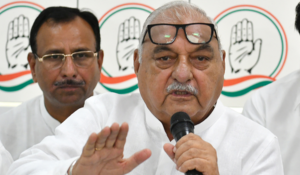
Chandigarh: Haryana Leader of the Opposition (LoP) Bhupinder Hooda on Saturday raised concerns over the state’s financial position,...
Singrauli: Mild earthquake tremors were felt in the Singrauli district of Madhya Pradesh on Saturday, India Meteorological Department...

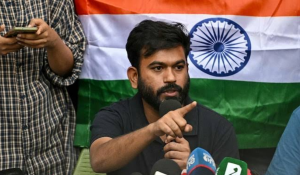
New Delhi: Cockroach Janta Party (CJP) founder and Convener Abhijeet Dipke was on Saturday granted conditional bail by...
Mumbai: Actor Rajpal Yadav called his wife Radha ‘the diamond of the family’ in a sweet birthday wish...

New Delhi: Trouble is brewing within Jaish-e-Mohammed, which has struggled to regroup in the aftermath of Operation Sindoor...
New Delhi: Delhi Chief Minister Rekha Gupta on Saturday flagged off primary and secondary waste collection and transportation...

Aries: The day will be auspicious...