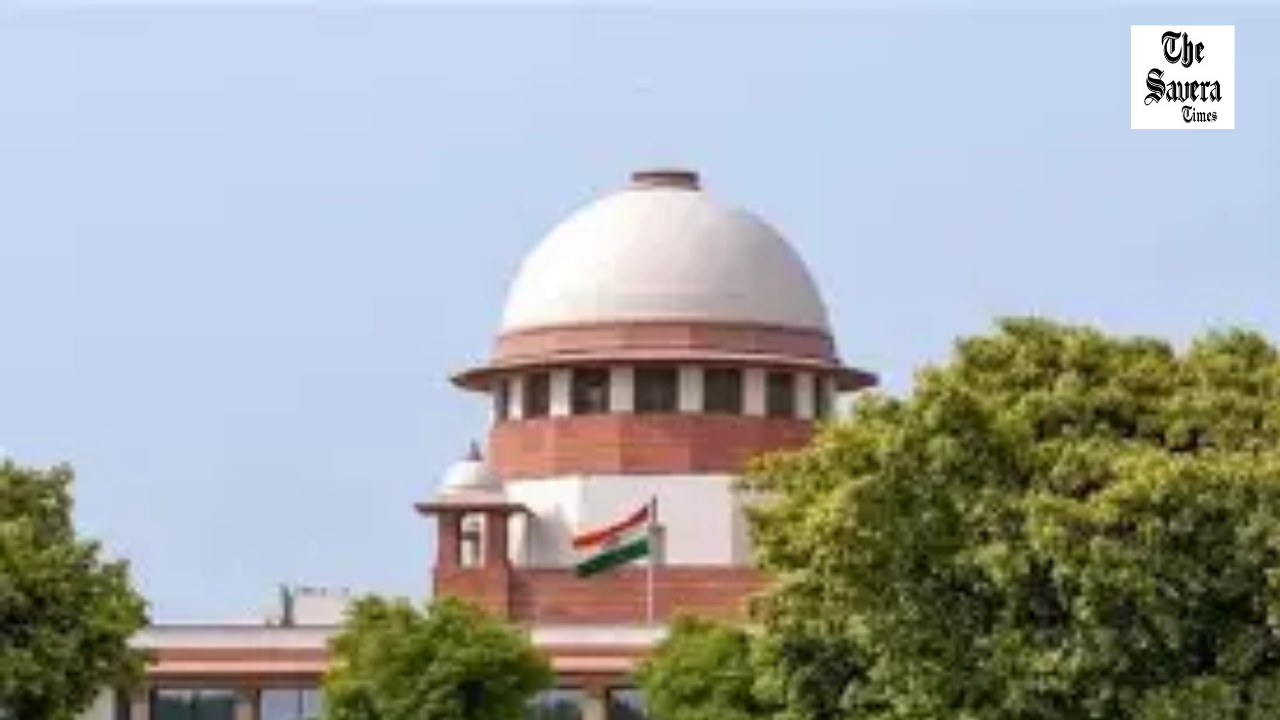
The Supreme Court of India has declined to entertain a plea challenging the Centre’s circular related to Vande Mataram, effectively allowing the directive to remain in force. The decision comes amid ongoing debates around the observance of the national song in official and public spaces.
A bench of the apex court refused to interfere with the government’s policy, indicating that the matter did not warrant judicial intervention at this stage.
What the plea sought
The petition had questioned the Centre’s circular, which encouraged or mandated the singing or playing of Vande Mataram on certain occasions. The petitioner argued that such directives could infringe upon individual rights and freedom of expression, particularly if compliance is perceived as compulsory.
The plea sought either the quashing of the circular or clear guidelines to ensure that participation remains voluntary.
Court’s stance on the issue
While declining to hear the plea, the Supreme Court signalled that such matters fall largely within the domain of policy decisions taken by the government. The court did not find sufficient grounds to examine the circular under its constitutional jurisdiction.
Legal experts note that the court’s refusal to intervene does not necessarily validate or invalidate the circular but simply reflects judicial restraint in policy-related matters.
Background of the circular
The Centre’s circular on Vande Mataram is part of broader efforts to promote awareness and respect for national symbols. Over the years, similar directives have been issued to encourage the singing of the national song on significant occasions.
However, such measures have often sparked debate, with critics raising concerns about personal choice and the potential for coercion.
Ongoing debate over national song
The issue of Vande Mataram has long been a subject of political and legal discourse in India. While many view it as a symbol of patriotism and national pride, others argue that participation should not be enforced.
Previous court rulings have generally upheld the importance of respecting national symbols while also emphasising that citizens cannot be compelled to express patriotism in a particular manner.
Reactions expected from stakeholders
The Supreme Court’s decision is likely to draw varied reactions from political parties, civil society groups, and legal experts. Supporters of the circular may see the move as a reaffirmation of government policy, while critics may continue to push for clearer safeguards on individual freedoms.
The development also comes in the backdrop of recent political controversies related to Vande Mataram, further intensifying the debate.
Legal and policy implications
The court’s refusal to entertain the plea leaves the Centre’s circular intact, at least for now. It also underscores the judiciary’s approach of limiting interference in policy matters unless there is a clear violation of constitutional provisions.
As discussions continue, the balance between promoting national identity and protecting individual rights is expected to remain at the centre of the debate.