Last Updated: October 16, 2026
Last Updated: October 16, 2026





-Abhishek Vij
This year in India can be called the Vande Mataram Year, imbued with national spirit. The Government of India has declared Vande Mataram as the national song. Written in Bankim Chandra Chatterjee’s novel “Anand Math,” this song is a hymn to Mother India. The song originally consists of six verses. Before independence, the Congress party, while considering Vande Mataram at its General Assembly, accepted only the first two verses as the national song. This has been the practice for many years. Now, the Government of India has not only made the singing of this national song mandatory, but also mandates that this six-verse song be sung in its entirety. Violations of this rule are punishable.
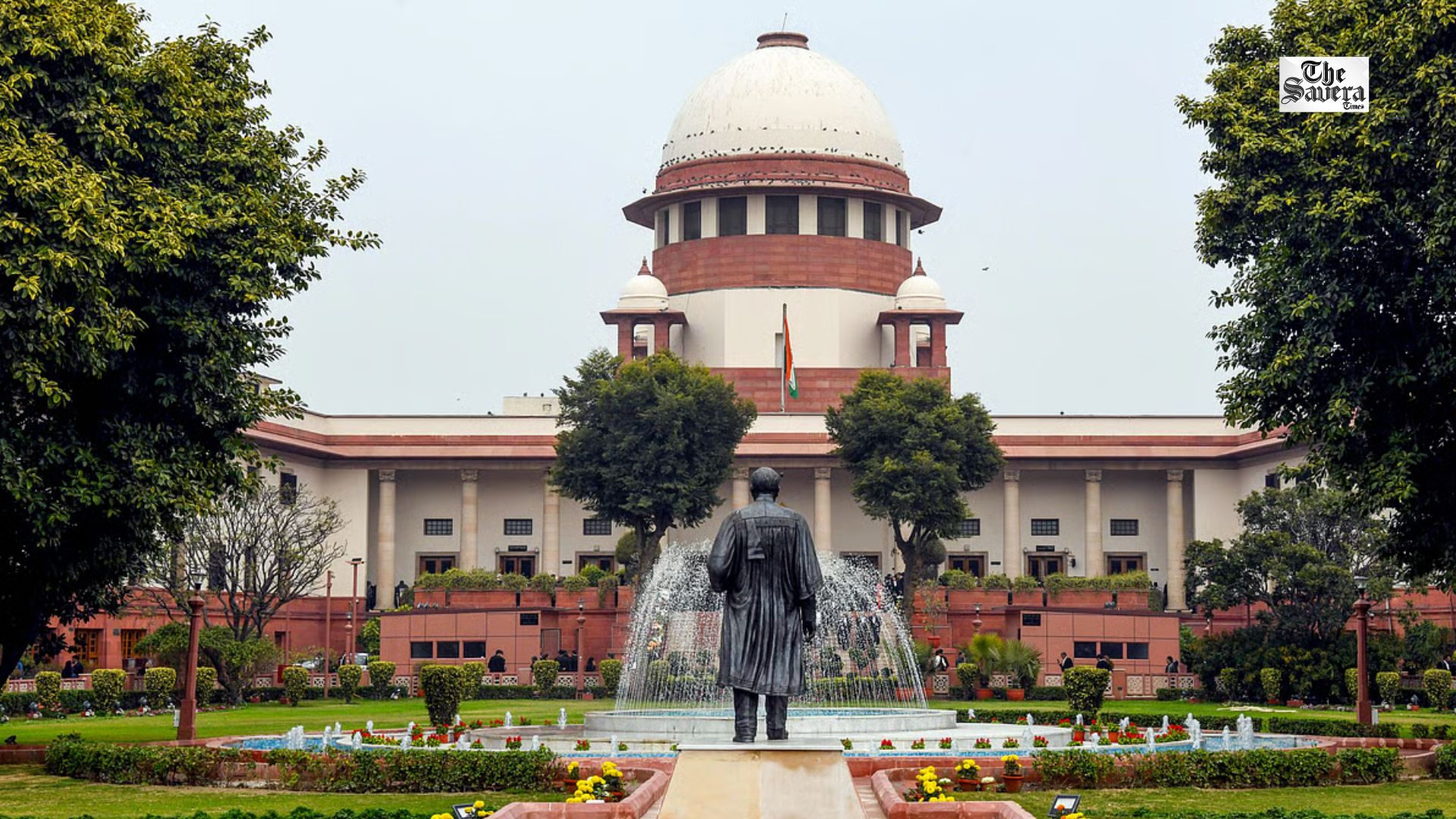
Citing religious freedom, several opposition parties, including the Congress, and Muslim organizations refused to sing the entire six stanzas of the national anthem. This became a point of controversy. In the exchange of accusations and counter-accusations, the ruling party stated that if an incomplete national anthem is sung by individuals or political parties at any event, it could be penalized. Congress was heavily criticized for this stance. The matter eventually reached the Supreme Court. Karnataka musician T.M. Krishna filed a petition before a bench of Chief Justice Surya Kant, Justice Joymalya Bagchi, and Justice V. Mohanna, challenging the penalty for not singing the entire song. The petition stated that the last four stanzas of the national anthem contain religious references. Therefore, forcing its singing raises questions about religious freedom and secularism. The petition also stated that the amendment’s definition of the national anthem is unclear.
Chief Justice Surya Kant, hearing the case, disagreed, stating that anyone familiar with history knows what the national anthem is. However, the petition, citing a 1986 decision, urged the court to examine whether religious freedom rights are protected. The petition challenged the amendments to the law and the Home Ministry’s mandatory order.
Solicitor General Tushar Mehta urged the court not to sensationalize the issue by issuing a notice. In a meeting on Tuesday, the Supreme Court clarified its stance. The court refused to consider whether the national anthem should be limited to two verses or expanded to six, stating that it embodies national aspirations and is therefore not the court’s job to decide. However, the court did agree that not singing it in its entirety should not be considered a punishable offense.
The Supreme Court stated that punishment simply because someone refused to sing or fully sing Vande Mataram based on conscience or religious belief is not justified. Citing a 1986 case, the court noted that children in Kerala had refused to sing Vande Mataram due to religious beliefs. The Supreme Court had protected them from punitive action. The court stated that it is not our job to determine national aspirations, but if any compulsion violates the religious rights of any group, we will intervene and will not allow punishment in the name of violation of fundamental rights. The court advised singing Vande Mataram based on the voice of one’s conscience.
New Delhi: All India Students’ Association (AISA) National President Neha Bora was detained by the Delhi Police on...
New Delhi: The Directorate of Enforcement (ED) has provisionally attached assets and proceeds of crime worth Rs 136.44...

Mumbai: Jindal Saw on Friday reported a steep decline in its earnings for the second quarter of FY27,...

Abu Dhabi: External Affairs Minister (EAM) S Jaishankar held a meeting with Ras Al Khaimah Ruler Sheikh Saud...
New Delhi: In a fresh development in the former model and actress Twisha Sharma death case, the Supreme...

Mumbai: Benchmark equity indices rallied in a consecutive day on Friday due to falling oil prices and a...

Aries: The day will be auspicious...