Last Updated: October 21, 2026
Last Updated: October 21, 2026





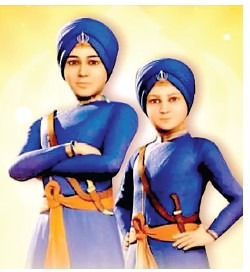
Every year on December 26, India observes Veer Bal Diwas to commemorate the martyrdom of the younger sons of Guru Gobind Singh — Sahibzada Zorawar Singh and Sahibzada Fateh Singh — who were executed by the Mughal administration in Sirhind in 1705. Barely nine and seven years old, the two children were bricked alive for refusing to abandon their faith. Their sacrifice, stark in its cruelty and luminous in its courage, occupies a unique place in India’s moral and civilisational memory.
The commemoration of Veer Bal Diwas is not merely an act of remembrance. It is an invitation to re-examine how societies define bravery, how power confronts conscience, and how values are transmitted across generations. In a time when heroism is often reduced to spectacle and instant validation, the story of the Sahibzadas offers a quieter, more unsettling lesson — that courage can be principled, silent, and deeply inconvenient to authority. The events that led to the martyrdom of the Sahibzadas unfolded during one of the most turbulent periods of Indian history. The Mughal state, under Aurangzeb, was engaged in a prolonged confrontation with the Sikh Gurus, whose insistence on religious freedom and moral autonomy posed a challenge to imperial orthodoxy. After the evacuation of Anandpur Sahib, Guru Gobind Singh’s family was separated during a hazardous crossing of the Sirsa river.
The younger Sahibzadas, along with their grandmother Mata Gujri, were captured and taken to Sirhind. What followed was not merely an act of political suppression, but an assertion of absolute power over belief. The children were offered life and privilege in exchange for conversion. Their refusal — guided by the teachings of their father and the moral clarity imparted by their grandmother — was met with a punishment designed to terrorise and deter. Yet history records that the act achieved the opposite: it immortalised resistance rooted in conviction.
Why does this episode continue to matter more than three centuries later?
First, the story of the Sahibzadas challenges modern assumptions about agency and age. In contemporary discourse, childhood is often framed as a phase of dependence and vulnerability alone. Veer Bal Diwas reminds us that children are also moral beings, capable of clarity and courage when nurtured within strong ethical frameworks. This does not romanticise suffering; rather, it underscores the responsibility of societies to transmit values with seriousness and depth.
Second, the martyrdom highlights a fundamental tension between state power and freedom of conscience — a theme that remains globally relevant. The Sahibzadas were not rebels in arms; they were resisters in belief. Their execution reveals how authoritarian systems often perceive dissenting identities as threats to be erased rather than voices to be engaged. Remembering them today reinforces the constitutional promise that faith, belief, and conscience must remain beyond the coercive reach of the state.
Third, Veer Bal Diwas offers a corrective to selective historical memory. Sikh history, particularly its encounters with persecution, has often been reduced to footnotes or ceremonial references. A meaningful observance demands more than symbolic gestures; it requires integrating such histories into mainstream narratives of India’s freedom struggle and civilisational ethos. The courage of the Sahibzadas belongs not to one community alone, but to the shared moral inheritance of the nation.
Importantly, the significance of Veer Bal Diwas should not be confined to religious identity. The Sahibzadas’ sacrifice was anchored in universal values — dignity, freedom of belief, and moral steadfastness. These values resonate across traditions and geographies. In an era marked by rising intolerance, polarisation, and the shrinking space for dissent, their story acquires renewed urgency.
However, commemoration must avoid the trap of politicisation. When historical memory is reduced to slogans or used to sharpen contemporary divides, it risks hollowing out the very values it seeks to honour. The legacy of the Sahibzadas calls for introspection, not appropriation; for ethical reflection, not competitive nationalism.Educational institutions, in particular, have a critical role to play. Veer Bal Diwas should be an occasion to engage students with history as lived experience — exploring questions of choice, fear, courage, and consequence. Teaching this episode through discussion rather than didacticism can help young citizens understand that moral strength is not inherited automatically; it is cultivated through example and reflection.
At a societal level, the observance invites a broader conversation on how India treats its minorities, dissenters, and the vulnerable. Remembering children who stood firm against coercion should compel us to ask uncomfortable questions about justice, tolerance, and empathy in our own times. Memory, after all, is meaningful only when it informs action.Veer Bal Diwas is not about glorifying martyrdom. It is about recognising the cost of conscience and the quiet heroism of standing one’s ground when surrender appears easier. The Sahibzadas did not choose death; they chose dignity, knowing fully what it might entail.As India marks this day, the challenge lies in ensuring that remembrance translates into resolve — resolve to protect freedom of belief, to resist the abuse of power, and to nurture courage rooted in values rather than force. In remembering the youngest martyrs of our history, we are reminded that the strength of a nation is ultimately measured not by the might of its rulers, but by the moral courage of its people — even, and especially, its children.
Reduced water levels at Har Ki Pauri and other Haridwar ghats have inconvenienced pilgrims during the Upper Ganga...

Six people returning from a Dussehra Mela were seriously injured when a car hit them on National Highway...

A bus travelling from Pachiound to Ramnagar fell into a gorge at Gulli Gula in Udhampur district. Nine...

Start your day with The Savera Morning Brief, bringing you the latest news from India and around the...

Union Home Minister Amit Shah will pay tribute to police martyrs at the National Police Memorial in New...

Four more people, including two women, have been arrested in the Tiger Shroff firing case. Delhi Police are...
Aries: The day will be auspicious...