Last Updated: September 30, 2026
Last Updated: September 30, 2026





Abhishek Vij
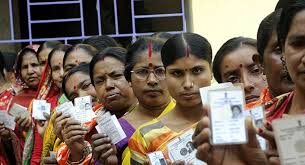
Amidst the slanderous campaigning between the ruling and opposition parties, bitter dialogue, and caste and religious slogans, the record voter turnout in West Bengal and Tamil Nadu on Thursday, April 23, proved how much faith Indian voters have in their democratic traditions.
The temperature was also soaring on the day of voting. Regardless of the weather, voters reached outside the polling stations in long lines since morning. The challenge was to choose the right leadership, hence the voters did not hold back. The voting percentage shows that voters belonging to every section came out of their homes to vote, only then such a huge turnout was possible.
West Bengal recorded a voter turnout of 92.86 percent. Such a turnout has never been seen anywhere else, not just in West Bengal but in India. We can only cite the example of 2018, when the Tripura Assembly elections saw a turnout of just over 91 percent. Whether this was a response to the issue of verifying the authenticity of the SIR or a concern for the safety of the Bengali people, the turnout was phenomenal. The Prime Minister noted that despite such a high voter turnout, this was the first election in Bengal in 50 years with minimal violence. Tamil Nadu, on the other hand, was no less. There is a strong advocacy for linguistic divisions and the monopoly of southern languages in Tamil Nadu. This is also a challenge to prevent North India from dominating South India. On one side was Stalin’s Dravida Munnetra Kazhagam (DMK), and on the other, the BJP contested the elections in alliance with the AIADMK. However, even in such hot weather, people in Tamil Nadu enthusiastically came forward to exercise their voting power, achieving a voter turnout of 85.14 percent.
Chief Election Commissioner Gyanesh Kumar said that the voter turnout in West Bengal and Tamil Nadu is the highest in India. Furthermore, while there is considerable criticism these days about women’s reservations and the lack of women’s rights, the women’s voting percentage in both states was higher than that of men in these elections. Bengal is notorious for sporadic violence during elections, but this time the voting was violence-free. Now let’s discuss the opinions of election experts. Whenever there is a high voter turnout, election experts assess public sentiment by looking at the voter turnout.
Now, Bengal and Tamil Nadu have seen record voter turnout. It’s often said that high voter turnout leads to a change in government, while low voter turnout indicates a neutral public, a disregard for the current situation, and a desire to let things be as they are. But it seems that even such predictions will demand a rethinking with the changing times. Whatever the predictions, whatever the outcome, the Indian public has proven: they are aware of their voting power. They make their own decisions, and they don’t share their opinion with anyone, either before or after voting. This is why pre-election predictions are failing miserably.
This maturity of the Indian voter cannot be praised enough. Today, when the tendency of leaders in major countries to enslave the Constitution and practice authoritarianism is rising, we hail Indian democracy because achieving a record-breaking 92.86 percent voter turnout in such a hot climate in such a large and populous country is no small feat. Therefore, as long as the common people of India remain committed to democratic traditions, they cannot be misled by misleading propaganda. The country should be satisfied with the electoral process and the dedication of its voters, regardless of the propaganda or misinformation that may occur.
Pakistan-based LeT terrorist Mohammad Asif alias Hashim Moosa, wanted in the Pahalgam terror attack case, was killed in...

The Supreme Court has ruled out both a complete firecracker ban and unrestricted 24-hour use, indicating that permissible...
The Centre has approved higher MSP for all mandated Rabi crops for the 2027-28 marketing season, with safflower...
Traders’ organisations have withdrawn the October 2 “No UPI Day” protest after meeting Finance Minister Nirmala Sitharaman over...

Ahmedabad: A Nigerian national allegedly acted as a link between a Gujarat-based wanted accused and a wider drug...
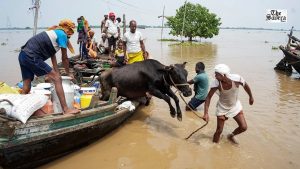
Flood victims in West Champaran protested against local MPs and MLAs during Samrat Choudhary’s visit as the Gandak...
Aries: The day will be auspicious...