Last Updated: November 19, 2026
Last Updated: November 19, 2026





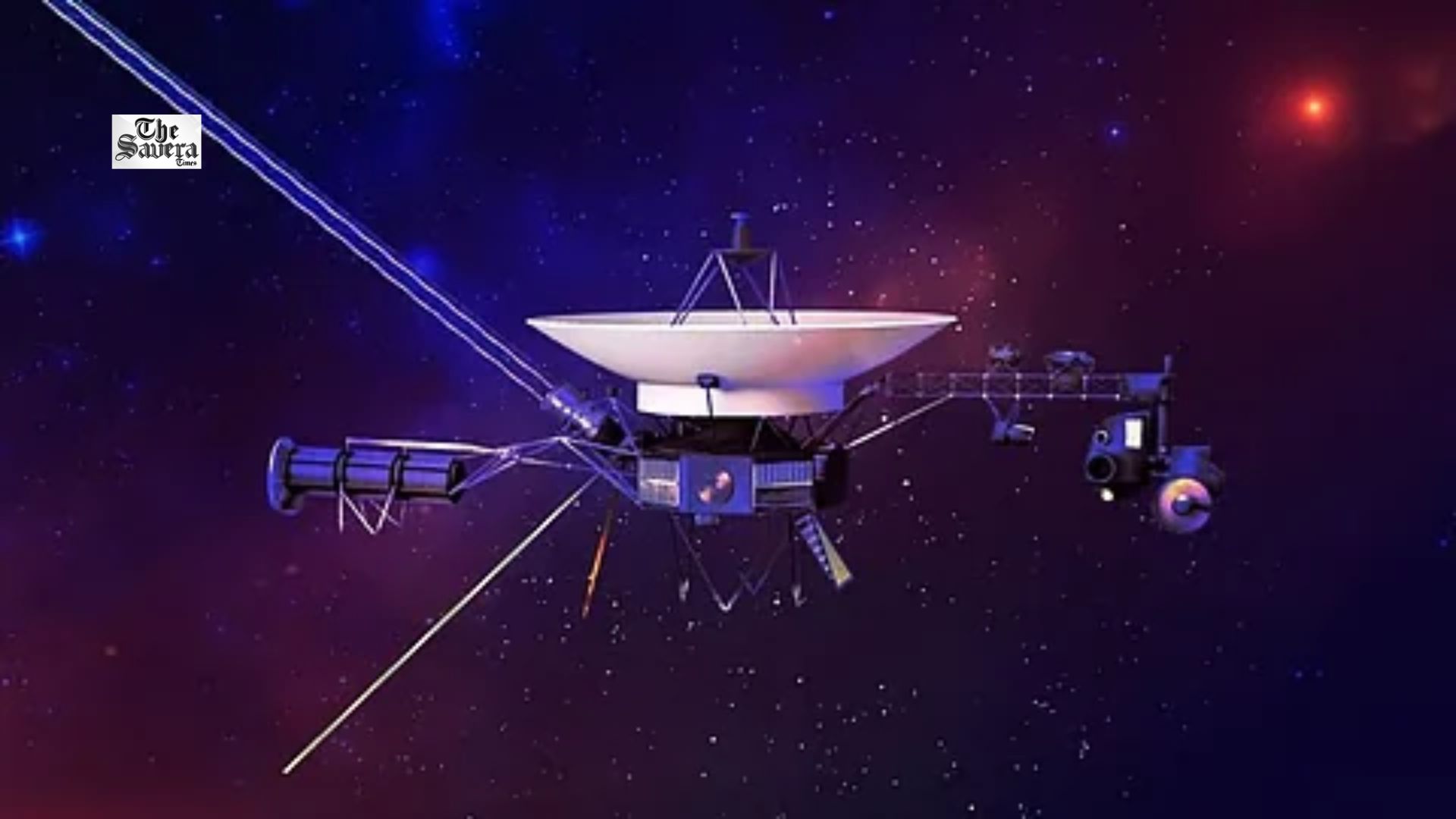
Voyager 1 has travelled 25.9 billion kilometres from Earth, survived far beyond its planned mission and continues to send data from interstellar space despite dwindling power NASA engineers have kept the aging spacecraft operational despite dwindling power, ensuring its continued contribution to space science. At 5.16 am, Eastern Standard Time (3.46 pm, Indian Standard Time) on November 18, Voyager 1 became the first human-made object to travel one light-day from Earth, reaching a distance of about 25.9 billion kilometres. A message sent to Voyager 1 now takes 24 hours to reach the spacecraft. A reply takes another 24 hours to get back to Earth. That is a two-day wait for a conversation with a machine launched nearly half a century ago. US space agency NASA confirmed the milestone on Wednesday afternoon in a post from one of its official handles on social media platform X (formerly Twitter). Voyager 1 was never designed for a journey this long. When the spacecraft lifted off on September 5, 1977, its mission was expected to last only a few years. It was built to study Jupiter and Saturn, taking advantage of a rare alignment of the outer planets. Nearly 50 years later, it is still sending data to Earth. Its continued operation is the result of careful engineering, but also of generations of scientists and engineers finding ways to keep it working.
Non-binding Wildlife for Climate Declaration seeks greater recognition of how wild animals contribute to carbon storage, ecosystem resilience...

A healthy animal does not need antibiotics, and a healthy crop does not need an antimicrobial pesticide. It...

Rome, Italy: Union Commerce and Industry Minister Piyush Goyal on Wednesday said India and Italy are working towards...

US President Donald Trump arrived in Shenzhen, China on Wednesday to attend the Asia-Pacific Economic Cooperation (APEC) Summit.

The US has proposed to further tighten the process for obtaining employment-based green cards for foreign workers.

The body found inside a burning car in Langley, British Columbia, Canada last month has been identified. The...

Aries: The day will be auspicious...