Last Updated: October 18, 2026
Last Updated: October 18, 2026





-Abhishek Vij
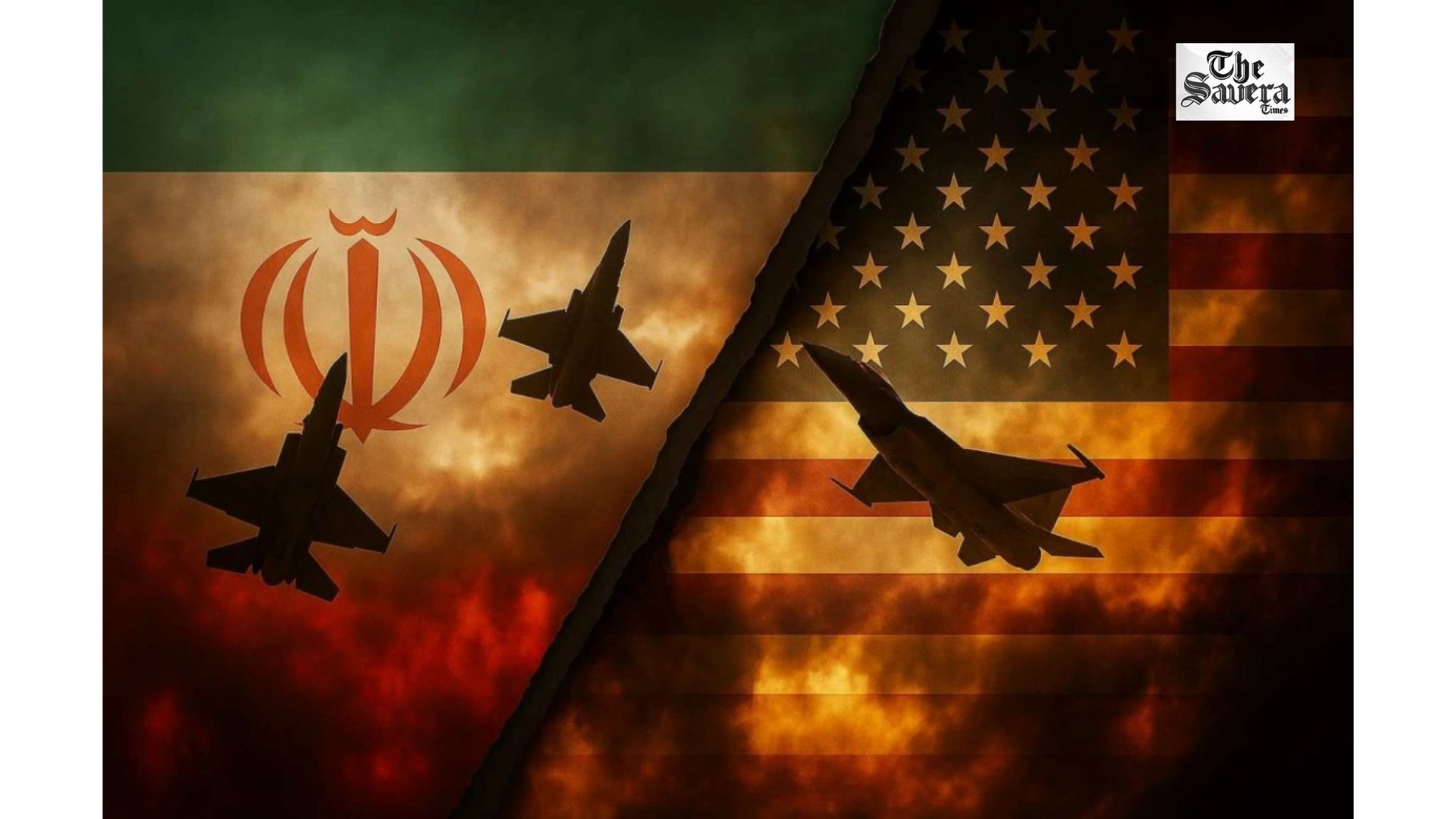
A conflict has erupted in West Asia involving the United States, Israel, and Iran. For the past 20–22 days, a formal three-month ceasefire has been declared in the ongoing hostilities between the U.S. and Iran, and peace proposals—accompanied by specific conditions—are being exchanged between the two sides. However, if self-interest is prioritized over peace, the true intent is not to establish harmony, but rather to assert dominance; this is precisely what is unfolding now. The current atmosphere suggests that the stance of both Israel and the U.S. toward Iran is becoming increasingly hardline. Netanyahu is issuing threats to annihilate Iran, while Donald Trump—whose primary objective is to seize Iran’s uranium—has now begun openly vowing to teach Iran a lesson. U.S. Secretary of State Marco Rubio has also stated that the outcome will be either a favorable agreement with Iran or Iran’s total destruction. Israel, too, has issued a threat to destroy Iran within a month. Tensions at the Strait of Hormuz persist unabated. The U.S. launched attacks on Iranian boats and missile sites near Hormuz; in retaliation, Iran shot down a U.S. MQ-9B drone. Meanwhile, Israel has attacked the Gaza Strip, killing a Hamas commander. The conditions being put forward by the U.S. and Iran appear to leave absolutely no room for compromise. Iran has presented five demands that do not seem unreasonable. Ibrahim Azizi, Iran’s head of security and foreign policy, states that Iran demands a cessation of hostilities on all fronts—including in Lebanon—guarantees against future attacks, the lifting of the naval blockade, the implementation of Iranian protocols at the Strait of Hormuz (meaning Iran should be permitted to levy taxes on containers passing through the strait), the lifting of sanctions on Iranian oil sales, and the return of all seized Iranian assets. Trump’s response to these demands has been nothing more than empty bluster and intimidation. Trump has recently imposed a condition regarding Iran: that, under the Abraham Accords, all Gulf nations—along with Pakistan—must formally recognize the existence of Israel. However, why would staunchly Islamic nations grant recognition to Iran, even though they all worship the same God? Ironically, Pakistan—the very nation that helped broker these accords—was the first to refuse to recognize Israel. Thus, yet another of Trump’s demands has been cast aside. The Gulf nations are gradually drifting toward a horrific, interminable war. While this conflict is wreaking terrible destruction upon both Iran and Israel, nations across the globe—including India— are left scrambling for adequate energy supplies. In a matter of moments, crude oil prices surged from above $70 per barrel to cross the $100 per barrel mark. Following the conclusion of the assembly elections in five states, the Indian government has effectively deregulated fuel prices, leaving them entirely at the discretion of the oil companies. In just the last two weeks, the prices of petrol and diesel have been hiked four times. CNG prices, too, have risen by a cumulative Rs 6 over the past fortnight. The massive surge in the cost of commercial gas cylinders has thrown the country’s food service sector into utter disarray. While dining out at hotels and restaurants has certainly become more expensive, the cost of a meal on the average household’s plate is now rising as well. Meanwhile, LPG supplies have yet to return to normalcy. The current reality is that, despite the mere formalities of peace talks between the U.S. and Iran, hostilities persist; conscious of its status as a superpower, the United States refuses to withdraw from this conflict in disgrace—it seeks to exit only as a victor. The unyielding regime in Iran, for its part, remains equally unwilling to capitulate; consequently, there appears to be no end in sight to this devastating war
A major fire at Canadian Forces Base Wainwright in Alberta has left several people dead and others injured....

Paris: France witnessed widespread unrest on Saturday as demonstrations over the rising cost of living, deteriorating public services...

Azad M. Madni, an Indian-American engineer and USC professor who grew up in Mumbai, has won the 2026...
Nairobi: Kenya’s Ministry of Health on Saturday confirmed four new cases of Ebola Bundibugyo virus disease, bringing the...
Increasing Houthi attacks on Saudi Arabia are testing Pakistan’s ability to defend Riyadh without affecting its ties with...
Nepal is seeking substantial financial assistance from India ahead of Prime Minister Balendra Shah’s proposed visit to New...
Aries: The day will be auspicious...