Last Updated: October 21, 2026
Last Updated: October 21, 2026






Amid escalating geopolitical tensions in the Middle East, leading industry bodies and business leaders have expressed deep concern over the economic fallout of a prolonged conflict, warning that any further escalation could severely impact global economies and the common man.
Top industry leaders have urged global powers to exercise restraint, emphasising that war-like situations disrupt economic stability and create uncertainty across markets. They stressed that continued conflict could negatively affect trade, supply chains, and investor confidence.
Business leaders highlighted that the ripple effects of war are felt far beyond the battlefield, impacting everyday life through rising costs and reduced economic activity.
Experts pointed out that the ongoing conflict has already begun to affect global economic conditions. According to energy and economic analysts, disruptions in the Middle East a key energy-producing region could trigger widespread inflation and slow economic growth worldwide.
The situation has raised concerns about a potential economic shock similar to past global crises, particularly due to volatility in oil and gas markets.
One of the biggest worries for industry leaders is the surge in crude oil prices caused by geopolitical instability. Higher oil prices increase transportation and manufacturing costs, which are eventually passed on to consumers.
Reports indicate that disruptions in critical supply routes like the Strait of Hormuz through which nearly 20% of the world’s oil supply passes — have intensified fears of supply shortages and price spikes.
This directly impacts countries like India, which rely heavily on oil imports, leading to higher fuel prices and inflation.
Industry leaders warned that the ultimate burden of such economic disruptions falls on the common man. Rising fuel costs can lead to increased prices of essential goods, including food, transportation, and utilities.
Global reports have already highlighted that conflicts in the region are pushing up the cost of living, affecting households across countries.
They stressed that inflationary pressures could reduce purchasing power and strain household budgets, particularly in developing economies.
The conflict has also raised concerns about disruptions to global supply chains. Industries dependent on imports of raw materials, energy, and logistics could face delays and increased costs.
Economists warn that prolonged instability could weaken business sentiment and slow down investments, further affecting economic growth.
Manufacturing sectors, in particular, may face production challenges due to rising input costs and logistical bottlenecks.
Industry bodies have strongly advocated for diplomatic solutions to prevent further escalation. They emphasised that stability is crucial for economic growth and sustainable development.
Global leaders and organisations have also echoed similar concerns, warning that continued conflict poses a “major threat” to the global economy and could lead to long-term economic damage.
While markets have shown signs of volatility in response to geopolitical developments, the long-term outlook remains uncertain.
Industry experts believe that if tensions ease, economies could stabilise quickly. However, a prolonged conflict may lead to sustained inflation, slower growth, and financial instability.
Good Evening Viewers! Catch up on the day's biggest stories with The Savera Times Evening Bulletin. Get the...

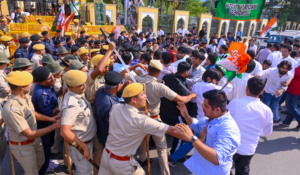
Congress leaders continued their protest outside the Jaipur Police Commissionerate on Tuesday, demanding the registration of a zero...
On the auspicious occasion of Vijayadashami, Prime Minister Narendra Modi on Tuesday called on the countrymen to unite...
A historic milestone was achieved on Tuesday in the expansion of Chhattisgarh's rail networkA historic milestone was achieved...

Model Shraddha Dubey, one of the main accused in the death of Lucknow businessman Shiv Sharma, has been...

Rashtriya Swayamsevak Sangh (RSS) chief Mohan Bhagwat on Tuesday called for strengthening national unity, social harmony, indigenous practices...
Aries: The day will be auspicious...