Last Updated: October 20, 2026
Last Updated: October 20, 2026





Rinchen Angmo Chumikchan
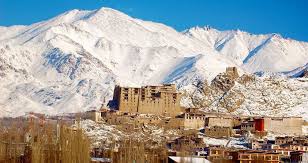
An unusually warm winter, combined with uneven snowfall, has marked the 2025-26 season in Ladakh, raising concerns about changing weather patterns in the high-altitude region.
Data from the India Meteorological Department (IMD) shows that Leh and Kargil recorded some of their warmest winters in years, with average temperatures significantly above long-term norms.
Sonam Lotus, director of the IMD in Ladakh, says that over the past eight years (2019-2026), Leh has recorded an average winter temperature of -4.3 degrees Celsius (°C). This winter, however, the average temperature rose to -2.3°C (about 2°C higher than the long-term average) making it the warmest winter in Leh in the period.
A similar pattern was recorded in Kargil. Over the past 14 years, the average winter temperature there has been -4.9°C. This winter, it rose to -1.4°C or around 3.5°C above normal, making it the warmest in Kargil over 2012 to 2026.
Uneven snowfall and shifting signals
Snowfall patterns have also been uneven. According to Lotus, winter in Ladakh spans December to February. Over the past 14 years, Leh has received an average winter snowfall of 15.3 centimetres (cm). This year, however, the region recorded only 4.2 cm (3.3 cm in January and 0.9 cm in February) amounting to just 27.7 per cent of the seasonal average, a deficit of 72 per cent.
In contrast, Kargil recorded above-normal snowfall, largely driven by heavy precipitation in January. The district’s average winter snowfall over the past seven years is around 17 cm, but this winter it received 42.2 cm, which is nearly 248 per cent higher than
“Ladakh is a mountainous cold desert, and winter snowfall is crucial for irrigation, drinking water, agriculture and horticulture,” Lotus says. “Although a single year of reduced or excess snowfall cannot be attributed solely to climate change, recurring patterns may indicate a changing climate. Globally, mountain regions are among the most sensitive indicators of climate change.”
Farming patterns under pressure
Kunzang Lamo, a scientist at KVK-Leh, SKUAST-K, says fruit-growing patterns in the region are beginning to change. Temperate fruits such as apricot, apple and cherry, which were traditionally grown in lower belts, are now shifting to higher elevations, she says.
Apricots grown in the Sham belt were once known for their quality, but pest infestations have increased in recent years, affecting both apple and apricot crops. “Good-quality apricots are now being grown around Leh city, in areas such as Shey, Thiksey and Phyang,” she explains. “Earlier, apricots in these areas often remained unripe. Now farmers are getting better-quality fruit.”
These changes are closely linked to winter temperatures. “All temperate fruits require chilling hours, typically between 0°C and 7°C, to break dormancy,” she says. “Most varieties need around 500 to 1,500 hours.”
Traditionally, these chilling hours were met during winter. As winters become warmer, these chilling requirements are not always met. “When that happens, trees may come out of dormancy late or buds break irregularly, affecting production,” she says. At the same time, warmer spring temperatures are triggering earlier flowering.
“Our weather has become highly unstable,” she adds. “Sudden cold waves can occur, increasing the risk of frost injury, and farmers can lose up to 50 per cent of their production.” Over the past two years, yields in the Sham belt have declined significantly, partly because earlier flowering has made crops more vulnerable to frost.
Changing temperatures are also affecting vegetable cultivation. “Warm-season vegetables that were earlier grown in greenhouses are now facing stress even inside these structures,” she says. “They suffer flower abortion or fruit drop, reducing production.”
At the same time, some crops are benefiting. “Capsicum, brinjal and tomatoes can now be grown in the open in lower belts, which was not possible earlier,” she says. “In higher areas, tomatoes now ripen fully, while other vegetables continue to perform well in protected structures.”
Beyond crops, the region’s water systems are also under strain. Agriculture in Ladakh depends heavily on glacier- and snowmelt-fed streams due to minimal rainfall. Rising temperatures and declining snowfall are accelerating glacier retreat and reducing glacier mass.
As a result, more meltwater is being released during autumn and winter, leading to early discharge. By spring when the irrigation demand is highest, stream flows are often significantly reduced. This creates acute water shortages during the early cropping season.
Adapting to shifting conditions
To cope with changing weather patterns, farmers in Ladakh are increasingly turning to hybrid crop varieties. “Hybrid high-yielding varieties tend to remain more stable in fluctuating environments,” says Lamo. “Open-pollinated crops, on the other hand, often face problems such as bolting because of temperature fluctuations during the growing season.”
She adds that the focus is now shifting towards climate-resilient crops. “Ladakh does not have plant breeders. We obtain varieties from outside, evaluate them under local conditions, select the best-performing ones and then promote them among farmers.”
Temperature variability is also affecting grain production. “In Ladakh, grains are harvested at the beginning of autumn. But when temperatures rise sharply during harvest, crops are forced into early maturity,” she explains. “This can result in shrivelled grains, which has been observed in several cases.”
At the same time, earlier spring warming is prompting farmers to sow crops sooner. “But because the weather is erratic, cold waves sometimes follow, leading to frost injury and crop damage,” she says. “Ideally, sowing or transplanting should be done after May 15, when temperature fluctuations are relatively lower.”
Experts say the ecological impacts of warmer winters in Ladakh may not be immediately visible, but could become significant over time. Tsewang Namgail, director of the Snow Leopard Conservancy-India Trust, says cold-adapted species are particularly vulnerable. “The impact of a warmer winter cannot be quantified immediately,” he says. “But species such as the snow leopard and the wild yak are adapted to extremely low temperatures, and even slight warming can affect them and lead to physiological stress.”
Rising temperatures are also driving broader ecological changes. Warming accelerates glacier melt across the Himalayas, leading to the formation of glacial lakes that may eventually breach and cause flooding in mountain valleys.
Research increasingly shows that species are moving upslope in response to rising temperatures. This shift that may also increase human-wildlife conflict, as animals enter areas where they were rarely seen before and damage crops.
Over time, he adds, new habitats may form in flatter areas, “but along water bodies bordered by rocky terrain, where there is little scope for lateral expansion, these habitats could be lost permanently.”
Courtesy: DTE
Amidst comparisons of youth protests in India to political movements and regime changes in France, Nepal, and Bangladesh,...

Rashtriya Swayamsevak Sangh (RSS) chief Mohan Bhagwat appealed for maintaining social unity in his Vijayadashami address in Nagpur...

Good Afternoon Viewers! Stay updated with The Savera Times Afternoon Bulletin, bringing you the latest news from Punjab,...

The Central Government's UDAN (UDAN, meaning Ude Desh Ka Aam Naagrik) scheme has played a significant role in...

Greater Noida (UP): While Dussehra is celebrated across India by burning the effigies of Ravan, Meghnad and Kumbhkaran...

Kanpur: While Vijayadashami is traditionally marked by the burning of Ravana’s effigies across the country, a temple in...

Aries: The day will be auspicious...