Last Updated: October 22, 2026
Last Updated: October 22, 2026





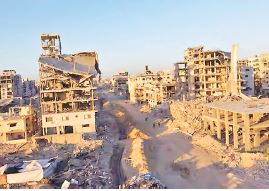
Israel launched a series of airstrikes across Gaza late Tuesday and early Wednesday, raising fears that the fragile, US-brokered ceasefire in the enclave could collapse. The Israeli government said the attacks were in response to what it called repeated violations of the truce by Hamas, including sniper and rocket-propelled grenade fire directed at Israeli troops and what it described as a manipulated hostage recovery effort.
Health authorities in Gaza reported at least 26 deaths in the overnight bombardment, including women and children. Fatalities were recorded in Gaza City, Khan Younis, and the Bureij refugee camp. Medical officials said the casualty count was among the highest since the ceasefire took effect on October 10. Hospitals described the situation as critical, with emergency rooms overwhelmed and rescue workers struggling to reach affected areas due to ongoing aerial activity.
The Israeli Prime Minister’s Office said Benjamin Netanyahu had ordered “immediate, powerful strikes” after Israeli soldiers reportedly came under fire near Rafah in southern Gaza. Military sources told Israeli and international media that troops were patrolling east of the yellow line, which marks the boundary of Israeli-controlled territory, when they were attacked. Officials called the incident “a blatant violation of the ceasefire,” asserting that Israel was exercising its right to defend its soldiers.
Hamas denied responsibility for the alleged attack, accusing Israel of breaking the ceasefire and targeting civilians. A spokesperson for the group said Hamas “remains committed to the truce” and called on international mediators to intervene to stop Israeli operations across the enclave. Eyewitnesses reported that Israeli aircraft struck multiple areas through the night, including densely populated neighborhoods.
In Gaza City’s Sabra district, a building was destroyed, killing several people inside. In the Bureij refugee camp, a missile strike on a residential home killed at least five people. Another airstrike in Khan Younis hit a vehicle, killing five people, among them two children, according to medical staff at Nasser Hospital. Rami Mhanna, managing director of Shifa Hospital, confirmed two additional fatalities from separate strikes. He said hospitals were struggling to manage the influx of casualties amid shortages of supplies and fuel.
The Israeli military did not issue a detailed statement but said it had “responded proportionally” to incoming fire and that its strikes targeted Hamas facilities and militant infrastructure. Israeli officials said that Hamas had been testing the limits of the ceasefire by staging provocations and using civilian areas for cover.
The ceasefire, mediated by the United States and supported by Egypt and Qatar, began on October 10 after two years of intense fighting between Israel and Hamas. The truce was structured in phases: halting hostilities, exchanging hostages and remains, and negotiating steps toward demilitarisation of Gaza. Although fragile, the agreement had largely held until this latest escalation.
There have been earlier violations. On October 19, Hamas fire killed two Israeli soldiers, prompting retaliatory strikes that left more than 40 Palestinians dead. Earlier in the month, an Israeli airstrike wounded several people in what the army described as a targeted operation against Islamic Jihad members preparing attacks. Despite these incidents, both sides had refrained from large-scale operations until this week.
The latest escalation also followed a growing dispute over a hostage case that has reignited tensions. On Monday, Israel accused Hamas of staging the recovery of the body of Ofir Tzarfati, one of the Israeli hostages abducted during Hamas’s October 7, 2023, assault on southern Israel. That attack, which triggered the current war, killed about 1,200 Israelis and saw 251 others taken captive.
The Israeli army released a 14-minute edited video that it said showed Hamas members burying and then exhuming a white body bag in Gaza before presenting it as a newly discovered hostage. “This footage clearly shows Hamas attempting to create a false impression of cooperation in locating the bodies, while in fact withholding the remains of deceased hostages,” the army said.
Government spokesperson Shosh Bedrosian called the episode “a disgraceful deception,” alleging that the bag contained partial remains of Tzarfati. The victim’s family confirmed that they had been asked to rebury their son multiple times. “This is the third time we have been forced to open Ofir’s grave and rebury our son,” they said in a statement.
Hamas has rejected Israel’s claim, accusing it of fabricating evidence to justify renewed military action. The dispute, combined with the latest exchange of fire, has cast doubt on the stability of the truce and raised the risk of a wider escalation.
Diplomats from Qatar, Egypt, and the United States are expected to press both sides to restore calm and prevent the collapse of the ceasefire. However, with rising civilian casualties and growing mistrust, analysts say that the current round of violence could mark the most serious challenge to the fragile peace since the truce began.
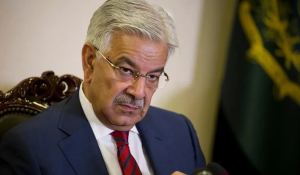
Pakistan's Defense Minister Khawaja Asif has questioned alleged plans by senior government officials to permanently settle abroad. He...
The Baloch Liberation Army (BLA) has claimed responsibility for carrying out 34 operations between October 9 and 20...
Russian President Vladimir Putin said on Wednesday that Russia's first tanker carrying 40,000 tons of diesel fuel will...

Ten people were killed and 44 others injured in a horrific road accident in Pakistan's Punjab province. The...
North Korean leader Kim Jong-un's influential sister, Kim Yo-jong, and a military marshal inspected fortification work along the...

New Delhi: US Secretary of State Marco Rubio has assured India that America’s relations with any country in...

Aries: The day will be auspicious...