Last Updated: October 12, 2026
Last Updated: October 12, 2026





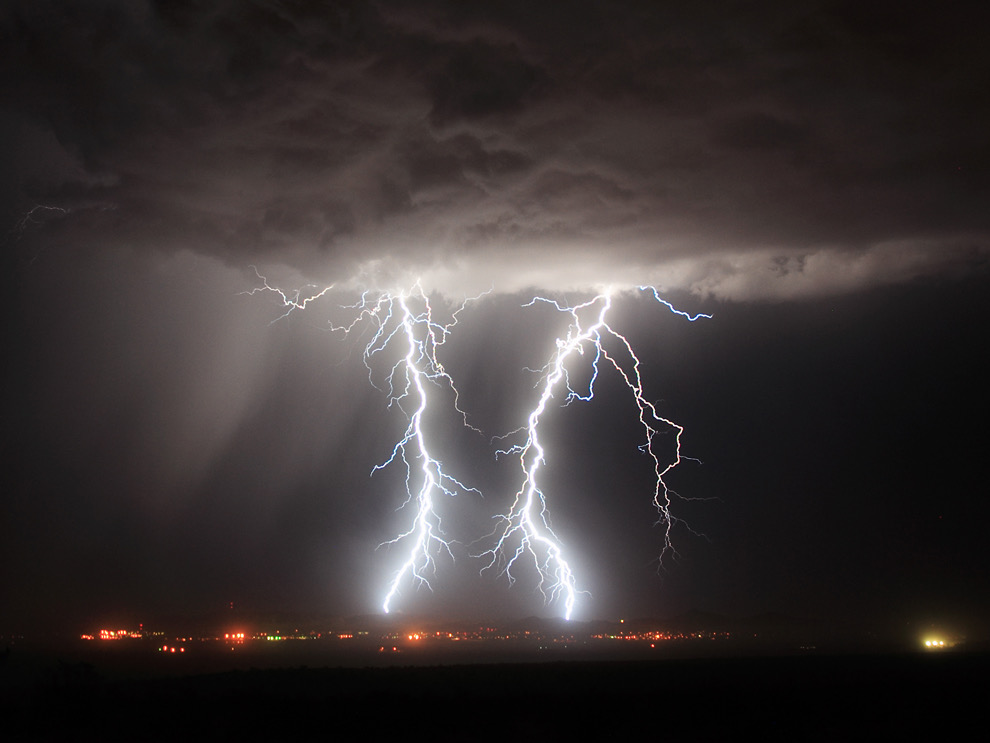
Due to environmental pollution and global warming, the seasons have disappeared, but this year’s problem is that the monsoon seems to have been cursed. The weakening of the El Niño effect is being cited as the main reason for this. Weather history for the last week of June suggests that this year is the country’s second-driest June. Regarding Punjab, the Meteorological Department is reporting that the monsoon will arrive here a few days late. So far, the country has received 42 percent less rainfall than normal. The southwest monsoon is now expected to advance after two weeks.
If the speed improves, there will be heavy rains in the areas of Odisha, Bihar, Jharkhand but the problem is that there is still little scope for it to progress rapidly. Normally, 99.2 mm of rain should have fallen in the country till 21 June but only 57.2 mm fell. If we look at the rain records, this is the second driest June in the last 126 years. Here the season of sowing paddy has arrived, for which abundant water is needed. Therefore, not only Punjab waits for the rains, but the neighboring agricultural states also do. But when it rains, winds also blow at a speed of 50-55 kilometers per hour.
The condition of the sewerage system remains the same. Rainwater accumulates on the roads in cities, and every city appears waterlogged. Last year, the monsoon arrived in Punjab on June 24th, but this time it will arrive late. Bathinda in Punjab is, as always, recording the hottest temperatures. Patiala, Fazilka, Ludhiana, Rupnagar, Amritsar, and Hoshiarpur are also recording temperatures above normal. It should be noted that these unusual temperatures reduce the average person’s ability to work and impact productivity. It goes without saying that all of Europe is currently reeling under extreme heat, with temperatures averaging 40 degrees Celsius.
Uncontrolled global warming and environmental pollution have disrupted the weather. While the monsoon is awaited, a red alert for heavy rain has been issued in Northeast and Eastern India. However, only sporadic rain is expected in Delhi, Haryana, Chandigarh, and Punjab. These are primarily agricultural states, and the continued dependence of agriculture on the monsoon only exacerbates the hardships of farmers. The solution is to unite and fight global warming and environmental pollution. Although rich countries have abdicated their responsibility, India must take the lead and become the leader in this struggle.
The frontier between Pakistan and Afghanistan, which has historically remained volatile, is entering a new phase of confrontation as none of the two sides is indicating willingness to step back. Recently, Taliban authorities announced that Afghanistan had conducted overnight airstrikes in Pakistan, a move if confirmed, would be one of the most assertive actions taken by the group since seizing power in August 2021.
In a statement issued on June 19, Afghanistan’s Ministry of Defence said that its forces carried out overnight airstrikes against what it said were ISIS-linked facilities in Balochistan and Khyber Pakhtunkhwa provinces of Pakistan.
The ministry said that the places that were targeted were allegedly being used to plan and coordinate attacks against Afghanistan. The ministry said “important and designated targets” were successfully hit during these airstrikes. It warned that Afghanistan would act decisively against groups that it considers a danger to the country. The outlet emphasized that the strikes come at a time when Pakistan has intensified pressure on the Taliban over the presence of Tehreek e Taliban Pakistan (TTP) militants, whom Islamabad accuses Kabul of sheltering. The Taliban deny the allegation. Residents in Balochistan said they heard explosions overnight, however, independent verification remains limited.
Taliban’s recent announcement seems to be aimed at showcasing strength domestically and regionally. Taliban’s statement stressed that Afghanistan would “eliminate threats in the embryo,” indicating a desire to showcase themselves as being capable of protecting national sovereignty — a stance they have consistently taken to bolster internal legitimacy. But analysts warn that such actions risk deepening instability. Pakistan and Afghanistan share a long, porous crossing Durand Line where militant groups have operated for decades. Both governments accuse each other of harboring hostile networks, and both deny responsibility.
With the West Asia conflict leading to energy shocks and disruption in supply chains due to the choking of Strait of Hormuz, the importance of alternative trade routes for countries like India has come to the fore.
In this context, the Eastern Maritime Corridor (EMC), an Indo-Pacific seaborne trade route between southern India and Russia’s Far East connecting Chennai port with Russia’s Vladivostok port, features both as an economic and strategic priority for India.
India activated the Eastern Maritime Corridor (EMC) or Vladivostok-Chennai shipping route in 2024 amidst the Hamas-Israel war in the Red Sea zone, with Yemen’s Houthi rebels targeting international commercial shipping in the Red Sea with drones and missiles in support of Hamas.
The US-Israel war with Iran with the blocking of Strait of Hormuz has been a more recent disruption that underscores the key role that EMC can play as an alternative trade route for India.
With India’s growing reliance on coking coal and crude oil for its steel and energy sectors requiring unhindered Russian supply, the EMC is considered a viable, stable, and cost-efficient alternative maritime route.
Rerouting of shipments via the EMC reduces transit time by roughly 24 days compared to more than 40 days via Suez Canal routes, as well as opening a direct eastern route to Russian energy and mineral resources.
The EMC also assumes importance in the back of robust port infrastructure being developed in India under the Sagarmala project. While EMC ensures steady and quick flow of vital raw materials to India from Russia, better connectivity under the Sagarmala project ensures that the distribution of these supplies from ports to the rest of the country takes place in highly efficient and cost-effective manner.
The Indian Navy’s growing participation in the Pacific maritime security exercises with fellow East Asian/Pacific countries boosts its security objective in the region. The project also fits in with India’s Act East Policy to integrate further with the larger Pacific region to counter Chinese dominance. It also highlights that the EMC facilitates India’s access to the Arctic zone. China already made headlines when its cargo ship Istanbul Bridge reached the British port of Felixstowe on October 13, 2025, via the Arctic Ocean in just 20 days. The Arctic belt, rich in natural resources including rare earth materials, is fast becoming the latest zone of geopolitical and eco-economic competition.
One of the most common questions people ask these days is how to lose belly fat. Belly fat...

Turtle doves picking fallen grain from Paddy fields, Cicada chirping on willow trees and the cackle of migratory...

Andre Agassi became one of the greatest tennis players in the world. Agassi’s father, Mike, a former Olympic...

Have you ever wondered how the words you speak can influence your thoughts, emotions, behavior, relationships and even...

Ac There’s no doubt that smoking can cause serious health related problems and also up the risk of...

Are you one of those who exercise daily but are still unable to lose weight? We might have...

Aries: The day will be auspicious...