Last Updated: October 21, 2026
Last Updated: October 21, 2026






Parneet Sachdev
Chairman of Real Estate Regulatory Authority and a leading author
In the second week of March 2020, as the equity prices collapsed, the global financial system did something that even seasoned market veterans found disorienting: it began to sell the safest assets i.e Government Bonds in order to raise cash. The Financial Stability Board’s post-mortem calls it the “dash for cash,” when correlations broke down and market functioning deteriorated sharply.
On March 16, the S&P 500 fell 12% in a single day (its worst since 1987) and the VIX hit an all-time peak of 83 (Financial Stability Board). VIX or Volatility Index measures the market’s anticipation of volatility in the near term. During moments of market volatility, the market typically moves sharply up or down, and the VIX tends to climb. VIX falls as volatility falls. It is not the same as a price index like the NIFTY.
The most alarming signal was what happened in the U.S. Treasury market. According to the FSB, IMF data shows 10-year U.S.
Treasury market depth fell 93% from its February average to the lowest level on record. When the world most needed the deepest market on earth to absorb panic flows, it couldn’t.That collapse threatened everything else because Treasuries are not merely an “asset class”; they are the benchmark collateral and the reference price for global funding. Derivatives margins, money market funds, corporate funding and emerging-market (EM) dollar liquidity all came under strain. This is what “financial system fragility in an era of speed and leverage” actually means.
WHAT EXACTLY BROKE IN 2020
The 2020 episode was not primarily a story of bank insolvency. It was a story of balance-sheet capacity; a systemic scramble for cash that forced institutions to liquidate even high-quality holdings. The FSB documents show several simultaneous fractures i.e settlement failures, ETF prices vs NAV, and cash Treasuries vs futures (Financial Stability Board). These are classic symptoms of a market that has ceased to clear smoothly because intermediaries i.e dealers, prime brokers, liquidity funds are constrained exactly when demand for intermediation spikes. The key insight is that global modern market liquidity is a private balance-sheet service. When the demand for immediacy surges (redemptions, margin calls, risk-limit cuts), the system needs dealers and leveraged investors to warehouse risk. In March 2020, that warehousing capacity was insufficient.
HOW “SMALL SPREADS” BECAME SYSTEMIC:NON-BANK ACTORS
A central fragility in 2020 was the ecosystem of leveraged relative-value trades funded in repo and prime brokerage. The U.S. Office of Financial Research notes that hedge fund trade is exposed to liquidity and margin risk in the short term (Office of Financial Research).
The crucial arithmetic of fragility is embedded in the financing. This matters because if an investor is levered 50:1, even a small adverse price move can trigger margin calls that force liquidation. The liquidation itself worsens prices, which triggers further margins; a classic margin spiral. What can be stated with confidence is that during 2020 it was the non-bank actors that had been burdened to provide liquidity in the system, because the trades required very high leverage to be profitable and post-2008 bank balance-sheet economics made low-spread trades less attractive on bank books. The system therefore increasingly relies, even today, on non-bank risk-takers for marginal liquidity in stress—precisely the actors most sensitive to margin and funding shocks.
Once the dash for cash began, the fastest transmission channel to emerging markets was portfolio outflows and dollar funding strain. The IMF documented that non-resident portfolio outflows from emerging markets reached a record of more than $100 billion since January 21, 2020 (astrid-online). IMF also notes that the number of affected countries was the largest since the global financial crisis.
This was not merely “risk-off” psychology. As the FSB describes, strains in offshore dollar funding markets emerged, the dollar appreciated sharply, and some non-US central banks liquidated parts of FX reserves to meet domestic dollar demand. When the world’s reserve currency becomes scarce, there is a double whammy; external financing tightens while local asset prices fall and currencies weaken.
HOW CENTRAL BANKS STABILISED THE SYSTEM
The policy response that restored market function was both swift and enormous. Central banks purchased treasury securities in large quantities- just to reaffirm faith in the system. In the United States, the Federal Reserve’s own balance-sheet report notes that by mid-April 2020, purchases of Treasury securities 1.5 trillion (federalreserve.gov). The FSB’s review also highlights that announcement effects helped, but that central bank assets expanded rapidly within weeks, with asset purchases accounting for a large share of G7 central bank balance-sheet increases.
India’s liquidity and regulatory firewall in March–April 2020 also had concrete, measurable interventions. The RBI’s March 27, 2020 communication records that system liquidity was ample. Reverse repo absorption averaged Rs 2.86 lakh crore per day during March 1–25 (RBI). The RBI simultaneously announced targeted longer-term repo operations (TLTRO) of up to three-year tenor for a total of Rs1,00,000 cr. Further, for preventing a cash-flow shock from becoming a solvency shock, the RBI permitted a three-month moratorium on term-loan instalments for banks, NBFCs etc (RBI).
WHY FRAGILITY IS ARGUABLY GREATER NOW
To assess whether these risks the lens that shows the facts is the scale of non-bank financial intermediation (NBFI) in market liquidity. FSB’s latest global monitoring report states that in 2024 the NBFI sector expanded 9.4%, about double the pace of banking, with assets representing 51.0% of total global financial assets. Reuters’ reports that non-bank activities that may pose financial stability risks grew to $76.3 trillion. This is the structural reason fragility persists: when half of global financial assets sit in institutions with less transparency than banks, a shock can propagate through forced selling and funding strains even if banks are well capitalised.
HOW INDIA IS POSITIONED
India enters this era with several genuine structural advantages, and a few vulnerabilities that deserve candour.
Government securities settlement in India is strongly anchored in delivery-versus-payment. CCIL is the settling intermediary. This reduces bilateral settlement risk and improves certainty of settlement. A second advantage is the macro-prudential and supervisory posture. The IMF’s 2025 India Financial Sector Assessment Program concludes that banks and NBFCs are generally resilient to severe macrofinancial solvency and liquidity shocks. A third advantage is that regulators demonstrably learned from liquidity episodes, especially in market-based finance.
SEBI’s November 2020 circular has mandated norms for holding liquid assets in open-ended debt schemes. Where are the fault lines? First, like most systems, India cannot fully insulate itself from global dollar liquidity shocks; March 2020 showed that EM portfolio flows can reverse at record scale and speed (astrid-online.it). Reuters’ reporting on the RBI’s June 2025 Financial Stability notes gross NPAs among 46 banks at 2.3% as of March 2025. Projected to be 5.6% in high-risk scenarios. It also notes capital adequacy at 17.2% in March 2025 and rising delinquencies in credit cards, personal loans and microfinance (Reuters).
The same report highlights household debt at 41.9% of GDP. These numbers do show where a shock could find traction if underwriting weakens and funding conditions tighten. The 2020 episode is best read as a rehearsal for future stress, not an anomaly. For India specifically, the agenda is to keep strengthening the same three pillars that worked in 2020: robust settlement and CCP infrastructure (CCIL), rapid and targeted liquidity tools (as RBI used via TLTRO), and proactive fund-liquidity regulation (SEBI).
The deeper message for readers is that in modern finance, resilience is not only about capital. It is about the ability to convert assets into cash. This is what March 2020 taught the world i.e that liquidity is a system variable and can disappear very fast.
(Views expressed are the author’s own)
We are very proud that at present India is the number one country in the world by surpassing...

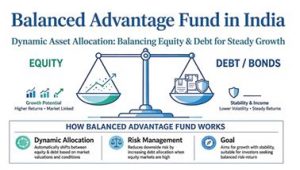
Every investor wants the wealth-creating power of equity and the reassuring stability of debt. Balanced Advantage Funds attempt...
Tourism is a major source of government revenue in our country. There are different types of tourism. Scenic...

Good Evening Viewers! Catch up on the day's biggest stories with The Savera Times Evening Bulletin. Get the...

Congress leaders continued their protest outside the Jaipur Police Commissionerate on Tuesday, demanding the registration of a zero...

On the auspicious occasion of Vijayadashami, Prime Minister Narendra Modi on Tuesday called on the countrymen to unite...

Aries: The day will be auspicious...