Last Updated: October 12, 2026
Last Updated: October 12, 2026






India currently has nearly 28 million hectares of land under agroforestry, and the government has set an ambitious target to expand this to 50 million hectares by 2050. However, despite its growing importance, the sector continues to face major structural constraints, particularly in accessing finance, experts gathered for the first South Asian Agroforestry & Trees Outside Forests (AF-TOF) Congress, noted.
Of the nearly Rs 20 lakh crore in institutional agricultural credit available annually, less than five per cent is directed towards agroforestry, largely due to tenure complexities, collateral limitations, and long gestation periods that can range from five to 30 years.
At the same time, limited awareness among farmers about India’s National Agroforestry Policy 2014, particularly regarding harvesting rights and regulatory clearances — continued to restrict wider adoption and income generation.
Agroforestry — the integration of trees with crops and livestock — which sits at the intersection of agriculture, forestry, climate action, and rural livelihoods and is critical for food security and land degradation. But experts noted that the sector remained under-supported in policy implementation and institutional financing, limiting its scale and impact.
The ‘Treescapes’ 2026 Congress was organised by CIFOR-ICRAF, in collaboration with the Indian Council of Agricultural Research (ICAR). The two-day Congress brought together policymakers, senior government officials, researchers, industry leaders, financial institutions, civil society organisations, farmers, and youth from across South Asian countries including India, Nepal, Maldives, and Sri Lanka, with discussions focussing on strengthening policy and regulatory frameworks and leveraging agroforestry and Trees Outside Forests (TOF) for climate resilience and ecosystem services.
The Delhi Police has registered an FIR regarding the alleged disturbance at the Bangla Sahib Gurdwara in...

The Delhi Police on Monday removed Jantar Mantar from the list of officially designated protest sites. The police...

The Supreme Court on Monday clarified that it has not passed any judgment on the Election Commission's (ECI)...

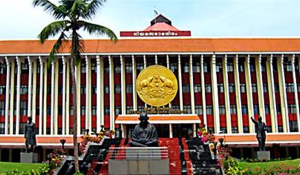
The Kerala Assembly passed a resolution demanding the removal of Chief Election Commissioner (CEC) Gyanesh Kumar from his...
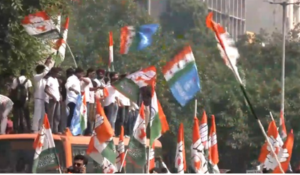
Amidst heavy security and barricades by the Delhi Police, INDIA Bloc leaders began a protest march towards the...
The Reserve Bank of India (RBI)'s new measures to curb speculation in the rupee and maintain stability in...