Last Updated: October 20, 2026
Last Updated: October 20, 2026





India’s Indo-Pacific Outreach Signals a Broader Strategic Shift
India’s diplomatic outreach reflects the growing role of emerging powers in shaping the regional order rather than simply responding to the changing geopolitical realities.
Prime Minister Narendra Modi’s recent six-day visit to Indonesia, Australia and New Zealand from July 6 to 11 was more than a series of high-level diplomatic engagements. It underscored India’s growing resolve to shape the strategic and economic landscape of the Indo-Pacific amid an increasingly fragmented geopolitics.
The Indo-Pacific has become the principal theatre where economics, security and technology increasingly intersect. Competition between the United States and China continues to reshape global supply chains, maritime security arrangements and access to critical resources. Rather than positioning itself as merely a participant in this rivalry, India appears intent on becoming one of the region’s principal agenda-setters.
That ambition was evident throughout the tour. Discussions with Indonesia centred on maritime cooperation, defence ties and critical minerals. Australia remained a key partner in energy security, critical minerals and negotiations towards a Comprehensive Economic Cooperation Agreement. New Zealand added another dimension by strengthening economic engagement and broadening cooperation in agriculture, education and innovation.
These three visits by Prime Minister Modi collectively reinforced India’s Act East policy while advancing the vision of a free, open and rules-based Indo-Pacific.
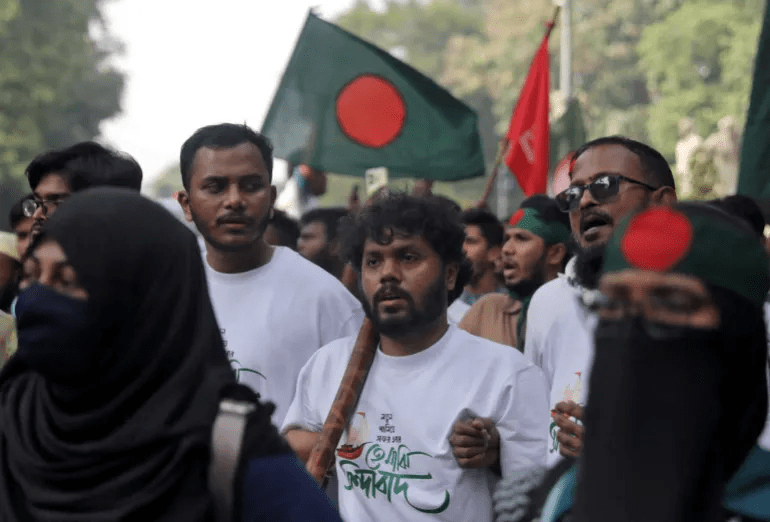
For Bangladesh, these developments should not be viewed through the narrow prism of India’s bilateral diplomacy. They raise broader questions about how the region itself is changing and where Dhaka intends to position itself within that transformation.
Instead of viewing India’s economic strategy through the lens of competition, Bangladesh could see it as an opportunity to strengthen industrial cooperation, attract technology investment and improve its integration into regional value chains.
Bangladesh’s engagement with India has long centred on land borders, connectivity and river-water sharing. Although these areas continue to be significant, the strategic focus is gradually shifting towards the Bay of Bengal.
Iran's Islamic Revolutionary Guard Corps (IRGC) Navy claimed early Monday that an oil tanker, violating regulations, had struck...
Amid ongoing protests and violence in Italy, the Indian Embassy on Monday issued an advisory for Indian citizens...

The number of Ebola virus cases in Kenya has risen to eight. Health officials have confirmed that a...

Houthi rebels fired several ballistic missiles at a government army training camp in Yemen's Shabwa province on Monday.

US Secretary of State Marco Rubio indicated on Monday that a trade agreement between the US and India...

Pakistan is among the 10 countries most affected by the global food crisis. According to a report, food...
Aries: The day will be auspicious...