Last Updated: October 21, 2026
Last Updated: October 21, 2026





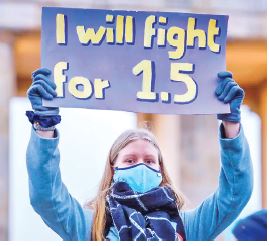
Hurricanes are intensifying, glaciers are melting at record speed, and oceans are steadily warming. The signs of a rapidly heating planet are clear and alarming. As climate change continues to reshape ecosystems and threaten livelihoods, the United Nations has issued another stark warning about the planet’s worsening condition.
UN Secretary-General Antonio Guterres has said that humanity has failed to keep global warming within the critical limit of 1.5 degrees Celsius. In a recent interview ahead of the COP30 climate conference, he cautioned that the world is on a dangerous path and must “change course” immediately to avoid severe and lasting damage.
Guterres noted that it is now “inevitable” the Earth will exceed the 1.5-degree threshold set under the 2015 Paris Agreement. He warned that crossing this boundary could bring devastating consequences, including extreme weather, sea-level rise, and irreversible impacts on ecosystems and human health. His statement reflects the growing concern within the scientific and policy communities that global efforts to curb emissions have been insufficient.
The Paris Agreement, adopted in 2015 by 196 parties, is a legally binding international treaty aimed at combating climate change. Its central goal is to limit the rise in global average temperature to well below 2 degrees Celsius above pre-industrial levels, and to pursue efforts to restrict it to 1.5 degrees. This limit was established based on scientific findings that even a half-degree difference could significantly worsen climate-related disasters.
The 1.5-degree target is more than a symbolic threshold. According to the Intergovernmental Panel on Climate Change (IPCC), keeping warming within this limit could prevent the most catastrophic outcomes. It would reduce the risk of extreme heat waves, protect coral reefs, preserve Arctic ice, and limit the spread of drought and floods. Scientists have long argued that surpassing this limit could lead to tipping points in Earth’s climate system, making some changes irreversible.
Despite the commitments made in Paris, global emissions have continued to rise. Fossil fuel consumption remains high, deforestation persists, and investments in renewable energy, though increasing, are not yet at the scale needed to counteract the damage. The United Nations and climate experts have repeatedly urged countries to accelerate the transition toward clean energy and phase out coal, oil, and gas.
Guterres emphasized that governments must act urgently to cut emissions, adapt to unavoidable changes, and finance climate resilience in developing nations. He also pointed to the responsibility of wealthier countries to lead by example. Developed economies are historically the largest emitters of greenhouse gases, and they possess the technology and resources to drive global change.
If the world exceeds the 1.5-degree limit, the consequences could be far-reaching. Scientists predict more intense and frequent heat waves, stronger hurricanes, rising sea levels threatening coastal cities, and major disruptions to agriculture and water supplies. Ecosystems such as coral reefs and Arctic ice regions would face near-total collapse. For many small island nations and vulnerable communities, the difference between 1.5 and 2 degrees could mean the difference between survival and disappearance.
The upcoming COP30 conference, set to take place in Brazil, is expected to focus heavily on how nations can still minimize the damage. Negotiators will review progress, discuss carbon reduction commitments, and explore financing mechanisms for climate adaptation. Guterres urged world leaders to move beyond pledges and deliver concrete action, warning that the window to limit warming is closing rapidly.
Climate scientists agree that it is still possible to bring temperatures back down after a temporary overshoot, but this would require deep and sustained emission cuts, large-scale deployment of carbon removal technologies, and significant global cooperation.
“The world must unite and act decisively,” Guterres said. “Delay means death.” His message reinforces the growing urgency surrounding the global climate crisis. The evidence is clear, the science is established, and the time for action, he stressed, is now
Protests in Jakarta, Yogyakarta and Bandung brought students onto the streets over rising costs, forest fires and civil...

Organisations linked to Neville Roy Singham are under US congressional scrutiny over funding. Their coverage of protests in...

US President Donald Trump says Washington and New Delhi are close to a trade agreement that will differ...

Iran has ruled out transferring its enriched uranium stockpile outside the country, with security official Mohsen Rezaei reiterating...

Donald Trump has urged Volodymyr Zelensky to pursue a peace deal with Russia, warning that Ukraine could face...

Pakistan, battling insurgencies at home and tensions along multiple borders, is too overstretched to offer meaningful military support...

Aries: The day will be auspicious...