Last Updated: October 15, 2026
Last Updated: October 15, 2026





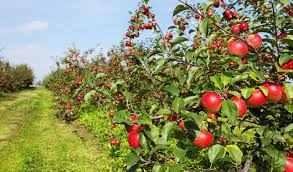
In Damhal village, about 80 kilometres from Srinagar, Shakeel Ahmad Rather walks through what remains of his apple orchard after last week’s hailstorm.
The storm lasted barely half an hour, but the damage was immediate. Red-tipped blossoms fragile and essential for fruit formationlie scattered across the ground.
Nearly 80-85 per cent of his eight-kanal orchard has been damaged. “It has become a pattern now,” says the 40-year-old, linking repeated losses to changing weather.
The impact goes beyond a single harvest. Damaged blossoms mean reduced fruit set, and repeated stress can weaken trees for seasons to come. “It affects everything the market, our household, even weddings and construction,” he says, pointing to how deeply apple cultivation is tied to everyday life in Kashmir.
Damage at a critical stage
Last week’s hailstorm swept through several apple-growing areas in Shopian, Kulgam and Bandipora, damaging orchards at the most critical stage of the crop cycle.
Though brief in some places and longer in others, the intensity was enough to flatten blossoms across large stretches. For growers, the timing has made the damage far worse.
“The chances of recovery are very rare,” says Rather, echoing concerns across the region.
The flowering stage determines the fruit set. Any disruption at this point directly translates into lower yields. Even small hailstones can knock off blossoms or damage young fruitlets. These losses that cannot be reversed within the same season.
A changing weather pattern
What happened last week is not an isolated event. Scientists point to a growing trend of declining overall precipitation alongside rising temperatures and more erratic weather.
A 2023 study by researchers from the University of Kashmir and the Indian Institute of Hyderabad recorded more than 200 hailstorm events in the Valley between 2007 and 2022. The increase is dramatic, with 27 in 2022 compared to just two events in 2007.
In the past decade alone, more than 80 severe hailstorms have been documented. These are no longer evenly spread across the year but are increasingly concentrated between April and June the crucial flowering period for apple orchards.
Yasir Altaf, assistant professor in the Department of Environment, Sustainability and Climate Change at the Islamic University of Science and Technology ,Kashmir, says the pattern reflects broader climatic shifts.
“Over the last decade, we are not just seeing changes in how much it rains, but how it rains. Warmer surface temperatures are fuelling stronger vertical air currents, which are essential for hail formation,” he says.
Kashmir’s geography amplifies the effect. When warm air rises rapidly and meets very cold conditions in the upper atmosphere, it creates ideal conditions for hailstorms, Altaf added.
Rising vulnerability for growers
Kashmir’s shift from traditional agriculture to high-value horticulture has made apples the backbone of its economy but also increased vulnerability.
Unlike staple crops, apples are highly sensitive to climate variability. A single untimely event such as hail, frost or unseasonal rain can wipe out a large part of the harvest.
Mohammad Yousuf Bhat, a grower from Katrasoo in Kulgam, has seen this repeatedly. “Every year there is a hailstorm now. We spray pesticides, we do everything, but there is no option when this happens,” he says.
Repeated shocks are eroding both income and confidence. Farmers struggle to plan ahead, while recurring losses push many towards debt.
Mohammad Muslim, assistant professor in the Department of Environmental Science at the University of Kashmir, says the region is witnessing stronger inter-seasonal variability.
“Warmer temperatures increase convective instability, while erratic western disturbances concentrate energy into fewer but more intense events,” he explains.
Growers say the nature of hailstorms has also changed.
“Earlier, damage was limited. Now it destroys orchards in minutes,” says Mohammad Ashraf Wani, president of the fruit mandi in Shopian, often called Kashmir’s apple bowl.
He adds that hailstorms are no longer confined to predictable periods and are now occurring even during later stages of fruit development, extending the window of risk.
Losses beyond a single season
Studies estimate that hailstorms can cause losses of 30 per cent to 70 per cent in affected orchards, and in some cases near-total damage.
But the impact does not end with one season. Repeated hail damage weakens trees, increases susceptibility to disease and reduces long-term productivity.
“It’s not just a one-year loss it affects orchard health for several seasons,” says Dr Altaf.
Despite the growing threat, protective measures remain limited. Anti-hail nets — one of the most effective solutions are used by only about 0.06 per cent of horticulturists, largely due to high costs.
Crop insurance, which could offer financial relief, has limited reach. While the government has introduced the Restructured Weather Based Crop Insurance Scheme (RWBCIS), its implementation on the ground remains patchy. Farmers remain sceptical. “We can only watch,” says Bhat, reflecting a sense of helplessness shared across the region.
Without a reliable safety net, losses translate directly into financial distress. For households dependent on a single annual harvest, even one bad season can affect education, healthcare and basic needs. Unlike droughts or gradual rainfall changes, hailstorms compress risk into a matter of minutes.
Farmers may spend months pruning, spraying and managing pests, only to see their efforts undone in a brief storm.
Dr Altaf describes this as a growing mismatch between risk and preparedness. “Farmers are facing a very real and increasing threat, but protective measures are still minimal,” he says.
This compression of risk leaves little room for recovery and even less time for response.
Experts say both immediate and long-term responses are needed.
In the short term, expanding access to anti-hail nets through subsidies could significantly reduce damage. Improved early warning systems even a few hours in advance could help farmers take precautionary steps.
“Even a short lead time can make a difference,” says Dr Muslim, emphasising the need for stronger agrometeorological advisories. (Courtesy: DTE)
Singapore: Two Singapore-registered container vessels were reportedly struck by unknown projectiles while transiting the Strait of Hormuz on...

Shimla: The Himachal Pradesh government has constituted a four-member commission to examine the reorganisation of administrative units in...

New Delhi: The Supreme Court on Wednesday listed for November 17 the appeal filed by self-styled godman Asaram...

Ranchi: Doctors in Jharkhand launched a protest on Wednesday over a slew of demands concerning their safety and...

Greater Noida: Police and Anti-Narcotics Team in Uttar Pradesh’s Greater Noida have seized ‘ganja’ worth Rs 1 crore...

New Delhi: The Enforcement Directorate (ED) has attached assets worth Rs 2,032.81 crore belonging to Reliance Power Ltd...
