Last Updated: October 12, 2026
Last Updated: October 12, 2026





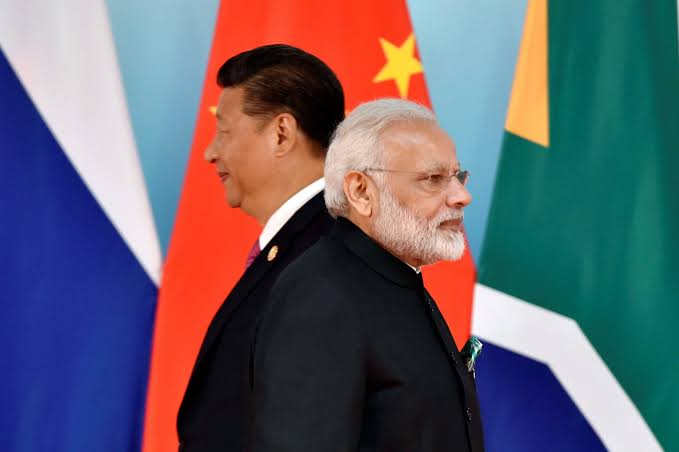
It is common knowledge that relations between India and China are not cordial. No matter how much we speak of opening a new chapter in ties—while keeping diplomatic values in mind—the underlying reason for the strain remains China’s indirect support for Pakistan’s terrorist activities. For Pakistan, fostering terrorism and instability in India has always been essential to its own internal politics. Recently, the 25th round of talks between India and China took place; National Security Advisor Ajit Doval traveled to Beijing as India’s Special Representative to participate in these discussions. Upon arriving in China, Ajit Doval met with Vice President Han Zheng. They discussed ways to maintain peace and stability in the region and to strengthen bilateral cooperation across various sectors. Prior to this, Chinese Foreign Ministry spokesperson Lin Jian had stated that both nations would continue in-depth discussions on the border issue, in line with the consensus reached by their respective leaders. Ministry of External Affairs spokesperson Randhir Jaiswal has also emphasized the critical need to resolve issues concerning the border areas. India insists on maintaining peace and stability along the Line of Actual Control; the future trajectory of India-China relations— whether positive or strained—depends on this stability being upheld. New Delhi has expressed grievance over China dismissing India’s criticism regarding the renaming of 27 locations in Arunachal Pradesh. India maintains that these places are an integral part of its territory—a fact that cannot be altered. This issue was also discussed during the 25th round of talks. No one disputes the need for continued dialogue. While the maintenance of the status quo is reiterated after every round of talks, tensions between the two nations remain unchanged. The armies of India and China continue to face each other in a standoff. India has grievances regarding China’s illegal construction activities near the border, while China frequently accuses India of encroachment. There is a strong possibility that Chinese President Xi Jinping may attend the BRICS summit scheduled to be held in New Delhi on September 12–13. Prime Minister Modi is also keen to advance bilateral relations. The two leaders previously met at the Shanghai Cooperation Organization summit in Tianjin; now, a meeting in Beijing between our National Security Advisor, Ajit Doval, and Chinese Foreign Minister Wang Yi is essential to realizing the hopes for better relations, peace, and stability. Will this expectation be met? It is worth noting that trade relations between India and China are of great significance. Despite frequent calls to boycott China and Chinese goods, we import vast quantities from the country; in fact, almost all the raw materials for our pharmaceutical industry originate in China. Therefore, if ties between the two nations improve—even if only to enhance trade relations—it would be a positive development in itself. All eyes are now on whether Modi and Jinping will meet at the BRICS summit in September. If talks between the two nations yield fruitful results, a new chapter in India-China relations could begin—one that would be economically highly beneficial for both countries.
US President Donald Trump is scheduled to attend the ASEAN summit in Manila on November 16 before travelling...
An Indian national injured in the October 10 attack on Riyadh’s King Khalid International Airport has died, taking...

Ukrainian President Volodymyr Zelenskyy says he was unaware of Donald Trump’s announcement of an immediate energy ceasefire between...

Colombian businessman Alvaro Pulido Vargas has been arrested in Florida over two US federal cases involving alleged bribery...

Republican Senator Thom Tillis has questioned the legality of Trump's Russian diesel deal, while John Barrasso defended it...
Bangladesh is grappling with mounting stagflationary pressures as persistently high inflation, weak economic growth, subdued private investment and...
Aries: The day will be auspicious...