Last Updated: October 23, 2026
Last Updated: October 23, 2026





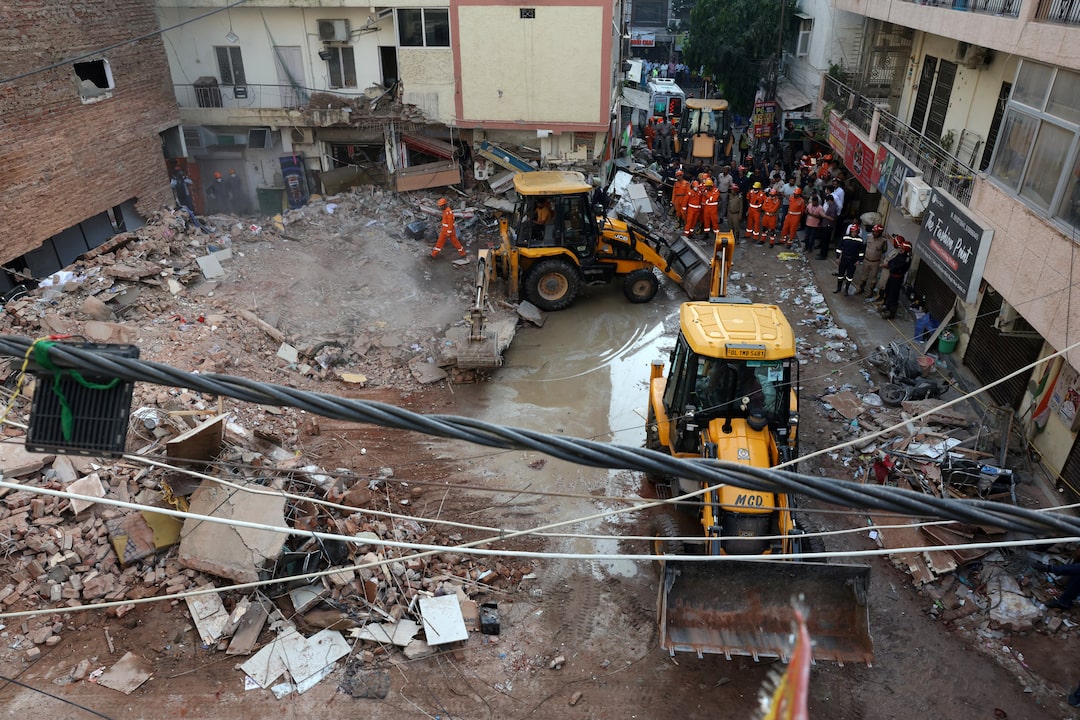
On Sunday, a tragic accident befell students striving for an education in Delhi, exposing the illicit greed of landlords who profit by providing substandard, makeshift accommodation. Satyaniketan is located near Delhi University’s South Campus; its proximity to the university makes it a preferred area for students seeking affordable housing. Often, as many as three students share a single room. At 1:30 PM on Sunday, a five-story building collapsed with such force that it felt like an earthquake. Seven students lost their lives in the incident, five are in critical condition, and it is feared that more than two dozen students remain trapped under the debris. Rescue operations are ongoing. The students were inside their rooms in this building, which was being operated as a ‘PG’ (paying guest) facility. The 36-year-old building collapsed in minutes. According to the opposition Congress party, the building had been sealed a year ago, though the municipal corporation claims to have no record of this. The owner never bothered to carry out any repairs. It is alleged that three floors of the building had been constructed illegally. Construction work involving the excavation of the basement was underway; the dilapidated structure could not withstand this activity. Students pointed out the basement where the digging was taking place; it was filled with water, which had weakened the foundation. The building collapsed, bringing death to the students. Students prefer living in Delhi because they believe the capital offers superior facilities for education and career guidance to help build their futures. Landlords near educational hubs have created tiny, cramped rooms—akin to animal enclosures—in their houses, packing students into them. Due to financial constraints, students live here in cramped conditions, often sharing limited space, while preparing for their studies. The accident in Satyaniketan is not the first of its kind to occur in Delhi. Prior to this, students lost their lives due to rainwater inundation in Rajendra Nagar. According to available data, 1,133 building collapse incidents have occurred in Delhi over the past three years, resulting in 98 deaths. The recurring nature of such incidents— and the administration’s utter indifference despite widespread discussion of these tragedies—demonstrates that there is no limit to human greed. Landlords erect additional floors or excavate basements in old buildings without regard for the law; such modifications are rarely authorized. Major tragedies, like the one in Satya Niketan, occur, and precious young lives are lost. Yet, why does the situation remain unchanged? Far from securing a future involving education and employment, young people are losing their very lives to administrative negligence. The rot runs deep—it is not merely a case of something being amiss; the entire system is tainted. Whether it is paper leaks and cheating in the examination system or students from towns and villages being forced to live in death-trap buildings, the youth are being crushed everywhere by human greed. From Rajendra Nagar to Mustafabad, Paharganj, Saket, and Rohini—why do unsafe buildings repeatedly claim lives? Does anyone have an answer? Is asking uncomfortable questions forbidden in this country?
Delhi’s season of despair starts with the winter setting in. Soon toxins will settle closer to the ground...
Police in the Handwara subdivision of Jammu and Kashmir have busted a terrorist poster module and arrested one...
Social media influencer Aamir Shokin has been arrested for allegedly racially harassing and publicly humiliating a Tripura student....
Good Evening Viewers! Welcome to The Savera Times Evening Bulletin, bringing you the biggest news stories and major...

Two workers died and five others fell unconscious after a fire broke out at a gold jewelry factory...
Congress Parliamentary Party (CPP) Chairperson Sonia Gandhi launched her account on the social media platform Instagram on Thursday.

Aries: The day will be auspicious...