Last Updated: October 13, 2026
Last Updated: October 13, 2026





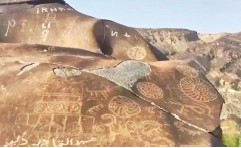
Pakistan’s landscape holds layered stories that go way beyond modern borders. Long before colonial maps carved up South Asia, this land was a crossroads of faiths — where Buddhist stupas coexisted with Hindu temples, and traders, monks, and scholars moved freely. You find remnants of that once-vibrant cultural mosaic in places like the Dharmarajika Stupa and the archaeological ruins of Taxila, or the Buddhist remains at Ranigat and the ancient Shah Allah Ditta caves, which were sacred long before Islamabad existed. But today, these priceless testaments to centuries of shared history are under threat, not just from time, but from neglect, vandalism, and illegal occupation.
Walk through Taxila and you’ll see both wonder and worry. The Dharmarajika Stupa, built in the third century BCE and part of a UNESCO World Heritage Site, should be a jewel of heritage tourism. But around it, decay and encroachment have eaten away at history, with land grabbers and construction creeping ever closer to sacred ruins that once marked Buddhist learning and spiritual life.
Runigat, a sprawling complex of 2,500-year-old Buddhist ruins in Khyber Pakhtunkhwa, tells a similar story. Its stupas and ancient structures — relics of the Gandhara civilization that fused Greek, Persian, and South Asian art — still stand, but they are fragile, watched by time as much as the indifferent eyes of people who may not grasp their significance.
Then there are places like the Shah Allah Ditta caves near Islamabad, carved and decorated by Buddhist monks before Hindu ascetics later used them. These serene relics of multiple spiritual traditions attract visitors, yet they too face slow erosion and lack the investment they deserve.
Heritage doesn’t just crumble because it’s old; it crumbles because it is unseen. In many cases, local apathy and government neglect leave these layers of history unprotected. Where awareness is low and resources are scarce, sites become targets for treasure hunters, illegal diggers, and land grabbers who care more about a quick profit than preserving millennia of culture.
Beyond simple decay, there’s a darker current. Vandalism at ancient sites — such as the painting over of Buddhist carvings with slogans or steps taken by extremists to deface religious images — has been reported in regions like Gilgit-Baltistan. Such acts aren’t just damage to stone; they’re noise crept into the silent stories of a place, erasing voices that walked the same paths centuries ago.For Hindu heritage specifically, legal protection often isn’t enough without enforcement. Centuries-old temples like the Panchmukhi Hanuman Mandir in Karachi have seen their lands illegally occupied, shrinking their footprint despite heritage status. Other historic Hindu sites have suffered neglect or slow decay because there’s little public pressure or political will to restore and protect them.
These threats don’t exist in isolation. They’re part of wider patterns where identity, memory, and history get tangled up with contemporary politics and economic pressures. In a country where day-to-day survival often takes precedence over antiquities, cultural heritage easily slips down the list of priorities. But letting these sites disappear or be defaced isn’t just losing stones and sculptures; it’s losing context about who lived here, how they thought, and how interconnected this region once was.Reviving heritage isn’t just about museums or monuments — it’s about reclaiming stories that belong to millions whose ancestors walked these lands. If we don’t look after those sites now, future generations will inherit not monuments, but gaps in memory.
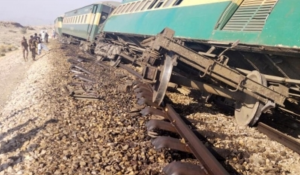
A major train accident occurred on Tuesday in the Multan district of Pakistan's Punjab province. At least four...
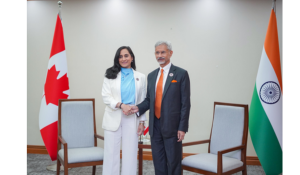
Canadian Foreign Minister Anita Anand will arrive in New Delhi on an official visit on Tuesday. During her...
International human rights organization Amnesty International has expressed serious concern over the alleged arbitrary arrests of prominent leaders...
US President Donald Trump says Vladimir Putin may be more willing than Volodymyr Zelenskyy to reach a peace...

A magnitude 6.1 earthquake struck Panama early Tuesday at a depth of 10 kilometres. The tremor followed a...

US President Donald Trump has indicated the possibility of meeting North Korean leader Kim Jong Un during his...
Aries: The day will be auspicious...