Last Updated: October 21, 2026
Last Updated: October 21, 2026





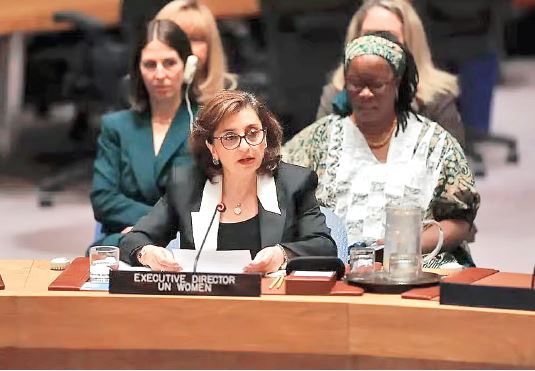
At the United Nations headquarters in New York on October 6, 2025, UN Women Executive Director Sima Bahous urged world leaders to transform the 25th anniversary of Security Council Resolution 1325 on Women, Peace and Security into a milestone for action rather than a symbolic commemoration. Addressing the UN Security Council, she called for renewed global commitment to women’s inclusion in peace and security efforts amid rising global conflict and gender inequality.
Bahous warned that the international community was witnessing a “renewed pushback” against gender equality and multilateralism, compounded by growing military spending that threatened the foundations of peace. “Today, 676 million women and girls live within reach of deadly conflict, the highest number since the 1990s,” she said. “Women and girls who live amidst conflict deserve more than commemoration. It must instead be a moment to refocus, recommit, and ensure that the next 25 years deliver much more than the last.”
Adopted unanimously in October 2000, Resolution 1325 acknowledged the disproportionate impact of conflict on women and recognised their essential role in conflict prevention, peace negotiations, and post-conflict reconstruction. It marked the first time the Security Council formally linked gender equality to international peace and security.
However, Bahous said progress over the past two and a half decades had been uneven. “Bold commitments have too often been followed by weak implementation and chronic under-investment,” she said. She highlighted the urgent need to act during ongoing crises in Gaza, Afghanistan, Sudan and Haiti, where women continue to bear the brunt of conflict and displacement.
Referring to the situation in Gaza, Bahous welcomed what she called “positive responses” to United States President Donald Trump’s proposal for a ceasefire and urged all parties to pursue a just and lasting peace that guarantees dignity, security and opportunity for Palestinian and Israeli women alike.
Bahous also pointed to worsening global trends affecting women and girls, including shrinking education opportunities, collapsing health systems, and severe cuts to humanitarian funding. “Short-sighted funding reductions,” she said, “are depriving Afghan girls of schooling and limiting life-saving care for survivors of sexual violence in Sudan, Mali, Somalia, Haiti and elsewhere.”
Despite mounting challenges, Bahous highlighted examples of women’s leadership in peacebuilding. She cited women mediating local conflicts in Abyei and the Central African Republic, advancing political representation in Haiti, Chad and Syria, and promoting gender-responsive budgeting in Ukraine. These examples, she said, demonstrated that women continue to drive peace efforts even in the most difficult environments.
Bahous stressed that greater investment was needed in women-led organisations working on the frontlines of conflict. She argued that while global institutions had received sustained attention and funding, grassroots women’s movements had been largely neglected.
She also warned against the growing “normalisation of misogyny” that she said was “poisoning politics and fuelling conflict.” Yet she remained optimistic that this could be reversed. “Those who oppose equality do not own the future; we do,” she said.
Looking ahead, Bahous urged that the Women, Peace and Security agenda evolve to address new challenges, including online gender-based violence, and incorporate stronger accountability measures for states and institutions failing to meet their commitments.
She outlined five key actions for the next phase of implementation: ensuring affirmative action for women’s participation in peace processes and leadership; measuring progress by women’s involvement in security decision-making and access to justice; ending all forms of violence against women, including technology-facilitated abuse; ending impunity for gender-based crimes; and embedding the agenda among younger generations to secure its continuity.
Concluding her address, Bahous reminded the Council that Resolution 1325 represented a landmark promise that remained only partially fulfilled. “When women lead, peace follows,” she said. “We made a promise to them 25 years ago. It is past time to deliver.”
Protests in Jakarta, Yogyakarta and Bandung brought students onto the streets over rising costs, forest fires and civil...
Organisations linked to Neville Roy Singham are under US congressional scrutiny over funding. Their coverage of protests in...
US President Donald Trump says Washington and New Delhi are close to a trade agreement that will differ...

Iran has ruled out transferring its enriched uranium stockpile outside the country, with security official Mohsen Rezaei reiterating...
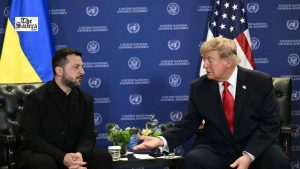
Donald Trump has urged Volodymyr Zelensky to pursue a peace deal with Russia, warning that Ukraine could face...
Pakistan, battling insurgencies at home and tensions along multiple borders, is too overstretched to offer meaningful military support...
Aries: The day will be auspicious...