Last Updated: October 12, 2026
Last Updated: October 12, 2026





Shreya Sharma
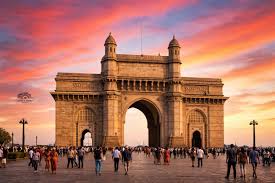
Mumbai’s intimacy with the sea is a famous affair. People of this city arrive at the seaside at any opportunity that presents itself. A Sunday, a quiet afternoon, a tired evening. They step out of musty squalors crowded with housemates and laundry, sprint away from the sensory mayhem of traffic and construction, and avoid the general assaults on their privacy to sit at the shore and hook their eyes on far-away nothingness. The horizon is a respite from everything else. It reminds them of space — of there being something larger than the immediacy of everyday life — and beckons them to breathe.
But something different has been happening of late. Now, when people go to meet the sea, they see the oneness of sea and sky injured by sprawling urbanisation, by the roadways being built from Marine Drive to Worli, Worli to Bandra, Bandra to Versova, and Versova to Bhayander. Essentially, across Mumbai’s entire coast.
To object to the coastal roadways is to pronounce yourself an irrational and imbecilic romantic. While I can’t honestly claim I’m neither of those, let me be clear: I am not anti-development. I am not against easier mobility. I wholeheartedly support better traffic flow and less congestion. Most of all, I do not reject change. I live in a city where change personifies itself more manifestly than anywhere else. But the existence of the city is changing now in a way entirely unforeseen. Along with the country, I suppose. And the gap between who it helps and who it affects is swelling rapidly.
Who rides the roads?
Before I talk about the esoteric subject of this article, which is the death of a horizon, I must address the material, positive claims of the coastal road network. I must do this to have you take my spiritual claims seriously, and to make a case for why the material benefits do not outweigh the metaphysical costs.
The roadways serpenting the Arabian Sea coast of Mumbai are said to have freed up the life of an average commuter. The highway projects cut down travel time by various impressive figures. For the Brihanmumbai Municipal Corporation (BMC) and the state government, they are game-changers in Mumbai’s congestion. And they really do ease life — for some. The rest remain stuck in congestion, in longer and longer bus queues, and in the frustration of poorer public services.
The coastal roadways are built exclusively for cars. Two-wheelers, rickshaws, and heavy vehicles are banned, while bus routes do not traverse. The inadequate expansion of public transportation systems due to their exclusion from urban planning runs alongside the promotion of car-infrastructure. A bus, on average, carries the load of eight cars, but the number of operational BEST buses has been dwindling over the years. With the BMC — India’s richest municipal body — substantially diverting funds away from public transport services, BEST’s fleet of buses is about a half of what it was 15 years ago. At the same time, the number of cars on the road has grown to 2.75 times, almost triple, of what it was 15 years ago.
Even then, as of 2024, merely 48 lakh (4.8 million) people rely on private vehicles for daily commute, of which only 14 lakh (0.14 million) rely on cars (others on two-wheelers), whereas 108.7 lakh (10.87 million) people continue to rely on public transport. So, there are 7.8 times more people using public transport (excluding auto rickshaws and cabs) than private cars. To put it simply, Mumbai’s urban infrastructure increasingly favours less than one-eighth of the population. (Courtesy: DTE)
New Delhi: The Indian Navy’s guided missile stealth frigate INS Trishul has arrived at the United Kingdom’s Plymouth...
Chandigarh: The Aam Aadmi Party (AAP) Punjab on Sunday condemned the Delhi Police action against protesters in the...
Tehran: Iranian Foreign Minister Seyed Abbas Araghchi said on Sunday the US-Israeli attacks on Iran’s oil, refinery, and...
Bhopal: The CBI arrested an official of the CGST and Central Excise department in Bhopal for taking a...

New Delhi: Leader of the Opposition in the Lok Sabha, Rahul Gandhi, on Sunday released a video on...

Mumbai: Shweta Bachchan Nanda once opened up about how the entry of Aishwarya Rai changed the dynamics in...

Aries: The day will be auspicious...