Last Updated: October 15, 2026
Last Updated: October 15, 2026





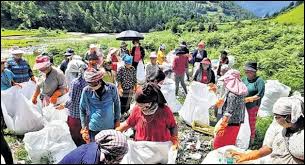
High in the hills and valleys of Northeast India, where rivers carve their own stories and forests breathe with ancient rhythm, a quiet revolution is unfolding. Here, change doesn’t arrive with grand announcements. Instead, it moves in the soft clatter of segregated bins, the hum of village-run recycling units, and the determined footsteps of citizens who refuse to let their lands drown in waste.
Across the region, from bustling market towns to remote hamlets, communities are rewriting the narrative of waste management with startling resolve. What was once an overwhelming challenge is now becoming a canvas for innovation: plastic transformed, compost pits doubling as livelihood sources, groups pioneering recycling networks, and municipalities redefining what a clean city can truly look like.
Whether reclaiming decades-old dumpsites, restoring rivers, reinventing festivals, or turning citizens into custodians of public spaces, Northeast India reflects a deeper shift: waste is no longer being pushed out of sight, but responsibly brought into systems that value reuse, recovery, and respect for nature. Among many inspiring efforts across the region, some notable stories act as a testament to the Northeast’s ability to turn obstacles into opportunities and waste into a catalyst for positive change.
North Lakhimpur Leads Assam’s Urban Green Revolution
North Lakhimpur in Assam has become a standout example of scientific waste management under Swachh Bharat Mission-Urban 2.0, turning decades of environmental neglect into a model of urban renewal. The North Lakhimpur Municipal Board cleared 79,000 metric tonnes (MT) of legacy waste from the Chandmari dumpsite. The intervention freed 16 bighas of land, with another 10 bighas now set to be transformed into an Urban Forest and Urban Retreat Zone. The revival of the nearby Sumdiri River has further restored local biodiversity, bringing back birds, fish, and aquatic life.
To strengthen daily waste management, the city now processes its 36–42 ton per day (TPD) of municipal waste through modern systems. Japisajia, Assam’s first integrated hub combining a Material Recovery Facility (MRF) and a Waste-to-Compost (WTC) Plant handles recycling, segregation, and composting in one place. The MRF operates with a 100 TPD capacity across 7,000 sq. ft, feeding recyclables back into the circular economy, while the WTC unit converts 25 TPD of wet waste into organic compost for local farmers.
Together, legacy waste clearance, integrated processing facilities, and ecological restoration have made “Swachh Lakhimpur” a benchmark for sustainable urban development in Assam. Whether reclaiming decades-old dumpsites, restoring rivers, reinventing festivals, or turning citizens into custodians of public spaces, Northeast India reflects a deeper shift: waste is no longer being pushed out of sight, but responsibly brought into systems that value reuse, recovery, and respect for nature. Among many inspiring efforts across the region, some notable stories act as a testament to the Northeast’s ability to turn obstacles into opportunities and waste into a catalyst for positive change. North Lakhimpur Leads Assam’s Urban Green Revolution
North Lakhimpur in Assam has become a standout example of scientific waste management under Swachh Bharat Mission-Urban 2.0, turning decades of environmental neglect into a model of urban renewal. The North Lakhimpur Municipal Board cleared 79,000 metric tonnes (MT) of legacy waste from the Chandmari dumpsite. The intervention freed 16 bighas of land, with another 10 bighas now set to be transformed into an Urban Forest and Urban Retreat Zone. The revival of the nearby Sumdiri River has further restored local biodiversity, bringing back birds, fish, and aquatic life.
Singapore: Two Singapore-registered container vessels were reportedly struck by unknown projectiles while transiting the Strait of Hormuz on...

Shimla: The Himachal Pradesh government has constituted a four-member commission to examine the reorganisation of administrative units in...

New Delhi: The Supreme Court on Wednesday listed for November 17 the appeal filed by self-styled godman Asaram...

Ranchi: Doctors in Jharkhand launched a protest on Wednesday over a slew of demands concerning their safety and...

Greater Noida: Police and Anti-Narcotics Team in Uttar Pradesh’s Greater Noida have seized ‘ganja’ worth Rs 1 crore...

New Delhi: The Enforcement Directorate (ED) has attached assets worth Rs 2,032.81 crore belonging to Reliance Power Ltd...
