Last Updated: October 12, 2026
Last Updated: October 12, 2026





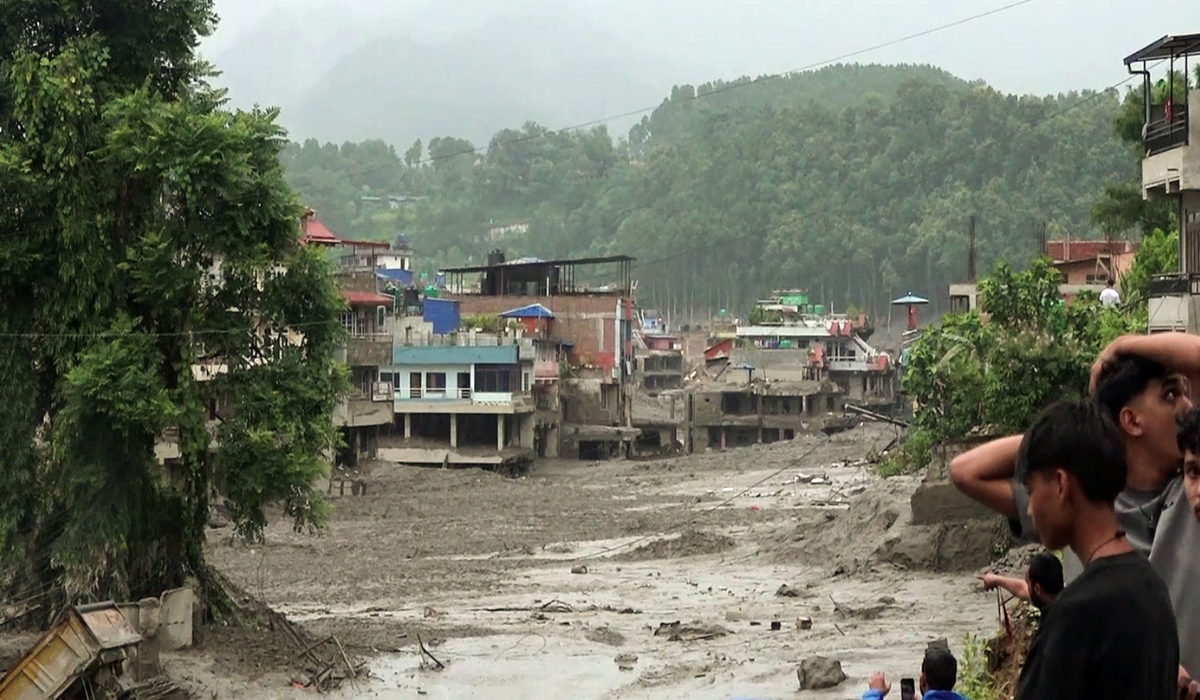
Nepal has suffered a devastating flood similar to the one that struck Kedarnath in 2013. Initially, reports suggested a 4.4 magnitude earthquake in Tibet, but later it was discovered that a large portion of the mountain, including ice and rock, had collapsed and fallen into the Lhende Khola River. This caused a glacier to burst, and within minutes, the Bhotekoshi River was inundated with devastating floods. The devastating flood swept away people, livestock, homes, and vehicles. Nearly a dozen hydroelectric projects were affected, and a dozen residential areas were affected. The flooding in the Bhotekoshi River also caused the Trishuli River to overflow. This river’s waters flow into Uttar Pradesh and Bihar, so the floods in Nepal are expected to affect India. As of the last reports, 360 bodies had been recovered. More than 2,100 people, including 288 Indians, were missing. Twenty-one Indians were rescued, of whom 11 have been identified. Indian tourists on a pilgrimage to Kailash Mansarovar were also caught in the floodwaters. Many remain missing. 44 Nepali Army soldiers, 80 security personnel, and 265 Chinese tourists were also missing. Tourists from India, the United States, Malaysia, Britain, South Africa, and Australia were also in this area of Nepal. The 43-kilometer-long road connecting the Rasuwagadhi border was also washed away. Roads in many nearby areas were destroyed. Several concrete bridges were also washed away. Prime Minister Narendra Modi expressed condolences for the unfortunate floods and the loss of life and property in Nepal. India has stepped forward with relief supplies and other aid. The floods affected areas approximately 70 to 200 kilometers from the capital, Kathmandu. Just like the flood tragedy that occurred in Kedarnath valley of Uttarakhand in 2013, a similar scene is being witnessed in Nepal. The question arises as to why such horrific disasters, devastating humanity, occur. On a smaller scale, several such reports emerged from Uttarakhand last year. The road to Shimla, the capital of Himachal Pradesh, was washed away in a landslide. While we tout modernity and development, such incidents highlight human helplessness and administrative shortcomings. Many wealthy nations have failed to fulfill their responsibility to combat environmental pollution and global warming. Third-world countries have been calling for a long time to combat environmental pollution and global warming, but other wealthy nations, including the United States, cleverly demand that India lead this fight, refusing to contribute substantial funds. This is why, while there is much talk of waging a war against environmental pollution and global warming, this war has yet to be waged on a large scale. As a result, humanity stands at the brink of floods and natural disasters. Will this unfortunate tragedy in Nepal serve as a warning to the world that the fight against environmental pollution and global warming cannot be postponed any longer? When this issue was raised within the Quad nations last year, it was stated that India should lead this fight. The question is why are other prosperous nations unwilling to release sufficient funds from their vast wealth reserves? The fight against environmental pollution is being delayed. As a result, seasons have disappeared, floods occur, cloudbursts occur, and there is massive loss of life and property.
Good Evening Viewers! Stay updated with The Savera Times Evening Bulletin for the latest news from Punjab, India...

eader of the Opposition in the Lok Sabha, Rahul Gandhi and 10 other INDIA bloc leaders have moved...

Amidst protests in central Delhi, the Delhi Metro Rail Corporation (DMRC) announced the reopening of entry and exit...
The Delhi Police has registered an FIR regarding the alleged disturbance at the Bangla Sahib Gurdwara in...

The Delhi Police on Monday removed Jantar Mantar from the list of officially designated protest sites. The police...

The Supreme Court on Monday clarified that it has not passed any judgment on the Election Commission's (ECI)...

Aries: The day will be auspicious...