Last Updated: October 24, 2026
Last Updated: October 24, 2026





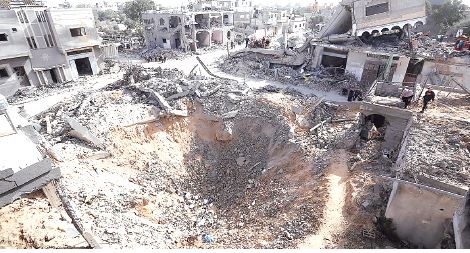
At noon on Friday, October 10, 2025, a US-brokered deal brought a pause to a two-year war between Israel and Hamas: a ceasefire that, in its first phase, set out an exchange of hostages—about 20 Israelis for roughly 250 Palestinian prisoners, alongside the release of some 1,700 detainees from Gaza. The announcement ended a period of intense fighting, but it also shifted attention to the deeper, slower forces that shape conflict in the region: geography, resources and the long shadow of historical grievance.
The recent violence itself had been triggered by a brutal Hamas attack on Israeli civilians, timed on Yom Kippur and echoing the historic shock of earlier wars. Yet to understand why cycles of violence erupt and endure, it helps to look beyond battlefield events to the landscape people fight over. The Negev Desert, for example, is not only the largest contiguous dryland within Israel—about 13,000 square kilometres, roughly 60 percent of the country—but also a symbolic and practical frontier. It lies at the meeting point of Israel, Egypt and Jordan and borders the Gaza Strip. For centuries this region has been home to nomadic and pastoral communities whose seasonal movements and resource use were altered dramatically during the twentieth century.
Bedouin life in the Negev was historically organised around pastoralism and patchy dry farming, with seasonal migrations for livestock. Modernisation and settlement transformed that economy. Today, only a small fraction of the Negev’s Bedouin population relies primarily on livestock; most work in wage employment. The increase in population, settlement and irrigation infrastructure in the decades after 1940 strained the desert’s carrying capacity and reshaped patterns of land use.
Water is a central and recurring source of tension. In the 1950s and 1960s disputes over river diversion and irrigation projects—above all the control of flows from the Jordan and Yarmuk river systems and the Sea of Galilee—helped turn local confrontations into regional crises. Israel’s development of water infrastructure, and Arab plans to alter river flows in response, contributed to the skirmishes and political standoffs that culminated in the wider wars of the 1960s. Control of water, pipelines and springs has therefore been as much strategic terrain as any mountain or plain.
Today, water and infrastructure remain weapons and targets. In the recent conflict, Palestinians reported repeated attacks on wells and pipelines; restrictions and damage to water systems have compounded civilian suffering. When basic utilities are damaged, humanitarian needs multiply.
Which brings into stark relief a practical and urgent question: who will rebuild Gaza? The immediate humanitarian scale is vast. Humanitarian planners estimate that to keep hundreds of thousands from starvation and to meet basic needs, roughly 600 truckloads of supplies would need to enter Gaza each day for many months. Winter looms, and the logistical and ecological costs of reconstruction will be immense. Beyond food and medicine, rebuilding housing, sewage, water systems and power grids will require sustained financing, technical capacity and political coordination.
But the global architecture for post-war reconstruction is uneven. Gaza is not a member of institutions such as the World Bank; some major donors have at times restricted direct assistance pending political conditions. The United States’ policy stance, divisions within the European Union and the varying priorities of wealthy Gulf states all shape the prospects for large-scale, sustained funding. That leaves reconstruction dependent on a mix of international aid agencies, bilateral donors and regional initiatives—each constrained by politics as much as by budgets.
The environmental bill will be high. War leaves not only ruins but damaged ecosystems: soil contamination, disrupted watercourses, destroyed sanitation systems, and abandoned agricultural land. Recovery therefore cannot be measured only in dollars; it must account for the long-term restoration of water systems, agricultural viability and public health infrastructure.
The ceasefire provides a pause, not a solution. If reconstruction and rehabilitation are to prevent the next cycle of grievance and deprivation, planners will need to combine urgent humanitarian relief with durable investments in water, energy and livelihoods—work that requires political will as much as financing. Nature, after all, keeps its own ledger. Restoring the physical systems on which communities depend will be central to any lasting peace.
Washington: US President Donald Trump has acknowledged that the war with Iran has driven up oil prices and...

Washington: US President Donald Trump has announced a new labelling initiative to identify American-produced seafood, seeking to give...
Kinshasa: A major clinical trial to evaluate vaccines against the Bundibugyo Ebola virus began Friday in the eastern...
Washington: US President Donald Trump has warned that American forces could launch another round of military strikes against...

The Indian Army on Friday rejected claims on social media that the Army had taken action against the...
Abdul Majid Hakim Elahi, Iran's Supreme Leader's representative and senior diplomat, said on Friday that the US has...
Aries: The day will be auspicious...