Last Updated: November 27, 2026
Last Updated: November 27, 2026




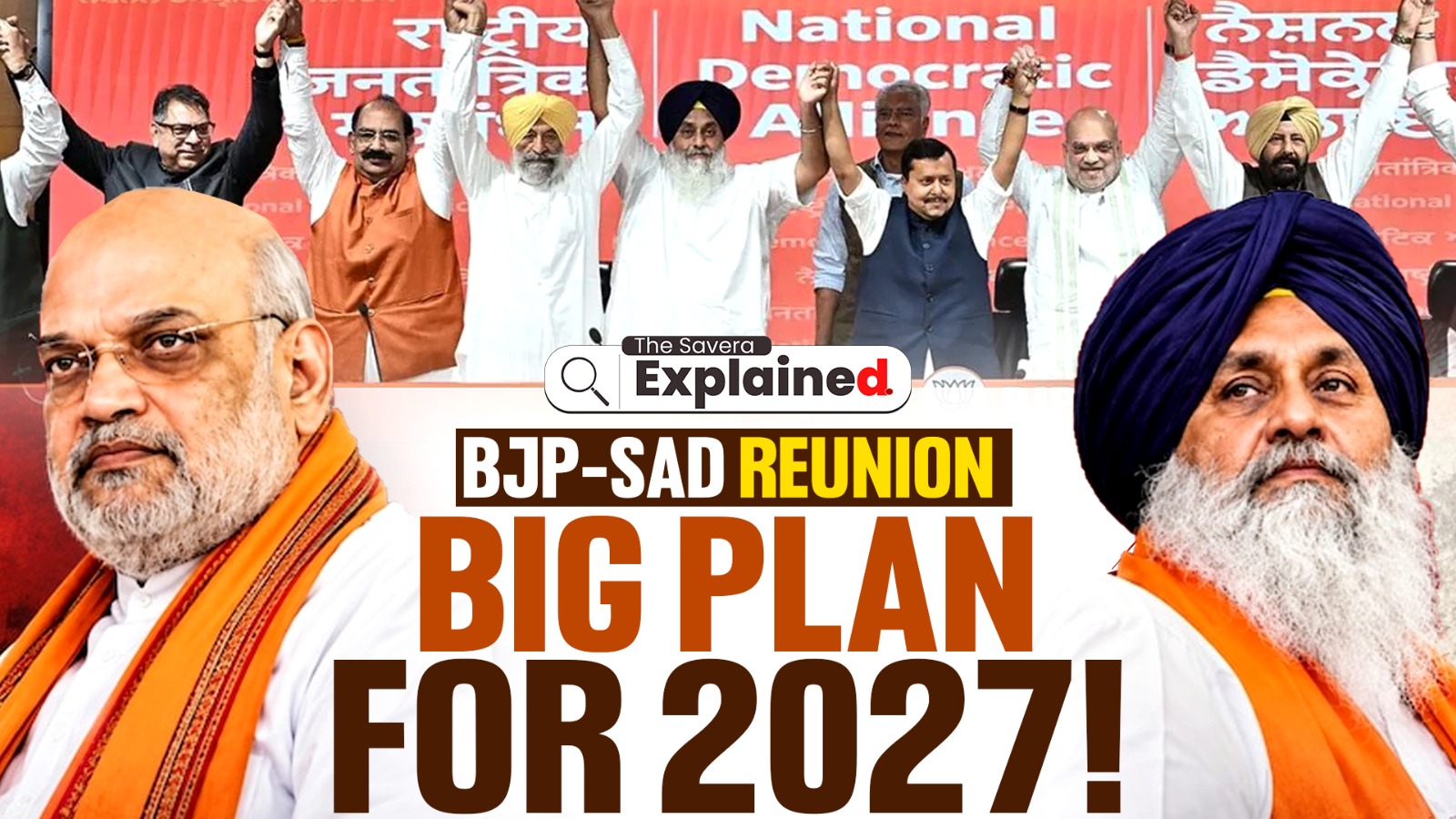
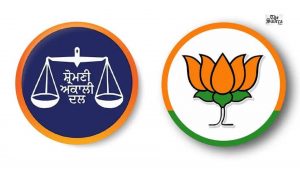
The BJP and Shiromani Akali Dal (SAD) have reunited ahead of the 2027 Punjab Assembly elections, ending a six-year separation. On November 24, Union Home Minister Amit Shah announced the alliance alongside SAD president Sukhbir Singh Badal and BJP national president Nitin Nabin. Shah made it clear that the Akali Dal would remain the ‘big brother’ in Punjab.
Sukhbir Badal called it an emotional reunion, recalling his father Parkash Singh Badal’s description of the relationship as ‘nail and flesh’. But behind this political reunion lies a bigger electoral calculation. The BJP wants to expand its rural presence, while the Akali Dal needs to rebuild its declining support base.
So, why has the BJP accepted the junior partner’s role, what are its five major strategies, and what challenges could stand in its way?
Q1. Why did BJP choose to become the ‘younger brother’?
The BJP and SAD first came together for the 1996 Lok Sabha elections, followed by a formal alliance before the 1997 Punjab Assembly elections. Their partnership was based on complementary voter bases. The Akali Dal had strong support among rural Sikh and farming communities, while the BJP had influence among urban Hindus and traders.
Together, they governed Punjab for 15 years, including 1997-2002 and 2007-2017. The alliance won consecutive Assembly elections in 2007 and 2012.
However, the relationship ended in September 2020 when the SAD withdrew from the NDA over the Centre’s three farm laws. Harsimrat Kaur Badal resigned from the Union Cabinet in protest. The laws were repealed in November 2021, but the parties remained separate.
Their electoral performance suffered afterwards. In 2022, AAP won 92 of 117 Assembly seats, while SAD secured just three and BJP two. In the 2024 Lok Sabha elections, SAD won one seat, while BJP failed to win any.
The reunion is therefore an attempt to combine their traditional voter bases and challenge AAP and Congress. The BJP also recognises that building a strong independent rural Sikh base will take time. Accepting SAD’s senior position gives it an established regional partner and a route into constituencies where it has historically struggled.
Q2. What are the BJP’s five major moves to regain power?
The alliance is only one part of the BJP’s Punjab strategy. The party is working on five fronts.
Haryana Chief Minister Nayab Singh Saini has been given an important role in Punjab outreach. His public meetings aim to expand BJP’s reach beyond urban voters and connect with other communities.
The appointment of Kewal Singh Dhillon as Punjab BJP president in May 2026 is significant. A Jat Sikh leader from Malwa, he is expected to help the party strengthen its rural presence.
The BJP is focusing on Dalit and OBC voters, particularly in Doaba. Modi’s visit to Dera Sachkhand Ballan on Guru Ravidas Jayanti and the party’s social harmony campaign are part of this strategy.
The BJP has brought several prominent Congress leaders into its fold, including Captain Amarinder Singh, Sunil Jakhar and Ravneet Singh Bittu. Recent defections involving AAP leaders and legislators are also helping it expand its political network.
The BJP is highlighting drug addiction, gangsters and security. Its ‘Nasha Mukt Punjab Yatra’ covered all 117 Assembly constituencies. At the alliance announcement, Shah again promised to tackle drugs and gangsters while prioritising farmers’ welfare.
Q3. What are the four major challenges?
The 2020 split remains a major hurdle. Although the three farm laws were repealed, sections of the farming community continue to question the BJP’s approach. Farmer organisations have criticised the reunion. The alliance will need to rebuild trust through concrete assurances on MSP and agricultural concerns.
The 2015 sacrilege incidents and police firing on protesters damaged SAD’s image. Sukhbir Badal also faced internal dissent and was declared ‘tankhaiya’ by the Akal Takht in 2024. Although he completed the religious punishment, rebuilding public trust remains difficult.
The alliance will face AAP, which won 92 seats in 2022, and Congress, which remains a significant political force. Anti-incumbency against the Bhagwant Mann government could become an issue, but it does not automatically guarantee votes for the BJP-SAD alliance.
Under the old arrangement, SAD contested 94 seats and BJP 23. This time, BJP wants a larger share, while SAD wants to retain its regional position. The chief ministerial face and allocation of constituencies could create disagreements.
The road to 2027
The BJP has chosen partnership over an immediate attempt to dominate Punjab independently. SAD brings regional roots, while BJP brings national leadership, organisational resources and an urban support base. But the political situation has changed considerably since 2020. Rebuilding voter trust, addressing farmers’ concerns and resolving seat-sharing differences will be crucial to the alliance’s electoral campaign.
Jalandhar: The prestigious coaching institute Allen Career Institute is set to inaugurate its new classroom centre in Jalandhar...
Punjab BJP chief Sunil Jakhar has urged Chief Minister Bhagwant Mann to seek an expedited trial in the...
A purported seat-sharing list between the BJP and Shiromani Akali Dal has sparked speculation online ahead of the...
BSF personnel shot dead a Pakistani intruder after spotting him around 120 metres inside Indian territory near Pathankot....
Addressing a massive gathering in Moga, Punjab Chief Minister Bhagwant Mann highlighted his government’s achievements and appealed to...
NEW DELHI / CHANDIGARH / MOGA: Addressing a historic gathering at Aam Aadmi Party (AAP)’s ‘Khushhaal Punjab Maha...
Aries: The day will be auspicious...