Last Updated: October 15, 2026
Last Updated: October 15, 2026





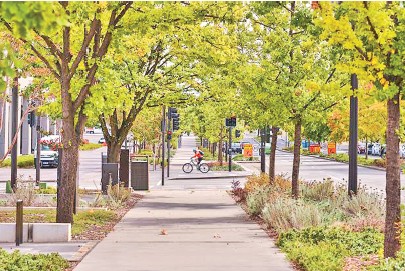
Urban trees are often treated as decorative elements—planted along roads, inside parks, or around government buildings for visual appeal. In reality, trees in cities perform critical functions that directly affect public health, climate resilience, and quality of life. As Indian cities expand rapidly, the role of urban trees has become more important than ever.
One of the most visible benefits of urban trees is temperature regulation. Cities experience higher temperatures than surrounding rural areas due to concrete surfaces, traffic, and reduced vegetation—a phenomenon known as the urban heat island effect. Trees provide shade and release moisture through transpiration, lowering surface and air temperatures. Studies across Indian cities have shown that areas with dense tree cover can be several degrees cooler than nearby built-up zones, reducing heat stress during increasingly frequent heatwaves.
Urban trees also improve air quality. Leaves trap particulate matter, absorb pollutants such as nitrogen dioxide and sulphur dioxide, and produce oxygen. In cities with high traffic density and industrial activity, this natural filtration system becomes vital. While trees alone cannot solve air pollution, their presence significantly reduces exposure at the local level, especially near schools, residential areas, and pedestrian spaces.
Another crucial role of urban trees lies in water management. As climate change increases the intensity of rainfall events, cities face rising risks of flooding. Tree roots help absorb rainwater, improve soil permeability, and slow surface runoff. Green spaces with tree cover act as natural sponges, reducing pressure on drainage systems. In contrast, tree removal often worsens waterlogging, soil erosion, and infrastructure damage.
Urban biodiversity also depends heavily on tree cover. Trees provide habitat and food for birds, insects, and small mammals, maintaining ecological balance within cities. This biodiversity supports pollination, pest control, and seed dispersal, contributing to healthier urban ecosystems. Even small clusters of native trees can support surprising levels of wildlife, demonstrating that conservation is not limited to forests alone.
Beyond environmental benefits, urban trees have a direct impact on mental and physical well-being. Access to green spaces has been linked to reduced stress, improved concentration, and better overall mental health. For children and elderly residents in dense neighbourhoods, tree-lined streets and parks offer safe spaces for recreation and social interaction.
These benefits are especially important in cities where living spaces are shrinking and outdoor access is limited.Despite their value, urban trees are under constant threat. Road-widening projects, real estate development, and infrastructure expansion frequently result in large-scale tree cutting. Compensatory plantation policies often fail to replace lost ecological value, as newly planted saplings take years to mature and are frequently planted in unsuitable locations. Survival rates of compensatory plantations remain low in many cities due to poor planning and lack of monitoring.
Urban planning frameworks have also struggled to integrate trees as essential infrastructure. Trees are often treated as obstacles rather than assets during development planning. Footpaths are built without space for roots, utility lines are laid without protection zones, and pruning is carried out without ecological understanding. These practices weaken tree health and shorten their lifespan.
Some cities are beginning to rethink this approach. Urban forestry initiatives that prioritise native species, protect mature trees, and involve local communities have shown positive results. Mapping tree cover, assigning monetary value to ecosystem services, and including arborists in planning processes are steps that improve long-term outcomes.
Citizen-led tree monitoring and neighbourhood stewardship programmes have also helped improve survival rates and accountability.
Protecting urban trees is not a choice between development and environment. It is a question of smarter development. As cities grow, trees must be seen as public assets that support climate adaptation, health, and resilience. Preserving and expanding urban tree cover is one of the most cost-effective ways to improve city life in a warming world.
New Delhi: The Delhi High Court on Thursday recorded the assuarance by Delhi Polices promise that all legal...
New Delhi: The Ministry of Defence on Thursday said it has signed contracts worth Rs 4,106 crore for...

Patna: An Excise Department constable was killed after suspected liquor smugglers and an alleged accomplice opened fire on...
New Delhi: Amid the ongoing protests, investigators have found that certain elements backed by Pakistan launched a multi-layered...
Good Afternoon Viewers! Stay updated with The Savera Times Afternoon Bulletin, bringing you the latest news from Punjab,...

New Delhi: Heavy rain and thunderstorms swept parts of Delhi-NCR on Thursday as dark clouds covered the national...
Aries: The day will be auspicious...