Last Updated: October 20, 2026
Last Updated: October 20, 2026






India has performed miserably in integrating health into national climate change action plan, according to a new global scorecard. The finding is significant given the country’s vulnerability to climate-related illness and premature death. According to “Healthy NDC Scorecard”, published by the Global Climate and Health Alliance, assessed how well countries incorporate health considerations into their Nationally Determined Contributions (NDCs). These are national climate action plans submitted under the Paris Agreement, setting out commitments to reduce greenhouse gas emissions and adapt to climate change. Of the 132 countries assessed, Colombia scored highest for integrating into its climate plan, followed by Nigeria and Cambodia. Climate commitments of several high emitting economies, by contrast, do not adequately account for health, states the report. It is third in the series, following earlier assessments in 2021 and 2023. The Global Climate and Health Alliance is a consortium of more than 300 health professionals and civil society organisations and networks from around the world working at the intersections of climate change and health. The findings are particularly relevant for India, which ranked ninth in the Climate Risk Index 2026, covering the period from 1995 to 2024. The index was released around the COP30 climate summit in Belém, Brazil. Health is also expected to feature prominently at COP31, scheduled to take place in Antalya, Turkey, in November 2026. Discussions at the UN climate negotiations in Bonn in June has set the agenda for advancing health, equity and resilience in the global climate response at COP31. The climate commitments of Japan, New Zealand and India fail to adequately account for health, the report states. Other major emitters, including the EU, China, Brazil and Britain, refer to health in their national climate plans but have not matched those commitments with the emissions cuts needed to protect public health. Many countries are missing opportunities to improve air quality, protect public health and tackle climate change simultaneously. Only five— Cambodia, Chile, Colombia, Costa Rica and Paraguay—have set targets to reduce black carbon, a pollutant that contributes to global warming and air pollution, with serious consequences for human health. India is particularly affected by air pollution, making the omission significant. The report gives India a score of just 2 out of 32 for the extent to which its latest NDC, submitted in April, prioritises health in climate policy. That puts India joint-bottom with Japan and New Zealand. The scorecard assesses eight indicators: health impacts, air pollution, action in the health sector, health co-benefits, a just transition, integrated governance, economics and finance and monitoring and evaluation. Each carries a maximum score of four. India scored zero on six indicators and just one each for action in the health sector and integrated governance. The report estimates that India records 186.2 deaths per 100,000 people from air pollution and warns that the country is on course for a rise in global temperatures of more than 2°C above pre-industrial levels. India additionally carries a high burden of air pollution mortality; but is among the countries which do not refer to air pollution considerations in their NDCs. The scorecard assesses NDCs of 132 countries which submitted their 2035 climate plans to the United Nations Framework Convention on Climate Change (UNFCCC). Colombia topped the rankings with 29 out of a possible 32 points, followed by Nigeria with 25 and Cambodia with 24. Paraguay and Timor-Leste rounded out the top five, with 22 points each. Nineteen of the 20 highest-scoring countries were low- and middle-income economies. The report finds that the emissions-reduction targets in the NDCs of India and Japan are not aligned with the Paris agreement, putting public health at risk and leaving gaps in plans to protect populations from climate-related harms. Other major emitters also scored poorly. South Korea received four points out of 32, Russia six, Brazil seven, and Australia, China and Britain nine each. These countries have failed to commit to what the report considers their fair share of emissions reductions, it says. Indonesia received 11 points, the EU 12, South Africa 13, Turkey 14, Canada 16 and the United Arab Emirates 19. The report warns that inadequate emissions cuts could undermine these countries’ health-related commitments over time. Among the major emitters assessed, the EU’s NDC is the only one to set a specific target for reducing air pollution, according to the report. It commits to phasing out hydrofluorocarbons (HFCs) by 2050. The US, whose NDC was not considered active following its withdrawal from the Paris agreement, received a score of just seven. (
The weather took a turn in Punjab on Wednesday morning. Pathankot experienced heavy rain in the morning. A

A fresh spell of snowfall has transformed the higher reaches of Manali into a picturesque winter landscape, with...

Continuous heavy rains in many parts of the country have triggered floods and landslides.
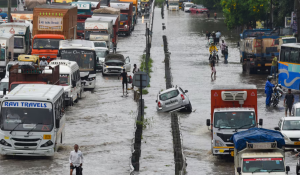
A depression over the Bay of Bengal is expected to intensify into a deep depression and cross the...

More than half of September has passed, and the monsoon is about to depart. This year, the threat...
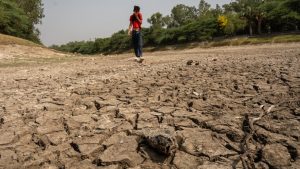
There is a crucial link between environment and health and the current status of Delhi stands as a...

Aries: The day will be auspicious...