Last Updated: October 15, 2026
Last Updated: October 15, 2026






Education is increasingly viewed through the lens of outcomes: degrees earned, jobs secured, and salaries achieved. While these indicators matter, they capture only a narrow slice of what education is meant to accomplish. At its core, education is not merely a pathway to employment, but a process of learning how to think, question, and understand the world.
Credential-driven education encourages short-term goals. Students focus on exams, grades, and certificates rather than curiosity or comprehension. This approach may produce qualifications, but it often fails to cultivate independent thinking. When education becomes transactional, learning turns into memorisation rather than understanding.
Thinking-oriented education, by contrast, equips students with skills that endure beyond classrooms. Critical thinking allows individuals to assess information, recognise bias, and make reasoned decisions. In an age of information overload, this ability is indispensable. Facts change, but the capacity to evaluate them remains valuable for life.
Education should also foster the ability to ask questions. Progress in science, society, and culture has always been driven by questioning existing assumptions. Yet many systems discourage inquiry, rewarding conformity over curiosity. When students are trained only to reproduce answers, they struggle when faced with unfamiliar problems.
Another overlooked aspect of education is ethical reasoning. Schools and universities shape not only careers, but character. Discussions around responsibility, fairness, and social impact help students understand their role within society. Without this grounding, technical skills risk being used without consideration of consequences.
The pressure to link education exclusively to employment has also narrowed academic diversity. Disciplines that encourage reflection, creativity, and historical understanding are often sidelined. Yet societies need thinkers, teachers, artists, and researchers just as much as engineers or managers. Balanced education systems recognise this diversity as a strength rather than a liability.
Teachers play a central role in shaping thinking-oriented education. When educators are encouraged to teach beyond textbooks—through discussion, debate, and exploration—students engage more deeply. However, overburdened curricula and rigid assessment structures limit this potential. Supporting teachers is therefore essential to improving learning outcomes.
Technology has expanded access to information, but access alone is not education. Without guidance, students may struggle to distinguish reliable knowledge from misinformation. Education must therefore focus not just on information delivery, but on interpretation and context.Importantly, education is a lifelong process. The idea that learning ends with formal schooling is increasingly outdated. Rapid social and technological change requires continuous adaptation. Education systems that emphasise thinking over rote learning better prepare individuals to evolve throughout their lives.
Inequality in education remains a major challenge. When quality education is limited to a privileged few, societies lose talent and deepen divisions. Expanding access to thinking-oriented education is not just a moral imperative, but a practical one.
Ultimately, education succeeds when it produces individuals capable of reasoning independently, engaging respectfully with others, and adapting to change. Degrees may open doors, but thinking determines how people navigate what lies beyond them.A society that values education only for credentials underestimates its true power. Education’s greatest contribution lies not in certificates, but in the minds it shapes.
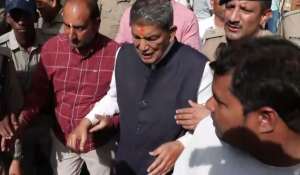
Congress leaders and workers in Dehradun raised slogans outside Lok Bhavan on Thursday regarding the infamous Ankita Bhandari...
New Delhi: The Delhi High Court on Thursday recorded the assuarance by Delhi Polices promise that all legal...
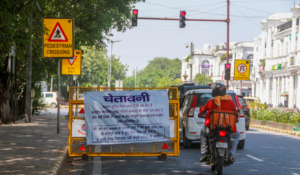
New Delhi: The Ministry of Defence on Thursday said it has signed contracts worth Rs 4,106 crore for...

Patna: An Excise Department constable was killed after suspected liquor smugglers and an alleged accomplice opened fire on...

New Delhi: Amid the ongoing protests, investigators have found that certain elements backed by Pakistan launched a multi-layered...
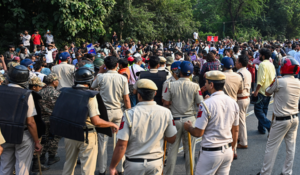
Good Afternoon Viewers! Stay updated with The Savera Times Afternoon Bulletin, bringing you the latest news from Punjab,...

Aries: The day will be auspicious...