Last Updated: October 21, 2026
Last Updated: October 21, 2026





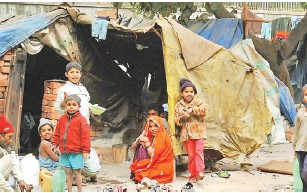
Development has become one of the most overused and least questioned words in public life. Governments invoke it to justify sweeping policies, corporations brandish it to polish their image, and critics are often silenced with a simple retort: this is necessary for development. But as the gap between glittering economic indicators and everyday lived realities widens, it is worth asking a basic question—development for whom, and at what cost?
For decades, growth has been treated as a proxy for progress. Rising GDP, expanding infrastructure, and increasing foreign investment are presented as evidence that a society is moving forward. Yet these numbers often conceal more than they reveal. Highways can coexist with hunger, smart cities with informal settlements, and record profits with mass unemployment. When development is measured only in monetary terms, human dignity becomes an afterthought.One of the clearest failures of the growth-first model is its indifference to inequality. Economic expansion does not automatically translate into shared prosperity.
In many countries, wealth generated by development projects accumulates at the top while the costs—displacement, environmental damage, loss of livelihoods—are borne by those with the least power to resist. Farmers lose land for industrial corridors, forest communities are evicted for mining projects, and urban poor are pushed to the margins in the name of “beautification.” These are not unfortunate side effects; they are built into a model that prioritises speed and scale over justice.The language of development is also deeply political. Once a project is labeled “national interest,” dissent becomes suspect. Those who raise concerns about environmental impact, labour rights, or social disruption are portrayed as obstacles to progress. This framing reduces complex debates into false binaries: development versus stagnation, patriotism versus obstruction. In reality, questioning the terms of development is not anti-progress; it is essential to ensuring progress is meaningful.
Environmental degradation exposes another flaw in the development myth. Rapid industrialisation and unchecked extraction have delivered short-term gains at the cost of long-term survival. Rivers are polluted beyond repair, air quality deteriorates, and climate vulnerabilities deepen—often in regions least responsible for emissions. The irony is stark: development projects meant to improve lives frequently undermine the ecological foundations those lives depend on. Growth that destroys the conditions for future generations is not progress; it is deferred crisis.There is also a psychological dimension to development that is rarely discussed. When success is defined narrowly—through consumption, productivity, and competition—it reshapes social values.
Start your day with The Savera Morning Brief, bringing you the latest news from India and around the...

Union Home Minister Amit Shah will pay tribute to police martyrs at the National Police Memorial in New...

Four more people, including two women, have been arrested in the Tiger Shroff firing case. Delhi Police are...
We are very proud that at present India is the number one country in the world by surpassing...
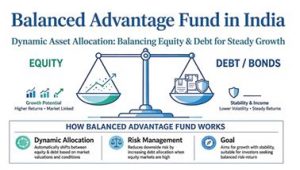
Every investor wants the wealth-creating power of equity and the reassuring stability of debt. Balanced Advantage Funds attempt...
Tourism is a major source of government revenue in our country. There are different types of tourism. Scenic...
Aries: The day will be auspicious...