Last Updated: October 21, 2026
Last Updated: October 21, 2026





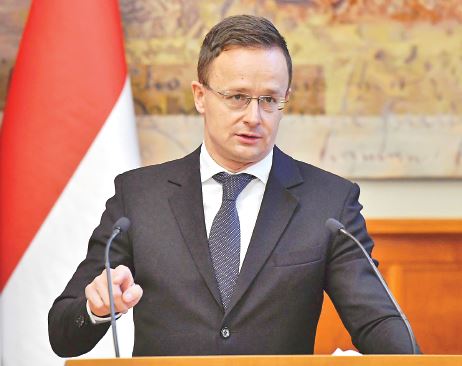
Hungary will continue purchasing Russian oil and will not reduce its reliance on Moscow for energy, Foreign Minister Péter Szijjártó said, rejecting calls from the United States for NATO allies to cut imports.
Speaking in New York on the sidelines of the United Nations General Assembly, Szijjártó framed the dispute as a matter of supply security and physical infrastructure. He said Hungary could not guarantee safe energy supplies without access to Russian oil and gas, and added that while he understood the position advanced by US leaders, the country must operate within the constraints set by existing pipelines, storage and refining facilities.
The remarks underline a growing divide between Washington’s public pressure on Europe to wean itself from Russian energy and the practical realities faced by several Central European states. Former President Donald Trump has intensified demands that European nations end their dependence on Russian oil, tying the prospect of new sanctions on Moscow to a broader European break with Russian imports.
Szijjártó made the point that aspirations to source fuel from alternative suppliers remain theoretical unless the necessary transport and processing infrastructure exists. He said it was easy to talk about buying oil from other places, but far harder to do without the pipelines and refineries that physically move and refine crude. That emphasis on logistics has become central to Budapest’s defence of its current energy posture.
State-owned MOL Group is a significant actor in the region’s fuel system. The company imports about 5 million tonnes of oil a year through the Druzhba pipeline, a flow that helps supply refineries in Hungary and neighbouring Slovakia. Those pipeline connections are at the heart of the argument advanced by Hungarian officials that an abrupt pivot away from Russian crude would be technically complex and costly.
Political alignment colours the debate as well. Prime Minister Viktor Orbán, a prominent figure in European politics, has expressed admiration for aspects of Donald Trump’s approach and has been critical of Ukraine in some statements, while maintaining working relations with the Kremlin. European leaders have repeatedly urged Hungary and Slovakia to move away from Russian oil, but those appeals have not yet shifted policy in either capital.
The US demand for a wholesale break with Russian energy has drawn scepticism from some quarters in the West. Observers note that the call places an uneven burden on countries whose energy networks were built around east-west flows of fuel. They argue that immediate, comprehensive cuts could inflict serious economic pain on households and industry without clear alternative supplies or infrastructure in place.
The debate has also erupted into public exchanges. Senator Lindsey Graham, a Trump ally, pointedly identified Hungary and Slovakia as among the last holdouts on Russian oil and urged them to act. He said that the responsibility now falls on a shrinking group of states and warned that failure to change course could prompt consequences.
Hungary’s stance highlights the tension between diplomatic aims and technical constraints. Officials in Budapest stress that energy policy must balance political objectives with the immediate need to keep homes heated and factories running. From this perspective, continuing imports from Russia is a pragmatic choice until new routes or facilities can be developed.
Any realignment would require significant investment and time. Options for diversification include building new pipeline connections, expanding the capacity to receive liquefied natural gas or making substantial upgrades to refining and storage infrastructure. Szijjártó did not outline a timetable for such changes. Instead he reiterated that procuring energy is governed by what the physical supply system can deliver today.
The disagreement exposes wider challenges for NATO and the European Union as they seek a unified approach to Russia. Allies face competing pressures: to impose costs on Moscow for its actions and to avoid destabilising their own economies. Hungary’s insistence on maintaining current supplies complicates efforts to present a single policy posture on energy.
For now, Budapest defends its position on pragmatic grounds, emphasising continuity of supply while signalling openness to dialogue. Szijjártó said he understood Washington’s concerns but insisted Hungary must act within the limits imposed by its infrastructure and national security needs.
The coming months are likely to see intensified diplomatic engagement as allies try to bridge the gap between policy aims and technical limits. Any substantial reduction in Russian oil imports would require coordinated planning, significant capital expenditure and time to build alternative routes or facilities. Until such measures are in place, Hungary’s insistence on maintaining current supplies is likely to remain a central point of contention in allied discussions.
Start your day with The Savera Morning Brief, bringing you the latest news from India and around the...

Union Home Minister Amit Shah will pay tribute to police martyrs at the National Police Memorial in New...
Four more people, including two women, have been arrested in the Tiger Shroff firing case. Delhi Police are...

We are very proud that at present India is the number one country in the world by surpassing...

Every investor wants the wealth-creating power of equity and the reassuring stability of debt. Balanced Advantage Funds attempt...

Tourism is a major source of government revenue in our country. There are different types of tourism. Scenic...

Aries: The day will be auspicious...