Last Updated: November 6, 2026
Last Updated: November 6, 2026






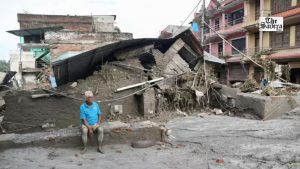
India experienced extreme weather events on 92 per cent of days in the first nine months of 2026, resulting in 3,220 deaths, damage to 4.25 million hectares (mha) of crops and the destruction of 128,334 houses if reports are to be beleived. The trends between 2022 and 2026, found that the share of days affected by extreme weather increased from 86-88 per cent in 2022 and 2023 to 93 per cent in 2024 and 99 per cent in 2025. Extreme weather claimed more than 16,000 lives and damaged at least 20.6 mha of crops over the five years, with more than 82 per cent of agricultural damage occurring between 2024 and 2026. It also recorded the deaths of 47,244 livestock due to heatwaves, cold waves, lightning, storms, heavy rainfall, floods and landslides. The report also highlighted changing seasonal patterns. February 2026 was India’s driest since 1901 and fourth-warmest in 125 years. Despite the southwest monsoon recording 13 per cent less rainfall than the long-period average, heavy rainfall, floods or landslides occurred somewhere in the country on all 122 days of the monsoon season. The findings highlighted the need to shift from disaster response towards risk reduction and resilience building, including better drainage, waterrecharge infrastructure and restoration of forests and green spaces. The report also found that Uttar Pradesh and Himachal Pradesh experienced extreme weather on nearly 64 per cent of the 273 days between January and September, the highest among states. Uttar Pradesh recorded the most fatalities at 811, followed by Maharashtra (286) and Bihar (245). Maharashtra reported the largest cropped area affected at 2.83 mha, followed by Uttar Pradesh (0.69 mha) and Bihar (0.23 mha). Northwest India recorded extreme weather on 235 days, the highest among regions, followed by east and northeast India with 218 days. The changing nature of the weather is increasingly taking a heavy toll on people’s lives. Intense heat, unseasonal rain, sudden floods, and lightning strikes have become significant threats. The impact is visible everywhere—from rural areas to cities—with farmers’ crops being destroyed, and homes and roads left in ruins. Most concerning of all is that these weather-related events claim lives every single year. The impact extends beyond human lives, affecting agriculture, housing, and livestock. These events resulted in 3,220 deaths, damaged approximately 4.25 million hectares of crops, and destroyed 128,334 homes. Additionally, 47,244 livestock animals perished. Among the states, Uttar Pradesh recorded the highest number of fatalities, with 811 deaths, followed by Maharashtra and Bihar. Uttar Pradesh has the highest number of deaths due to extreme weather, while Maharashtra suffered the most severe damage to crops. Uttar Pradesh and Himachal Pradesh are highlighted as the states most severely affected by adverse weather conditions. In both of these states, extreme weather events were recorded on approximately 64 percent of the 273 days between January and September. Meanwhile, looking at regions across the country, Northwest India recorded the highest number of days—235—affected by extreme weather. In Eastern and Northeastern India, this figure stood at 218 days.
A tragic road accident occurred late Thursday night in Khunti district, Jharkhand. A speeding 18-wheeler truck crushed people...

Recent statement by Director General IndoTibetan Border Police (ITBP), while interacting with “Himveers” opened a pandora box. Defence...

Sikkim has reinforced its position among India’s cleanest states, with all monitored locations recording air quality in the...
Recently, the Indian government has extensively used the World Bank’s assessment in its publicity releases, claiming that its...

A waste-to-energy (WTE) incineration plant in Maharashtra’s Sangli district has been shut down following protests by local residents...
Read The Savera Times Evening Wrap for the top news and latest updates from India and around the...

Aries: The day will be auspicious...