Last Updated: October 21, 2026
Last Updated: October 21, 2026





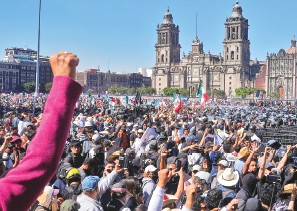
Across Mexico City, streets that are usually packed with weekend crowds turned into lanes of protest as thousands of young people from Generation Z gathered to voice their anger over a system they believe has failed them. Their slogans, placards and chants reflected a growing frustration among Mexico’s youngest adults who say they are tired of living with rising crime, political impunity and a sense that those in power are unwilling or unable to protect citizens. Although the demonstrations were planned and led by Gen Z, they quickly drew support from older groups who share similar concerns about the country’s direction.
This wave of youth activism in Mexico comes during a year when young people in several countries have taken to the streets to push back against inequality, corruption and diminishing trust in democratic institutions. In Nepal, a large youth movement erupted after a ban on social media. That protest culminated in the resignation of the prime minister and the formation of an interim government. Similar frustrations are now visible in parts of Latin America, Eastern Europe and Southeast Asia. Mexico has become the latest example of this generational pushback.
For many young Mexicans, the motivation behind the demonstrations is rooted in a daily reality shaped by insecurity. Violent crime continues to affect large parts of the country, and the sense of impunity has only grown. Murders often go unresolved, and corrupt practices have become deeply entrenched in local and national systems. Young people say they are no longer willing to accept a political culture that appears unchanged despite repeated public commitments to reform.
“We need more security,” said Andres Massa, a 29-year-old business consultant who joined the demonstration holding a pirate skull flag. The symbol has become a global emblem for Gen Z protest movements. For young protesters like him, the flag represents a shared identity among those who are demanding honesty from institutions and accountability from leaders.
Although protests in Mexico are not uncommon, the tone of this march was different. It came at a time when the country is still processing a series of high-profile killings, including the assassination of a widely respected mayor in the western state of Michoacan. His death intensified public anger and brought new urgency to debates around crime and political influence in the region.
These demonstrations also unfolded under the watch of President Claudia Sheinbaum, who continues to enjoy high approval ratings despite growing criticism from opposition parties. Days before the march, the president accused right-wing groups of attempting to exploit youth anger and influence the turnout by manipulating conversations on social media. She alleged that political opponents were using online networks and bots to amplify calls for protest. Her remarks generated further debate among young activists, many of whom insisted that their motivations were independent of party interests and rooted in lived experiences.
On the day of the demonstrations, it became evident that the protests had expanded beyond a single generation. People from diverse age groups joined the march, each carrying their own grievances and fears about Mexico’s future. A visible presence at the protest was a group of supporters of Carlos Manzo, the mayor of Michoacan who was recently killed. Many of them wore straw hats that have become a symbol of his political movement. Their participation underscored the wider national concern about targeted killings, especially of public officials attempting to challenge criminal networks.
“The state is dying,” said Rosa Maria Avila, a 65-year-old real estate agent who had travelled from Patzcuaro in Michoacan to join the protest. She described Manzo as a leader who was willing to confront criminal groups directly by sending officers into remote areas where gangs operate with little resistance. For her, his death was a sign of the risks faced by those who attempt to push back against organised crime. She said the demonstration was not only for young people but for everyone who wants a safer future.
The march in Mexico City was peaceful, but the atmosphere suggested a deeper undercurrent of fear and frustration. Many young participants said they grew up witnessing cycles of violence that never seem to end. They also expressed disappointment that economic inequality limits opportunities for their generation. For them, corruption is not an abstract issue but a barrier that shapes everyday life, from the job market to public services.
Several protesters said they no longer believe that political debates alone can bring change. Instead, they view public mobilisation as a necessary tool to challenge a system that often rewards loyalty over competence. The presence of older citizens at the march strengthened the message that concerns over public safety and accountability are not limited to one demographic. It also suggested that the gap between generations may be narrowing when it comes to shared expectations of transparency and justice.
As the protests dispersed in the evening, organisers said this was only the beginning of a larger movement. While it remains unclear how the government will respond to this growing wave of discontent, the turnout demonstrated that young people are no longer willing to remain silent about the country’s challenges. For many, the demonstrations offered a glimpse of a new civic consciousness driven by a generation determined to demand a safer and more accountable Mexico.
Pakistan's Defense Minister Khawaja Asif has questioned alleged plans by senior government officials to permanently settle abroad. He...
The Baloch Liberation Army (BLA) has claimed responsibility for carrying out 34 operations between October 9 and 20...

Russian President Vladimir Putin said on Wednesday that Russia's first tanker carrying 40,000 tons of diesel fuel will...

Ten people were killed and 44 others injured in a horrific road accident in Pakistan's Punjab province. The...

North Korean leader Kim Jong-un's influential sister, Kim Yo-jong, and a military marshal inspected fortification work along the...

New Delhi: US Secretary of State Marco Rubio has assured India that America’s relations with any country in...
Aries: The day will be auspicious...