Last Updated: October 21, 2026
Last Updated: October 21, 2026






One in every four senior Americans with dementia or mild cognitive impairment lives alone, making them vulnerable to risky driving, wandering outside the home, mixing up medications, and skipping appointments.
According to a study led by UC San Francisco and published in JAMA Network Open on August 18, 2023, patients living alone with cognitive decline, whose numbers are expected to rise as the population ages, are not effectively served by the American health system.
For these patients, living alone is a social determinant of health with an impact as profound as poverty, racism and low education, said first author Elena Portacolone, PhD, MBA, MPH, of the UCSF Institute for Health and Aging and the Philip R. Lee Institute for Health Policy Studies.
In this qualitative study, researchers interviewed 76 health care providers, including physicians, nurses, social workers, case workers, home care aides and others. Participants worked in memory clinics, home care services and social services and other places in California, Michigan and Texas.
The providers raised concerns about patients missing medical appointments, failing to respond to follow-up phone calls from the doctor’s office and forgetting why appointments were made, leaving them vulnerable to falling off the radar. “We don’t necessarily have the staff to really try to reach out to them,” said a physician in one interview.
Some patients could not assist their doctor with missing information on their chart, leaving the providers uncertain about the pace of their patient’s decline. Many had no names listed as emergency contacts, “not a family member, not even a friend to rely on in case of a crisis,” according to a case manager.These patients were at risk for untreated medical conditions, self-neglect, malnutrition and falls, according to the providers. A house service coordinator also noted that calls to Adult Protective Services were sometimes dismissed until a patient’s situation became very serious.
Good Evening Viewers! Catch up on the day's biggest stories with The Savera Times Evening Bulletin. Get the...

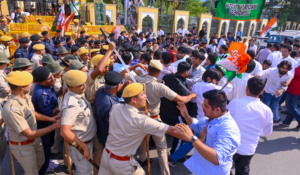
Congress leaders continued their protest outside the Jaipur Police Commissionerate on Tuesday, demanding the registration of a zero...
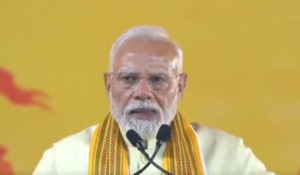
On the auspicious occasion of Vijayadashami, Prime Minister Narendra Modi on Tuesday called on the countrymen to unite...
A historic milestone was achieved on Tuesday in the expansion of Chhattisgarh's rail networkA historic milestone was achieved...

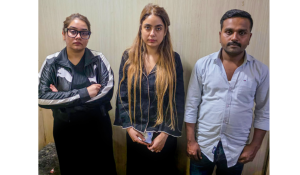
Model Shraddha Dubey, one of the main accused in the death of Lucknow businessman Shiv Sharma, has been...
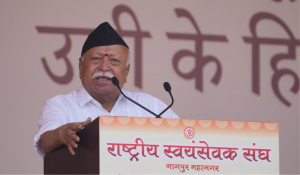
Rashtriya Swayamsevak Sangh (RSS) chief Mohan Bhagwat on Tuesday called for strengthening national unity, social harmony, indigenous practices...
Aries: The day will be auspicious...