Last Updated: October 15, 2026
Last Updated: October 15, 2026





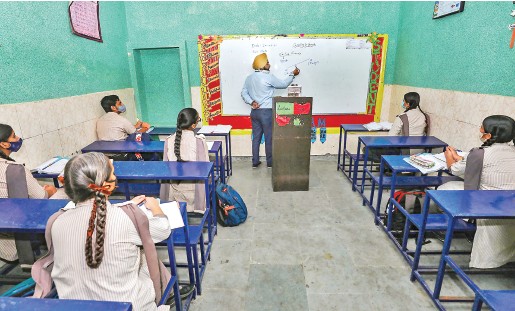
Education has expanded rapidly across the world, with more schools, universities, and digital learning platforms than ever before. Yet, despite increased access, a growing concern persists: modern education often fails to spark genuine curiosity. Many students complete years of schooling without developing a love for learning, treating education as a requirement rather than a journey of discovery.
One major reason lies in how learning is structured. Most education systems prioritize standardized testing and measurable outcomes. Students are trained to memorize information, reproduce answers, and meet rigid benchmarks. While this approach simplifies evaluation, it discourages exploration and questioning. Curiosity thrives on freedom, but classrooms frequently reward compliance instead.
The pressure to perform also shapes student behavior. Grades, rankings, and competition dominate academic life, pushing learners to focus on results rather than understanding. Fear of failure suppresses experimentation, making students hesitant to ask questions or pursue unconventional ideas. Over time, learning becomes transactional—study, test, forget—rather than transformative.
Teaching methods further contribute to the problem. Overcrowded classrooms and limited resources force educators to rely on lecture-based instruction. Personal engagement becomes difficult, and individual interests are often overlooked. When lessons fail to connect with real-world experiences, students struggle to see relevance in what they are taught. Technology, though powerful, is not a guaranteed solution. Digital tools can enhance learning, but when misused, they reinforce passive consumption.
Watching videos or clicking through slides rarely replaces deep engagement. Without thoughtful integration, technology becomes another layer of distraction rather than inspiration. Cultural expectations also play a role. In many societies, education is viewed primarily as a pathway to employment. Parents and institutions emphasize stable careers, often discouraging creative or exploratory pursuits.
This narrow definition of success limits intellectual risk-taking and undervalues curiosity-driven learning. Reviving curiosity requires systemic change. Classrooms must encourage discussion, creativity, and problem-solving. Teachers need support to experiment with interactive approaches. Education should prioritize understanding over memorization and curiosity over conformity. Curiosity is not lost—it is suppressed. When education nurtures questions rather than just answers, learning regains its power to inspire.
Suva: India and Fiji on Thursday held discussions focused on deepening bilateral ties and reaffirmed their shared commitment...

Bokaro (Jharkhand): The protest by trained youth from displaced families affected by the Bokaro Steel Plant (BSL) intensified...

Varanasi: Uttar Pradesh Chief Minister Yogi Adityanath, on a two-day visit to Varanasi, honoured sanitation workers from the...

New Delhi: India’s pharmaceutical sector performed exceptionally well in September 2026, recording the highest monthly growth in the...

Prime Minister Narendra Modi on Thursday inaugurated and dedicated to the nation five major development projects worth approximately...

New Delhi: The Supreme Court on Thursday issued notice to the Election Commission of India (ECI) on a...

Aries: The day will be auspicious...