Last Updated: October 15, 2026
Last Updated: October 15, 2026






Modern storytelling often celebrates turning points breakthroughs, victories, moments when everything changes. But most lives are not shaped by dramatic events. They are shaped by routine. By ordinary days repeated quietly over time. Increasingly, people are recognising that stability, consistency, and daily structure are not signs of stagnation, but sources of strength.
Routine gives life a rhythm. Waking up at a fixed hour, preparing meals, commuting, working, resting — these actions may seem unremarkable, yet they provide predictability in an otherwise uncertain world. For many, routine becomes a form of emotional safety. It anchors the mind when external circumstances feel overwhelming. Psychologists note that routine reduces cognitive load.
When basic decisions are automated — what time to wake up, when to eat, how to structure a day — mental energy is freed for creativity, problem-solving, and emotional regulation. This is why people often perform better during structured periods than during unplanned ones.
Routine also plays a vital role in resilience. During personal loss, illness, or stress, maintaining even small daily habits can provide a sense of continuity. Something as simple as making tea each morning or taking an evening walk becomes a reminder that life, in some form, continues. These acts do not erase pain, but they make it manageable.
In professional life, routine supports long-term productivity. Regular working hours, planned breaks, and predictable workflows prevent burnout more effectively than occasional bursts of intense effort. People who respect routine often sustain focus and motivation longer than those constantly pushing limits.
Routine is also deeply connected to self-discipline. Not the harsh, punitive kind, but a gentle commitment to showing up. Doing tasks even when motivation fades builds reliability. Over time, this reliability strengthens self-trust — the belief that one can depend on oneself regardless of mood or circumstance.
Importantly, routine does not mean rigidity. Healthy routines allow flexibility. They adapt to changing needs and priorities. The power of routine lies not in control, but in consistency. It provides a base from which people can experiment, take risks, or rest when needed.
Families, too, rely on routine more than they realise. Shared meal times, bedtime rituals, and regular conversations create emotional security, especially for children. These repeated moments build trust and connection. Long after specific memories fade, the feeling of stability remains.
Routine also nurtures creativity. Contrary to popular belief, creativity thrives within structure. Artists, writers, and thinkers often rely on strict schedules not to limit imagination, but to protect it. When time is consistently set aside for creative work, ideas have space to develop without pressure.
In an age of constant stimulation, routine offers calm. Notifications, trends, and expectations compete for attention. Routine helps people step back, focus on what is necessary, and filter out noise. It restores a sense of control over time one of the most valuable resources in modern life.
Ordinary days rarely feel meaningful while they are happening. Yet, when looking back, they form the foundation of growth, relationships, and identity. Big moments stand on the shoulders of routine.
Good Afternoon Viewers! Stay updated with The Savera Times Afternoon Bulletin, bringing you the latest news from Punjab,...

New Delhi: Heavy rain and thunderstorms swept parts of Delhi-NCR on Thursday as dark clouds covered the national...

A street vendor has approached the Delhi High Court seeking to stop the Cockroach Janata Party (CJP)'s protest...

Suva: India and Fiji on Thursday held discussions focused on deepening bilateral ties and reaffirmed their shared commitment...

Bokaro (Jharkhand): The protest by trained youth from displaced families affected by the Bokaro Steel Plant (BSL) intensified...
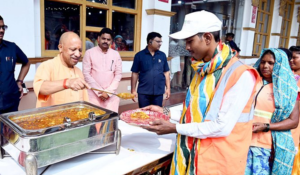
Varanasi: Uttar Pradesh Chief Minister Yogi Adityanath, on a two-day visit to Varanasi, honoured sanitation workers from the...
Aries: The day will be auspicious...