Last Updated: October 21, 2026
Last Updated: October 21, 2026





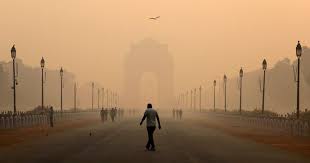
India’s air pollution crisis has evolved into a persistent public health emergency, with efforts struggling to translate into measurable improvements on the ground. Despite years of policy interventions and significant financial allocations, clean air remains out of reach for millions.
Many cities, especially in the Indo-Gangetic Plain, remain at the top of global pollution rankings. PM2.5 levels in most Indian cities are still far above the safe limits set by the World Health Organization (WHO), the report finds. Delhi, in particular, continues to rank among the most polluted capital cities in the world. Together, these trends make it clear that India’s clean air ambitions are still far from being realised.
Vehicle emissions, industrial pollution, construction dust and biomass burning all play a significant role in deteriorating air quality. Seasonal factors, especially during winter, worsen the situation by trapping pollutants close to the ground and increasing their concentration.
Although the government has introduced policies such as the National Clean Air Programme (NCAP), cleaner fuels and the promotion of electric vehicles, their overall impact has remained limited. Many of these measures are not fully implemented or effectively enforced on the ground, highlighting a clear gap between policy intent and actual outcomes.
The scale of the problem becomes even more evident at the city level. Loni in Uttar Pradesh ranks as the most polluted city globally, with levels of fine particulate matter PM2.5 reaching 112.5 microgrammes per cubic metre (μg/m³), the IQAir report said. It is followed by Byrnihat (101.1 μg/m³) and Delhi (99.6 μg/m³). Several other cities from the National Capital Region (NCR), including Ghaziabad (89.2 μg/m³), Noida (80.5 μg/m³) and Greater Noida (77.2 μg/m³), also feature prominently among the most polluted worldwide.
The clustering of these cities within and around Delhi highlights the critical reality that air pollution is not confined to a single city but spans an entire region. NCR has effectively emerged as a continuous pollution hotspot, driven by shared sources such as vehicular emissions, industrial activity, construction dust and seasonal factors. The regional nature of pollution becomes even more pronounced during winter. Air quality in northern India deteriorates sharply as temperature inversion traps pollutants near the surface, while crop burning, industrial emissions and local sources further intensify the problem. In December 2025, PM2.5 levels increased by 44 per cent in Delhi and by around 62 per cent in neighbouring cities. These seasonal spikes push pollution to hazardous levels, posing serious risks to public health.
Even though India recorded a modest 3 per cent improvement in average pollution levels overall, these episodic winter surges show that the gains are fragile and far from sufficient to deliver sustained clean air.
Policies in place, but misplaced priorities
India has taken several steps to control air pollution, but the results have been uneven. Despite the National Clean Air Programme’s goal of reducing pollution by 40 per cent by 2026, 67.13 per cent of the funding has been allocated to road dust reduction, while only 11.47 per cent has gone towards reducing biomass burning, 13.71 per cent towards vehicle emissions, and just 0.8 per cent towards industrial pollution.
Major pollution sources have therefore been relatively overlooked. Additionally, the focus has largely been on PM10 concentrations rather than the more harmful PM2.5, suggesting that spending priorities do not fully align with the actual sources of pollution.
At the same time, higher spending does not always guarantee better air quality, and Delhi is a clear example of this problem.
Despite being one of the most polluted cities, Delhi has used only 19.35 per cent of its allocated funds under the National Clean Air Programme. Out of Rs 80.65 crore received, only Rs 15.74 crore has been spent, leaving a large share unutilised.
This indicates that the issue is not just about how much money is available, but how effectively it is used. Poor utilisation reflects delays, weak planning and gaps in execution. (Courtesy: DTE)
Good Evening Viewers! Catch up on the day's biggest stories with The Savera Times Evening Bulletin. Get the...

Congress leaders continued their protest outside the Jaipur Police Commissionerate on Tuesday, demanding the registration of a zero...
On the auspicious occasion of Vijayadashami, Prime Minister Narendra Modi on Tuesday called on the countrymen to unite...
A historic milestone was achieved on Tuesday in the expansion of Chhattisgarh's rail networkA historic milestone was achieved...
Model Shraddha Dubey, one of the main accused in the death of Lucknow businessman Shiv Sharma, has been...

Rashtriya Swayamsevak Sangh (RSS) chief Mohan Bhagwat on Tuesday called for strengthening national unity, social harmony, indigenous practices...
Aries: The day will be auspicious...