Last Updated: October 20, 2026
Last Updated: October 20, 2026





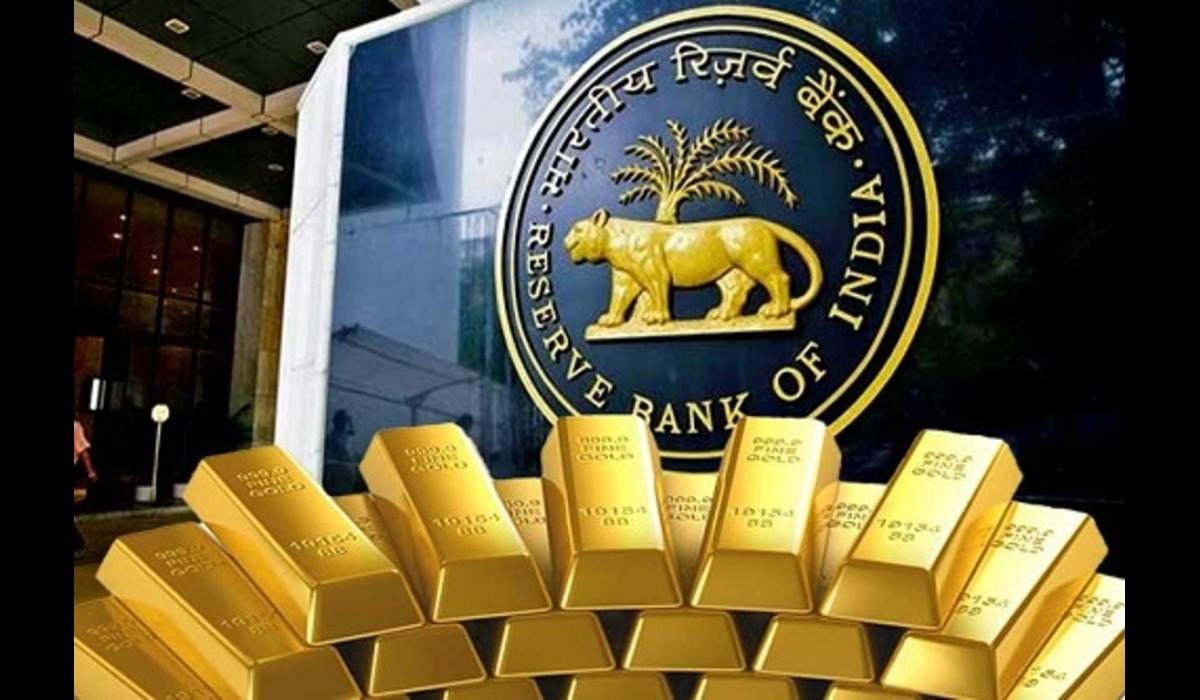
India’s love affair with gold runs deep — from family heirlooms and temple donations to central bank vaults. But while Indians have always held gold close to their hearts, the Reserve Bank of India (RBI) has in recent years been doing the same in a far more literal sense. Quietly but steadily, the central bank has been shifting a large share of the country’s gold reserves from foreign vaults to Indian soil.
Between March and September 2025, the RBI brought back over 64 tonnes of gold from storage locations in the United Kingdom and other Western countries. With this repatriation, India’s total gold holdings now stand at 880 tonnes, of which around 576 tonnes — more than 65 per cent — are stored domestically. Four years ago, this figure was less than half that share. The move reflects a calculated strategy by the central bank to reduce dependence on foreign custodians, diversify risk, and assert greater control over one of the world’s most trusted stores of value.
Why India is bringing its gold back
At first glance, the transfer may appear symbolic — a matter of national pride or logistical convenience. But experts say it is rooted in clear financial reasoning. In recent years, the global economic landscape has become increasingly uncertain. The combination of geopolitical tensions, sanctions policies, and volatility in major currencies has prompted several countries, including Germany, the Netherlands, and Turkey, to repatriate their gold reserves. India’s move follows the same trend of reducing exposure to foreign institutions and ensuring strategic autonomy over critical financial assets.
Until a few years ago, a large portion of India’s gold was kept with the Bank of England, one of the world’s oldest custodians of sovereign gold. This arrangement provided convenience for international transactions and safety in historically stable jurisdictions. However, the global environment has changed. The rise in geopolitical risks, tightening sanctions regimes, and episodes of financial freezing — such as those witnessed during the Russia-Ukraine conflict — have highlighted the vulnerabilities of holding national reserves abroad.
For India, repatriating gold means the reserves are physically within its reach, subject to its own security, and fully sovereign in control. The RBI now stores its domestic gold primarily in vaults at its offices in Nagpur and Mumbai, both of which are equipped with state-of-the-art security systems.
The economic logic behind the move
Gold has long played a key role in India’s monetary policy, particularly as a hedge against currency fluctuations and inflation. With the rupee facing intermittent pressure and global markets turning unpredictable, gold serves as a stabilising asset in the RBI’s balance sheet.
By holding a larger portion of gold domestically, the RBI can manage its reserves more flexibly. If the need arises, gold can be swapped or used as collateral for emergency liquidity without the procedural delays associated with foreign storage.
There are also cost considerations. When stored abroad, the RBI pays annual storage fees and insurance premiums to custodians. Bringing gold home eliminates much of these recurring expenses. Officials have noted that the savings, though not massive, are still significant in the long term.
Moreover, the move supports the government’s broader goal of strengthening India’s financial sovereignty. By physically holding its reserves, India signals to the world that it is better prepared for potential global shocks.
Global context and historical echoes
India’s decision is part of a wider international pattern. Over the past decade, many central banks have increased their gold holdings or repatriated existing ones. Germany’s Bundesbank, for instance, completed a massive repatriation programme in 2017, bringing home hundreds of tonnes from New York and Paris. Similarly, countries such as Hungary, Poland, and Turkey have either boosted domestic storage or added to their reserves as a safeguard against external risks.
For India, the symbolism of holding its gold at home carries historical resonance. During the 1991 balance of payments crisis, the country was forced to pledge nearly 67 tonnes of its gold to the Bank of England and the Bank of Japan to secure an emergency loan. That episode left a lasting mark on the national psyche. The current repatriation, though financially strategic, also reflects a quiet assertion of confidence — a reminder that India is no longer in the position of having to send its gold abroad to survive.
Gold’s enduring appeal
Beyond its monetary value, gold holds cultural significance unmatched by any other asset in India. Families buy gold for weddings, festivals, and investments; temples receive tonnes of gold in offerings every year. This deep-rooted attachment gives gold a dual identity — as both a financial instrument and a symbol of stability.
For the RBI, this cultural and economic alignment is an advantage. Gold’s stability as an asset provides a hedge during market turbulence, while its universal acceptance ensures liquidity in times of crisis. In fiscal 2024–25, the central bank’s gold reserves increased not only through repatriation but also through fresh purchases from the open market, continuing a trend seen over the past decade.
The road ahead
India’s decision to store most of its gold within its borders does not mean it is closing off from international engagement. The RBI still maintains a portion of its reserves overseas for trade and investment flexibility. But the broader message is clear — India wants greater control over its strategic assets.
Analysts expect the central bank to continue adding to its reserves, especially as global interest in gold rises amid economic uncertainties. With the world shifting towards a more multipolar order, gold remains one of the few assets that transcend borders, politics, and currencies.
As India deepens its position as one of the world’s largest holders of gold, the metal once again stands at the crossroads of national policy and global finance — a timeless symbol of wealth, security, and resilience.
In bringing its gold home, India is not just safeguarding its reserves; it is reclaiming control over its financial destiny.
On the auspicious occasion of Vijayadashami, Prime Minister Narendra Modi on Tuesday called on the countrymen to unite...
A historic milestone was achieved on Tuesday in the expansion of Chhattisgarh's rail networkA historic milestone was achieved...

Model Shraddha Dubey, one of the main accused in the death of Lucknow businessman Shiv Sharma, has been...

Rashtriya Swayamsevak Sangh (RSS) chief Mohan Bhagwat on Tuesday called for strengthening national unity, social harmony, indigenous practices...
Amidst comparisons of youth protests in India to political movements and regime changes in France, Nepal, and Bangladesh,...

Rashtriya Swayamsevak Sangh (RSS) chief Mohan Bhagwat appealed for maintaining social unity in his Vijayadashami address in Nagpur...
Aries: The day will be auspicious...