Last Updated: October 20, 2026
Last Updated: October 20, 2026





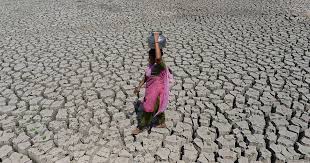
India’s monsoon forecast, according to India Meteorological Department on 14 April 2026, carries a warning that extends far beyond crop productivity. The 2026 southwest monsoon season is predicted to deliver 92 per cent of the Long Period Average (LPA) rainfall (870 mm), with a model error margin of 5 per cent either way.
This places the forecast squarely in the below-normal category. More critically, the spatial distribution reveals a troubling concentration: Punjab, Haryana, and Chandigarh. India’s primary wheat-producing belt is explicitly flagged for below-normal rainfall during the critical June-September kharif season.
This is not simply a food supply issue awaiting policy attention. It is a monetary policy constraint masquerading as a weather event.
The spatial asymmetry problem
For the RBI’s flexible inflation-targeting framework, the crisis lies in architecture. The central bank targets headline Consumer Price Index (CPI) inflation at 4 per cent, with a tolerance band that allows for fluctuations between 2 and 6 per cent, using a uniform policy rate across all regions. This framework treats India’s economy as a single transmission zone. In practice, it is far from that.
Regional agricultural performance creates asymmetric inflation dynamics that a uniform interest rate cannot address. When Punjab and Haryana face below normal rainfall, the supply shock does not distribute evenly across the price index. Instead, it concentrates on specific commodities: wheat and rice that carry distinct weights and vulnerabilities in the national price basket.According to government data from the Union Ministry of Statistics, food accounts for approximately 46.2 per cent of India’s CPI basket (based on the 2024 series). Within this, cereals primarily wheat and rice constitute a disproportionate share of the food group’s weight.
A production shortfall in Punjab and Haryana, where irrigation capacity has reached saturation according to recent analysis, and where groundwater depletion limits adaptive capacity, does not translate into a modest food inflation uptick. It creates a structural pricing shock in a commodity essential to nearly every household.The RBI is aware of this vulnerability. In its April 2026 Monetary Policy Committee (MPC) review, the MPC noted explicitly that food and fuel constitute more than 50 per cent of the consumption basket in India, and argued that excluding these volatile items from the inflation target would lead to policy biases and undermine central bank credibility. The committee chose to hold the repo rate at 5.25 per cent, maintaining a neutral stance. But this decision masks a deeper tension: the RBI’s framework requires a uniform response to a non-uniform shock
Good Evening Viewers! Catch up on the day's biggest stories with The Savera Times Evening Bulletin. Get the...

Congress leaders continued their protest outside the Jaipur Police Commissionerate on Tuesday, demanding the registration of a zero...
On the auspicious occasion of Vijayadashami, Prime Minister Narendra Modi on Tuesday called on the countrymen to unite...
A historic milestone was achieved on Tuesday in the expansion of Chhattisgarh's rail networkA historic milestone was achieved...

Model Shraddha Dubey, one of the main accused in the death of Lucknow businessman Shiv Sharma, has been...

Rashtriya Swayamsevak Sangh (RSS) chief Mohan Bhagwat on Tuesday called for strengthening national unity, social harmony, indigenous practices...
Aries: The day will be auspicious...