Last Updated: October 12, 2026
Last Updated: October 12, 2026





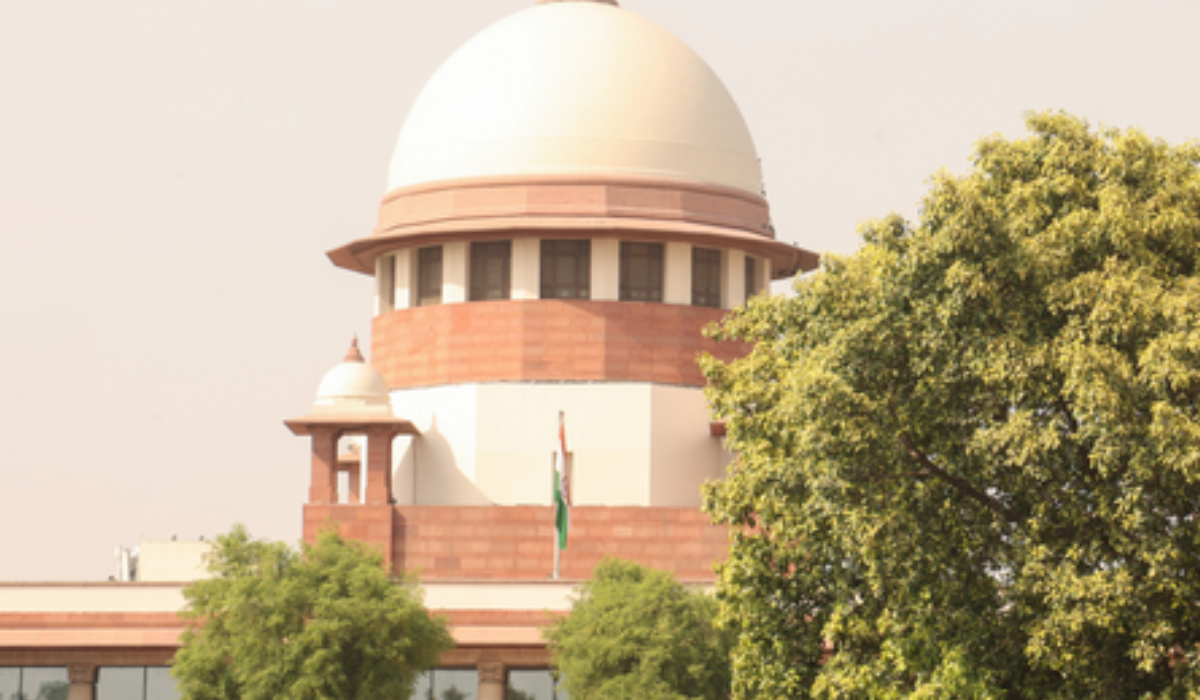
On Friday, the Supreme Court made significant observations regarding the issues of reservation and social mobility. While hearing a case concerning reservation benefits extended to the ‘creamy layer’ within backward classes, the Court raised the question of whether children belonging to families that have already achieved educational and economic advancement should continue to receive the benefits of reservation.
Court Poses Tough Questions
A bench comprising Justice B.V. Nagarathna and Justice Ujjal Bhuyan was hearing the matter. During the proceedings, Justice Nagarathna remarked that if both parents are IAS officers, then why should their children be entitled to reservation?
What Did the Petitioner Argue?
Advocate Shashank Ratnu, appearing on behalf of the petitioner, argued that individuals are being excluded not based on their income, but rather on the basis of their social status. He pointed out that Group ‘A’ employees have been excluded from reservation benefits, and Group ‘B’ employees are also subject to such exclusion.
What Did the Court Say Regarding Reservation?
In response, Justice Nagarathna observed that social mobility naturally accompanies educational and economic empowerment. She noted that if the next generation continues to demand reservations, society will never be able to move past this system. She emphasized that this constitutes a matter of significant concern.
Justice Nagarathna further remarked that while the parents of these students hold good jobs and earn substantial incomes, their children still seek reservation benefits. She commented that such individuals should now be able to move beyond the need for reservation.
Observations Regarding the EWS Category
Advocate Ratnu submitted to the Court that this issue requires deep deliberation and that a distinction must be maintained between the Economically Weaker Sections (EWS) and the ‘creamy layer.’ Responding to this, Justice Nagarathna noted that the EWS category is characterised solely by economic backwardness, whereas it does not involve social backwardness. Ratnu argued that, for this very reason, the criteria applicable to the ‘creamy layer’ ought to be more liberal than those applied to the EWS category; otherwise, if both are treated identically, no meaningful distinction would remain between the two.
Court States: Maintaining a Balance is Essential
During the hearing, the Court issued a notice in the matter. Justice Nagaratna observed that it is essential to maintain a balance in this matter. She stated that while social and educational backwardness is a valid consideration, when parents have already attained a certain level of advancement by availing the benefits of reservation—and both are serving as IAS officers or hold high-ranking positions in government service—social mobility becomes clearly evident. She further added that the government’s orders excluding such individuals from reservation benefits must also be taken into consideration.
Former BJP MLA Attar Singh Bhedana died at Jaipur’s SMS Hospital after a violent clash at a crusher...
An eyewitness has recounted the fatal Mini Cooper crash in Nedumbassery, Kochi, claiming the driver said his father...

The Cockroach Janata Party plans to approach Parliament Street Police Station for permission to hold a peaceful protest...
BJP leader Kirit Somaiya has announced plans to file a complaint against actor Imran Khan over alleged OCI...

Start your day with The Savera Morning Brief, bringing you the top India and world news, breaking developments,...

Maharashtra MPSC Chairman Vivek Bhimanwar has been sent on compulsory leave until the inquiry into the alleged paper...
Aries: The day will be auspicious...