Last Updated: October 21, 2026
Last Updated: October 21, 2026





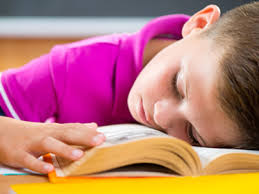
Classrooms across India are full again. Morning assemblies have returned, textbooks are being distributed, and attendance registers are ticking upward. On paper, the country’s education system has recovered from years of disruption. In reality, a deeper crisis is unfolding — one that threatens to leave an entire generation behind.Teachers in government and low-fee private schools report that students promoted to higher classes are struggling with basic reading, writing, and arithmetic. Many children in Class 8 cannot read a Class 5 text fluently. Others stumble over simple division or cannot write a coherent paragraph.The learning gap, widened by school closures and uneven access to digital education, has not closed. It has hardened.
The problem begins early. Foundational literacy and numeracy, the building blocks of education, remain weak for millions of children. National and state-level surveys have consistently shown declines in learning outcomes, particularly in rural areas.
Teachers describe spending months revising content from previous classes before moving ahead with the syllabus. “We are teaching two grades at once,” said a government school teacher in Rajasthan. “Officially they are in Class 7, but academically many are in Class 4.”
Promotion policies aimed at preventing dropouts have unintentionally masked the problem. Students move forward without mastering basics, accumulating gaps that become impossible to bridge by secondary school.
During the pandemic, online education was presented as a solution. In practice, it exposed deep inequalities. Millions of students lacked smartphones, stable internet, or quiet spaces to study. Girls were often the last to access shared devices, while children from poorer households were pulled into work or caregiving.Even now, schools assume digital familiarity that many students do not have. Assignments, registrations, and assessments increasingly rely on apps and portals, creating new barriers for first-generation learners.
Start your day with The Savera Morning Brief, bringing you the latest news from India and around the...

Union Home Minister Amit Shah will pay tribute to police martyrs at the National Police Memorial in New...
Four more people, including two women, have been arrested in the Tiger Shroff firing case. Delhi Police are...
We are very proud that at present India is the number one country in the world by surpassing...
Every investor wants the wealth-creating power of equity and the reassuring stability of debt. Balanced Advantage Funds attempt...

Tourism is a major source of government revenue in our country. There are different types of tourism. Scenic...
Aries: The day will be auspicious...