Last Updated: October 23, 2026
Last Updated: October 23, 2026





Parneet Sachdev
Chairman of Real Estate Regulatory Authority and a leading author
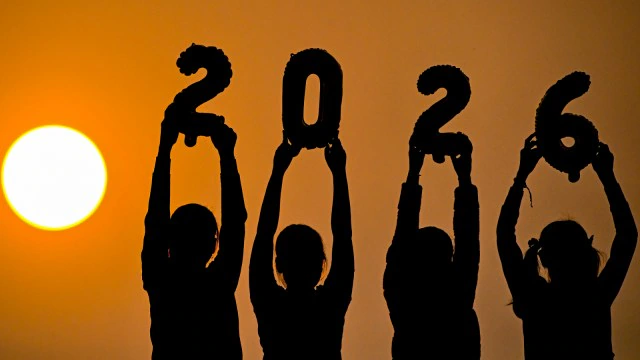
Each New Year arrives with a familiar moral instruction. Become better. Become leaner, calmer, more productive, more successful. The calendar, it is assumed, demands a transformation of the person who turns its pages. This belief has hardened into ritual. The underlying message is unmistakable
The self that endured the previous year
is inadequate for the one ahead.
THE COST OF RADICAL SELF SETTING
This assumption deserves analysis, not because growth is undesirable, but because the way modern culture frames change is psychologically costly and spiritually incoherent. Reinvention, when treated as a prerequisite for worth, often produces the very stagnation it seeks to overcome.
Behavioural science has long questioned the effectiveness of radical self-resetting. Studies on habit formation show that abrupt, high-intensity behavioural change carries a high rate of attrition, particularly when undertaken under conditions of cognitive and emotional load. Research synthesised by the American Psychological Association demonstrates that resolution-based change fails not due to lack of motivation, but because it ignores identity continuity and neural fatigue (APA Monitor on Psychology, 2020).
The brain resists change that feels like a rejection of the self rather than an extension of it.
Modern psychology offers a precise framework for understanding why the “New You” narrative backfires. Self-discrepancy theory, developed by E. Tory Higgins, shows that when the gap between the “actual self” and the “ideal self” becomes too wide, individuals experience increased anxiety, shame, and disengagement rather than motivation.
The pursuit of an idealised future identity triggers a threat response, not a growth response (Psychological Review, 1987).
Neuroscience deepens this insight. Functional MRI studies indicate that sustained self-criticism activates the brain’s default threat circuitry, particularly the amygdala, while self-compassion and acceptance engage neural networks associated with learning and behavioural flexibility. A landmark study from Stanford University demonstrated that individuals who approach personal change from a stance of acceptance show greater long-term behavioural persistence than those driven by self-judgment (Stanford Center for Compassion and Altruism Research, 2016).
What masquerades as discipline in many New Year resolutions is, at a neural level, a form of chronic self-threat.
ANCIENT WISDOM AND THE CONTINUITY OF THE SELF
Long before modern psychology articulated these mechanisms, classical wisdom traditions had reached similar conclusions. The Bhagavad Gita does not advocate personal reinvention; it emphasises abhyasa—steady, repeated practice anchored in self-knowledge rather than self-rejection.
Action, Krishna explains to Arjuna, must arise from clarity,
not from contempt for one’s present condition
(Bhagavad Gita).
Buddhist psychology follows a similar arc. The Buddha explicitly rejected sudden self-overhaul, teaching instead that liberation emerges through mindful observation of thought, sensation, and impulse over time.
Change occurs not by becoming someone else,
but by seeing more clearly what one already is
(Gautama Buddha).
The line recognises imperfection without equating it with inferiority. These traditions converge on a single insight: growth does not require self-replacement. It requires self-understanding.
PRODUCTIVITY, FATIGUE, AND THE MYTH OF ENDLESS UPGRADING
The modern demand for reinvention is inseparable from a broader cultural fixation on optimisation. The self is treated as a project under perpetual renovation, expected to yield ever-higher returns in productivity, emotional regulation, and social performance. Yet cognitive science suggests that this model is fundamentally flawed.Research on decision fatigue shows that self-regulatory capacity is finite. Roy Baumeister’s extensive work on ego depletion demonstrated that sustained effort at self-control without recovery leads to poorer judgment, reduced persistence, and emotional volatility (Journal of Personality and Social Psychology, 1998). Although later studies refined aspects of the theory, the core finding remains robust: humans cannot indefinitely impose improvement upon themselves without replenishment.This has profound implications for New Year resolutions. A person entering January already burdened by unresolved stress, economic uncertainty, or emotional residue from the previous year is neurologically ill-equipped for radical change.
INHABITATION INSTEAD OF REINVENTION
A more durable alternative emerges when the New Year is approached as an invitation to inhabitation. To inhabit oneself is to remain present within one’s existing life, roles, and limitations, while gently refining one’s responses to them. It is an inward reorientation rather than an outward overhaul. From a scientific perspective, this approach aligns closely with what is known about neuroplasticity. Small, consistent shifts in attention and behaviour reshape neural pathways more reliably than dramatic interventions.
Studies from University College London show that habit formation typically requires sustained repetition over weeks or months, not sudden enthusiasm (European Journal of Social Psychology, 2009). Incremental change, grounded in identity continuity, is neurologically economical. Spiritually, inhabitation resists the moral violence of constant self-improvement and replaces it with attentive living.
WHAT THIS LOOKS LIKE IN PRACTICE
When translated into lived experience, this philosophy produces changes that are subtle, enduring. People begin to notice how many habits persist not out of weakness, but because they once served a protective function. Research in contemplative neuroscience shows that even brief daily periods of non-reactive awareness reduce baseline cortisol levels and improve emotional regulation over time (Harvard Medical School, 2018). They are quiet, gentle recalibrations.
Studies on goal pursuit suggest that publicly announcing intentions can reduce follow-through by providing premature psychological reward (Psychological Science, 2009). Silent commitments, by contrast, preserve motivational energy.
A NEW YEAR WITHOUT SELF-ABANDONMENT
One of the most common ideas in modern self-improvement culture is the assumption that mistakes are purely personal failures. Gurbani takes a radically different position. It recognises that human fallibility itself unfolds within divine ordinance (Hukam).
Jo kichh karai so ape karai,
ape karta ape karai.
Whatever happens, He Himself does;
the Creator Himself is the Doer.
-Guru Granth Sahib, Ang 294
This verse dissolves the illusion of absolute self-authorship. Human action is not denied, but contextualised. One is not crushed by guilt, nor absolved of responsibility, but placed within a framework where learning replaces self-condemnation.
Self-Forgiveness as a Form of Grace
The Gurbani repeatedly emphasises that liberation is not achieved through relentless self-punishment, but through grace (Nadar) that awakens insight.
Gunha bakhsanhar sabaia,
ape bakhse ap chhadaia.
He alone is the forgiver of all sins;
He Himself forgives and sets us free.
-Guru Granth Sahib, Ang 1072
Here, forgiveness is not portrayed as moral leniency, but as a divine mechanism for emancipation. To forgive oneself—after honest recognition of error—is not weakness. It is participation in grace.
Sikh philosophy is deeply wary of extremes. Inertia (alas) dulls awareness, but cruelty towards the self fractures learning. Growth is possible precisely because human beings are not frozen in virtue or vice. This insight aligns strikingly with modern behavioural science, which shows that identity-based condemnation (“I am a failure”) inhibits change far more than behaviour-based correction (“This action failed”).
This Sikh understanding finds an unexpected echo in Stoic philosophy. Marcus Aurelius wrote that one should begin each day expecting human failure—both one’s own and that of others—and resolve not to be disturbed by it.
In both traditions, the moral task is the same: neither indulgence nor severity, but steadiness. One fails, reflects, forgives, adjusts, and continues.
Taken together, Gurbani, Stoicism, and modern psychology converge on a single insight: Laziness and complacency arrest growth. Excessive self-criticism corrodes it. Between these extremes lies a disciplined gentleness—a willingness to learn without self-hatred, to change without self-rejection.
As the year begins, perhaps the most disciplined act is not to reinvent oneself, but to remain present, constantly improving. The New Year does not need a new you. Rather a consistently better version of you. Compassionate!Confucian wisdom, grounded in social and moral realism, captured this ethic as below
“Better a diamond with a flaw than a pebble without”
(Views expressed are the author’s own).
Police in the Handwara subdivision of Jammu and Kashmir have busted a terrorist poster module and arrested one...

Social media influencer Aamir Shokin has been arrested for allegedly racially harassing and publicly humiliating a Tripura student....

Good Evening Viewers! Welcome to The Savera Times Evening Bulletin, bringing you the biggest news stories and major...

Two workers died and five others fell unconscious after a fire broke out at a gold jewelry factory...

Congress Parliamentary Party (CPP) Chairperson Sonia Gandhi launched her account on the social media platform Instagram on Thursday.

Congress MP Priyanka Gandhi Vadra's son, artist and photographer Rehan Vadra, has alleged that the Bikaner House administration...

Aries: The day will be auspicious...