Last Updated: October 21, 2026
Last Updated: October 21, 2026






Parneet Sachdev
Chairman of Real Estate Regulatory Authority and a leading author
When the sense of smell enters the law of trademarks, a subtle but profound shift begins: intangible aromas, once considered purely experiential, now count as brand capital. The recent decision by the Trade Marks Registry, India (under the Trade Marks Act, 1999) to accept, for advertisement, a “rose-like fragrance smell reminiscent of roses as applied to tyres” for Sumitomo Rubber Industries Ltd. has turned what was once largely theoretical into a present-day commercial reality.
Under Indian Trademark Laws, registering a fragrance as a trademark is complex due to the requirement for graphical representation, which scents inherently lack. The Trade Marks Act, 1999, outlines that a trademark must be visually representable and distinctive, posing challenges for scent registration. While international precedents exist, such as in the EU and the US, where non-traditional marks like scents have been accepted, Indian courts have recognized non-traditional marks like colors and sounds. But fragrance marks face hurdles due to distinctiveness and non-functionality requirements. Future legal developments may allow for fragrance registration in India.
However, recently, the Registry’s order accepted that a smell, so long as it is distinct and objectively represented, it can serve as a source-identifier under trademark law. In doing so, it opened the door to “non-conventional trademarks” in India, embedding sensory branding firmly in the country’s IP regime.
HOW DOES IT CHANGE THINGS
Why does this matter? Because brand equity; the intangible value associated with a brand, has long been central to corporate worth. As defined in marketing theory, a brand is more than a name; it is a promise, a reputation, a set of expectations in the consumer’s mind. With smell-trademarks, companies gain a new dimension for building that equity. Smell triggers memory, emotion, nostalgia; it operates subconsciously, anchoring a product in sensory experience rather than mere utility.
Consider, for instance, the globally known case of Play-Doh. In May 2018, the United States Patent and Trademark Office (USPTO) registered the distinctive “sweet, slightly musky, vanilla-like fragrance, with slight overtones of cherry, combined with the smell of a salted, wheat-based dough” as a trademark for the toy modeling compound.
The scent of Play-Doh, intangible, evocative, became legally protected brand property. That precedent is now being echoed in India. For Sumitomo Rubber, the rose-scented tyre mark transforms a minor sensory tweak into a proprietary asset.
ECONOMIC AND CORPORATE IMPLICATIONS
From a purely legal footnote, smell-trademarks could evolve into a meaningful business strategy, if firms and markets treat them as part of brand capital. In a crowded, commoditised industries where technical differentiation is shrinking, smell offers a new vector of differentiation. Tyre manufacturing is mass-produced and heavily cost-driven. Yet with a rose-scent trademark, a tyre company can claim not only durability or performance but an aesthetic, sensory identity. If even a small segment of buyers values that, maybe luxury or lifestyle-oriented vehicle owners, the company will suddenly have the potential to secure higher margins, or at least brand loyalty. That additional premium, across millions of tyre units globally, may amount to a nontrivial revenue uplift over time.
With this decision, smell marks have entered the terrain of intangible assets in the balance sheet. This can seriously influence corporate valuations and have immense effect during mergers or acquisitions. In markets such as India where manufacturing, automotive, rubber-goods and lifestyle segments are large and growing smell-IP could become a new category of “brand capital.” The implications are many.
The rise of smell-marks could catalyse new sub-industries and value chains. Firms will in time begin investing in fragrance-design laboratories, scent R&D, sensory-marketing agencies. In a country like India — with a vast manufacturing base and rising consumer aspirations — this could lead to creation of jobs, skill centres, exportable services centered on “sensory branding.”
RISKS
Yet, this transformation is far from automatic. There are serious constraints — legal, technical, economic — that may limit how far smell-trademarks can meaningfully reshape industry economics. India, being a signatory to the Trade-Related Aspects of Intellectual Property Rights (TRIPS) agreement, adheres to international standards for intellectual property. TRIPS allows for the protection of various types of trademarks, including non-traditional marks, but it is unclear whether scent marks are explicitly included under TRIPS. However, some jurisdictions, such as the European Union and United States, have accepted fragrance trademarks under specific circumstances.
The recent Indian decision rested critically on a scientific, technical representation: the application included a graphical representation; derived from a model that represented the rose-scent as a vector in a seven-dimensional “smell space” (24law.in). The authorities found it to be sufficiently “clear, precise, self-contained, intelligible, objective”.
But that standard may not be easy to meet for many other products or scents. Representing a complex fragrance in a durable, objective, transferable fashion requires technical and scientific input, raising cost and complexity. Moreover, for many products, smell is functional: perfumes, soaps, air fresheners — their smell is the product. For those, a scent cannot serve as a source-identifier distinct from the product itself; courts historically treat such functional scents as unregistrable.
The scent should be non-functional and not inherent to the product. If the scent is merely a feature of the product (e.g., the natural smell of a flower in a perfume), it may not be eligible for protection. Even for non-functional scents, reproducing the same smell reliably at scale — consistently over batches, geographies and time — may be challenging. Variation, degradation, recalls or supply-chain issues may undermine the “distinctiveness” necessary for enforcement.
When smell-marks become more common, regulators, courts and firms will need new instruments standardized smell-charts, “electronic noses,” chemical-analysis, reference libraries. This will spur investments into a whole new industry and enforcement mechanisms.
A WHISPER OF AROMA- GLOBAL LAWS
The acceptance of a smell-trademark for rose-scented tyres may at first appear symbolic. In India, as manufacturing scales up and consumer aspirations shift, there is fertile ground. Imagine a domestic shoe-maker registering a signature “leather + sandalwood” scent, or a mattress-manufacturer trademarking a “fresh linen” aroma, or a retail chain protecting the aroma of its stores. Over time, such signature smells could become part of a product’s purchase appeal — just as colour, design, or packaging do today. For global firms operating in emerging economies, scent-IP might provide a low-visibility but effective differentiation strategy — harder for imitators to copy than colours or logos.For investors and financial markets, smell-marks may slowly emerge in valuations as intangible assets akin to patents, trademarks, brand goodwill. That could influence capital flows, M&A activity, brand-driven growth strategies, and even credit ratings for companies that build strong sensory-branding portfolios.
The European Union Intellectual Property Office (EUIPO) has accepted fragrance marks, including the smell of a specific flower or fruit, as registrable trademarks. The EU Trademark Regulation allows the registration of non-traditional marks, including smells, if they meet the distinctiveness and non-functionality requirements. In the U.S., fragrance trademarks have been recognized in certain cases. The United States Patent and Trademark Office (USPTO) has registered scents as trademarks under the Lanham Act, primarily in the context of consumer goods. A famous example is the “fresh cut grass” fragrance for the scent used in tennis balls, registered in the 1990s.The rose-scented tyre trademark is more than a curiosity—it is potentially the vanguard of a quiet revolution in how business defines value.
As intangible as fragrance may be, it may soon become as concrete in corporate balance-sheets as trademarks, patents or brand goodwill.Smells signal a new frontier of brand building; for economies, a possible emergence of “sensory value chains”; for consumers, perhaps a new dimension of product experience. But whether scent-marks grow from niche novelty to mainstream asset class depends on vision, investment, regulation. Meanwhile, the customers of Sumitomo tyres can enjoy the smell of roses as they travel.
(Views expressed are the author’s own).
Start your day with The Savera Morning Brief, bringing you the latest news from India and around the...

Union Home Minister Amit Shah will pay tribute to police martyrs at the National Police Memorial in New...

Four more people, including two women, have been arrested in the Tiger Shroff firing case. Delhi Police are...

We are very proud that at present India is the number one country in the world by surpassing...

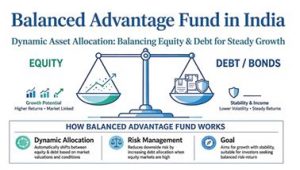
Every investor wants the wealth-creating power of equity and the reassuring stability of debt. Balanced Advantage Funds attempt...
Tourism is a major source of government revenue in our country. There are different types of tourism. Scenic...

Aries: The day will be auspicious...